Tuscany is often sold as a slow destination, the kind that asks for long lunches and unplanned detours. Yet the hills also reward a single, well-paced day behind the wheel - if the route is treated like a playlist: a few strong tracks, no filler, and enough silence between them. The trick is to drive with intention, stop with curiosity, and let the landscape do most of the talking.
- Make a one-day Tuscany loop work (without rushing it)
- Montepulciano: steep streets, big views
- Pienza and the Val d’Orcia road: the moving postcard
- Sant’Antimo and Montalcino: stone, hush, and Brunello air
- Siena in a tight window: Gothic drama, lived-in streets
- Return through the hills: choosing the right way back
Make a one-day Tuscany loop work (without rushing it)
A one-day drive through the Tuscan hills is less about “seeing everything” and more about choosing a sequence that feels inevitable. Starting from Rome works best when the first hour is treated as pure transit - straight onto the A1, a steady pace, and no temptation to turn the morning into a scavenger hunt of random viewpoints. The reward comes later, when the highway drops away and the roads begin to curve like handwriting.
Picking up a vehicle in the city keeps the timing flexible; a dedicated car rental in Rome allows an early departure before commuter traffic thickens. For arrivals on a morning flight, collecting keys right after landing is often cleaner than fighting urban logistics later; Rome Fiumicino Airport car rental makes it possible to point the bonnet north with almost no detour.
The spine of the day is simple: Rome - southern Tuscany (Montepulciano area) - Val d’Orcia - a quiet abbey - Siena - back. What turns it from a checklist into a story is pacing. In practice that means letting each stop deliver one clear sensation: a ridge view, a Renaissance square, a shadowy nave, a city piazza that feels like theatre even when nobody is performing.
A quick rhythm that keeps the day coherent
- Front-load the distance: get the longest stretch done early, while attention is fresh and the light is still cool.
- Park once, walk well: hill towns are not designed for cars; a 12-minute walk often beats a 20-minute crawl to a closer space.
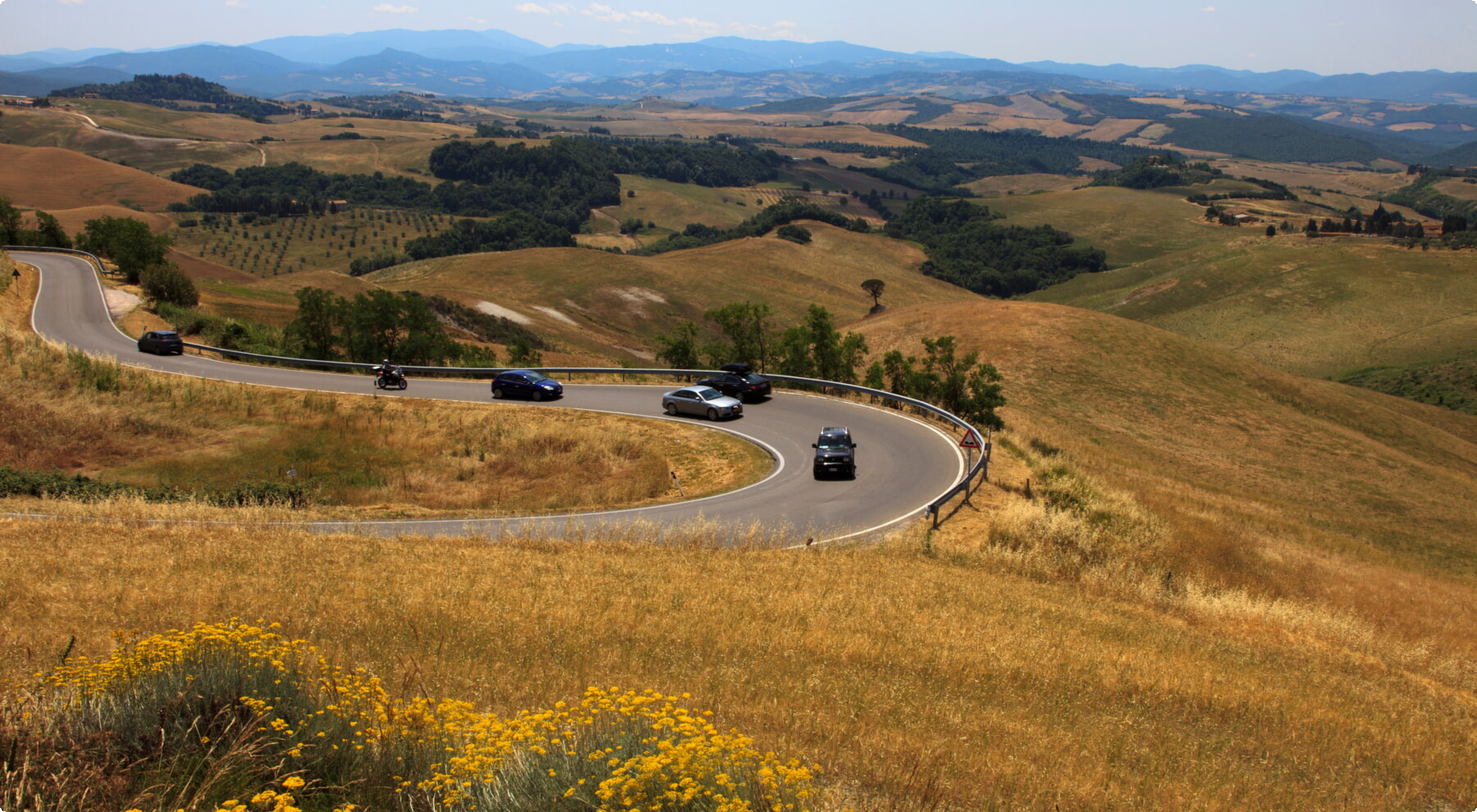
- Leave room for the road itself: the best “attraction” is sometimes a bend lined with cypress, when the windshield, catches a sudden slice of valley.
One small mindset shift helps: instead of thinking in hours, think in scenes. A coffee scene at a service area. A stone street scene where footsteps echo. A vineyard scene where the air smells faintly of cut grass. It sounds poetic, but it’s also practical - scenes create natural endpoints, making it easier to move on without feeling deprived.
Another practical note that saves nerves: many Tuscan towns enforce ZTL zones (limited traffic areas). They are not a moral test; they are simply expensive to ignore. The day runs smoother when the car is treated like a way to reach the edges, not the heart, of historic centers.
Montepulciano: steep streets, big views
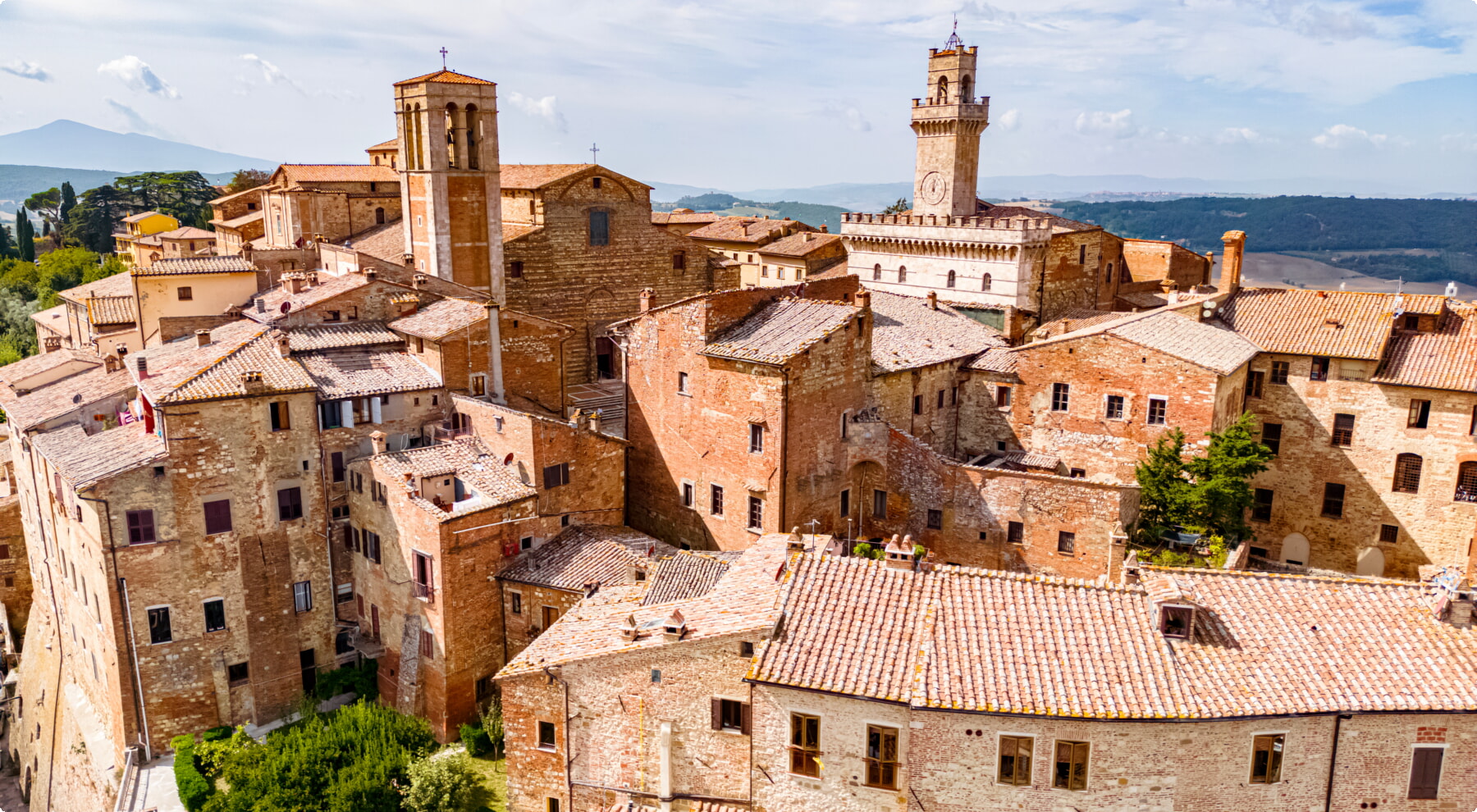
The highway exit into southern Tuscany often feels like a curtain lifting. Fields widen, the horizon becomes layered, and the light starts to behave differently - less harsh than the city, more generous with detail. Montepulciano works as a first stop because it delivers immediate altitude and atmosphere, like stepping onto a balcony and realizing the building is taller than expected.
Navigation is straightforward; the town is well-signposted, and the final approach climbs with a kind of stubborn elegance. Parking outside the old core is typically the calm choice, then the rest is done on foot. For an exact pin to aim at while planning the morning, Montepulciano, Italy is a useful reference point - the last kilometers are where drivers tend to overthink.
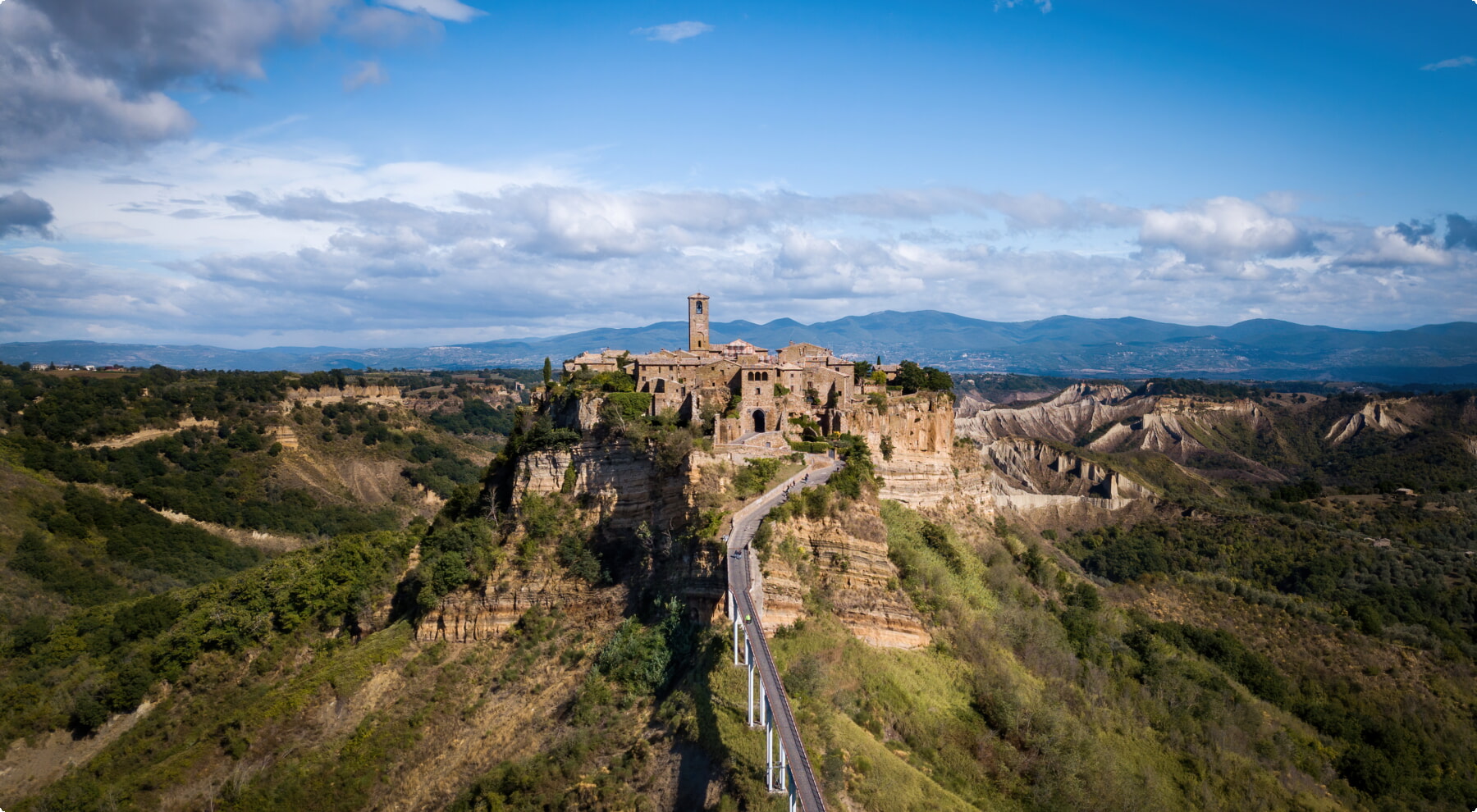
Montepulciano’s streets are a workout disguised as sightseeing. Stone walls lean inward, shops appear like stage sets, and the views arrive suddenly between buildings. There’s usually a moment when the town’s verticality becomes clear: everything is up, and the reward is always “later.” It’s a bit like walking to a favorite bakery in a hilly neighborhood - the pastry tastes better because it was earned.
Vino Nobile is the local headline, but the town doesn’t require a full tasting itinerary to feel authentic. Many cellars are atmospheric enough that even a short visit gives context: thick brick arches, barrels like furniture, a coolness that makes the outside heat feel imaginary. If sampling is part of the plan, it’s best treated as a small note, not a loud chorus; the road ahead is too beautiful to drive with a foggy head.
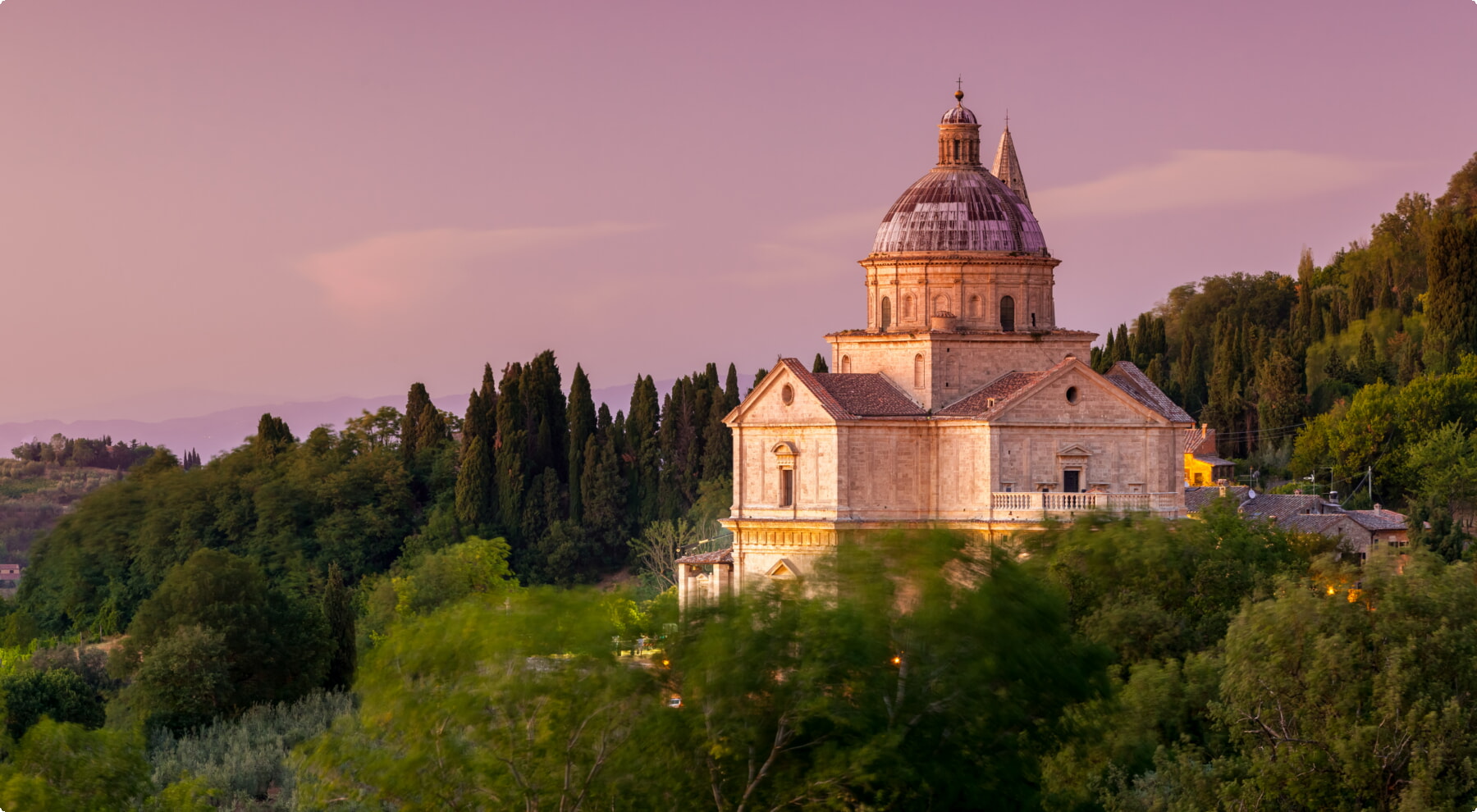
Before leaving, a pause at a viewpoint is worth the minutes. The countryside here doesn’t pose; it just exists with confidence. Lines of vines trace the slopes, olive trees stand with their dusty-green restraint, and distant farmhouses look placed by a patient hand.
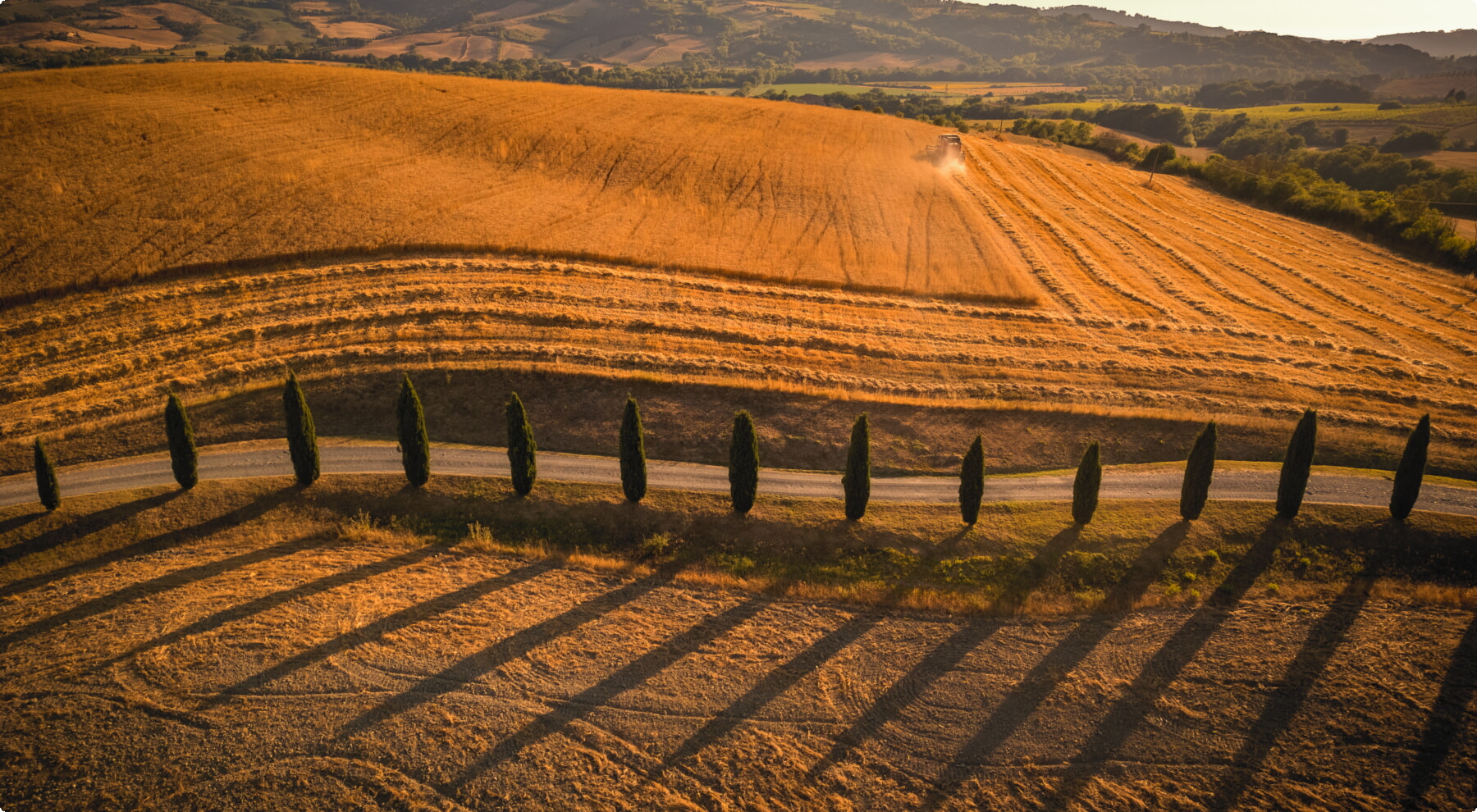
From Montepulciano to the next stop, the drive begins to feel properly Tuscan. The roads narrow, the pace softens, and the landscape starts to “compose itself” through the windshield: wheat fields, cypress rows, then a farmhouse, then a sudden dip into a shallow valley. This is the part of the day where conversations naturally go quiet because the view keeps interrupting.
Pienza and the Val d’Orcia road: the moving postcard
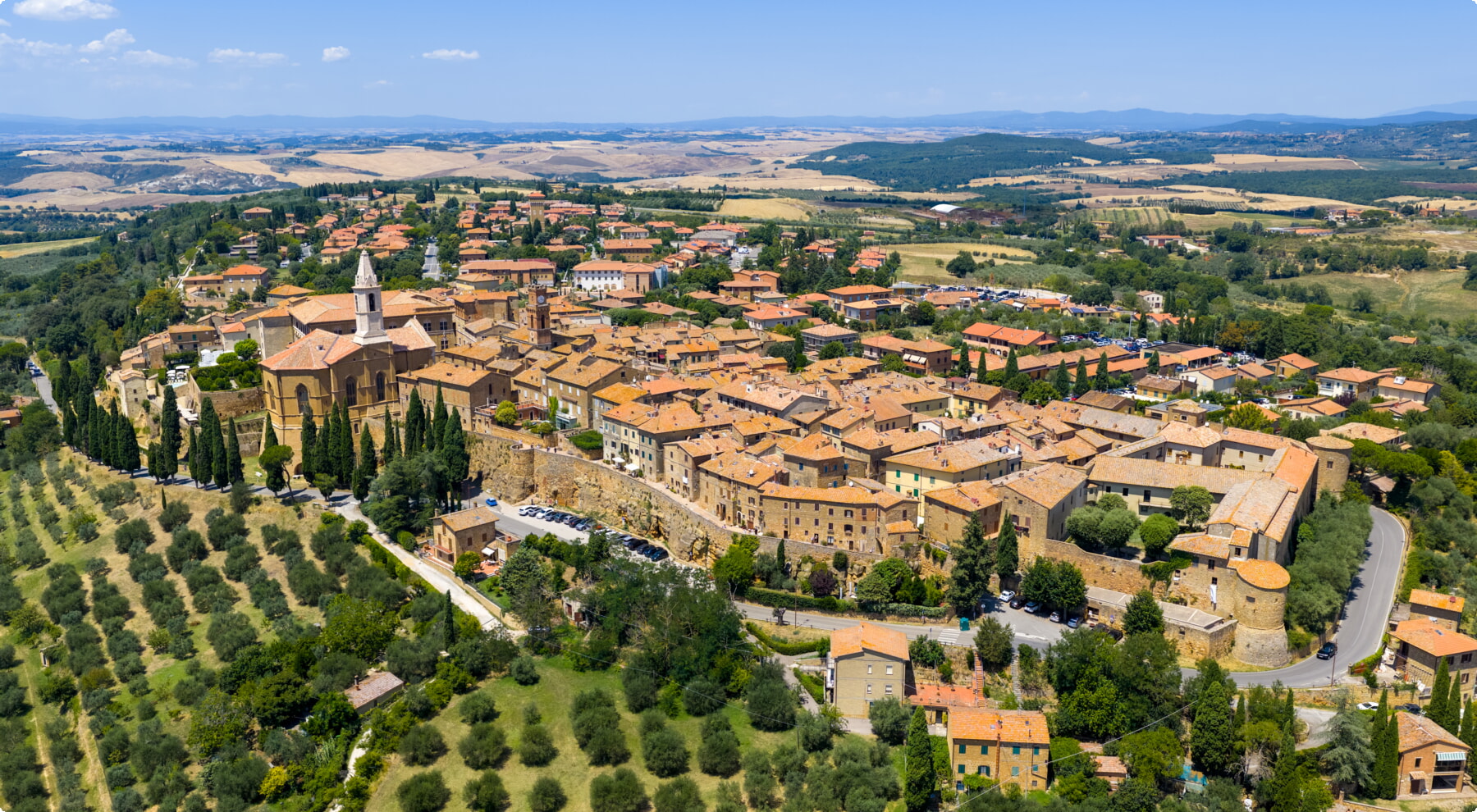
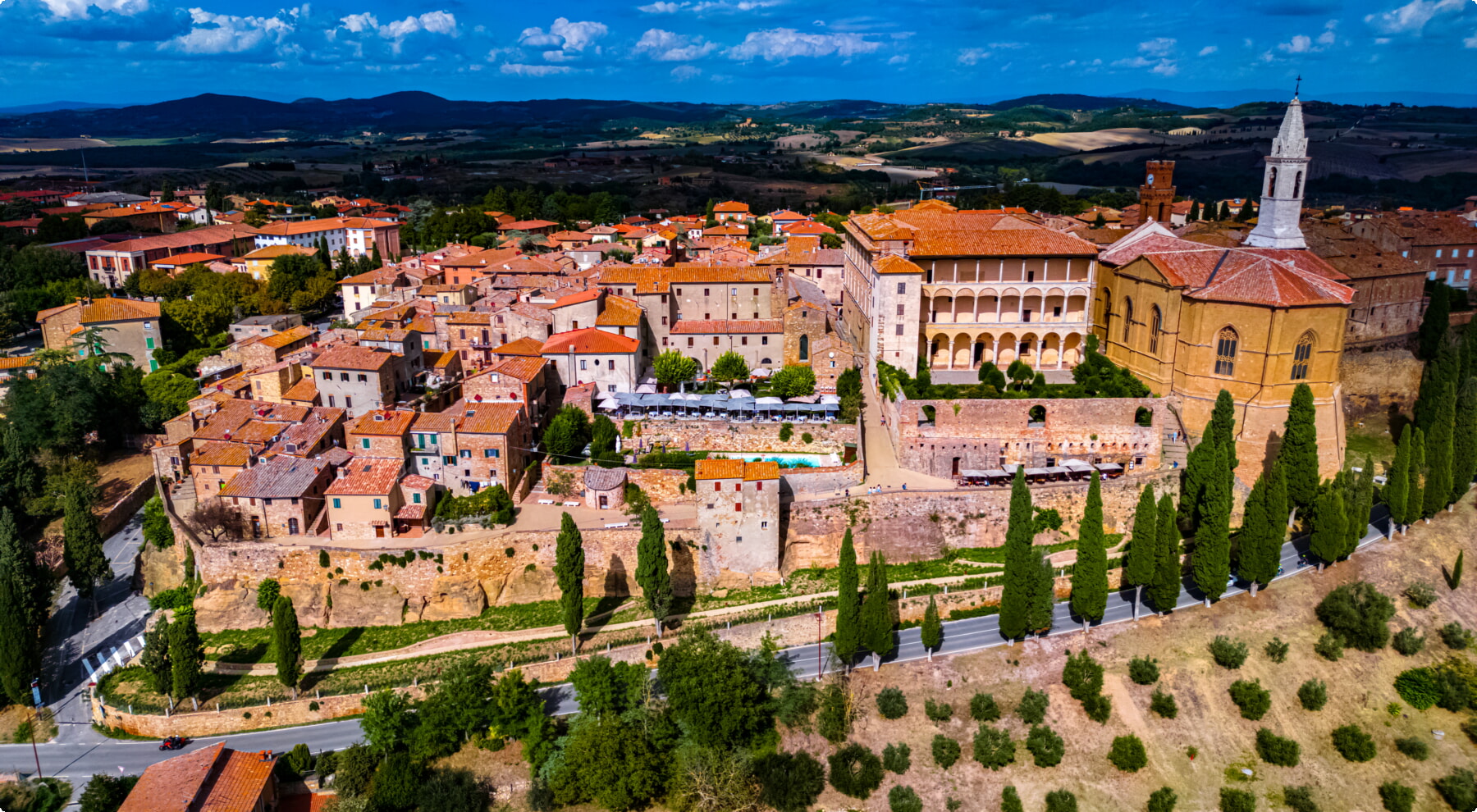
Pienza is often described as pretty, but that word doesn’t quite cover it. The town was shaped by Renaissance ideals - a planned place meant to feel harmonious. The effect today is subtle: the streets seem to agree with each other, corners open into small squares at just the right angle, and even the light feels organized. For a driver on a one-day loop, Pienza also works because it sits in the middle of something larger than itself: the surrounding valley, widely known as Val d'Orcia, where the road is as memorable as any monument.
The approach into town is part of the experience, especially when the hills roll out in a soft sequence, like waves that forgot to break. For a clean navigation marker, Pienza, Italy is the simplest target; once near, the best plan is to park and let the town be small on purpose.
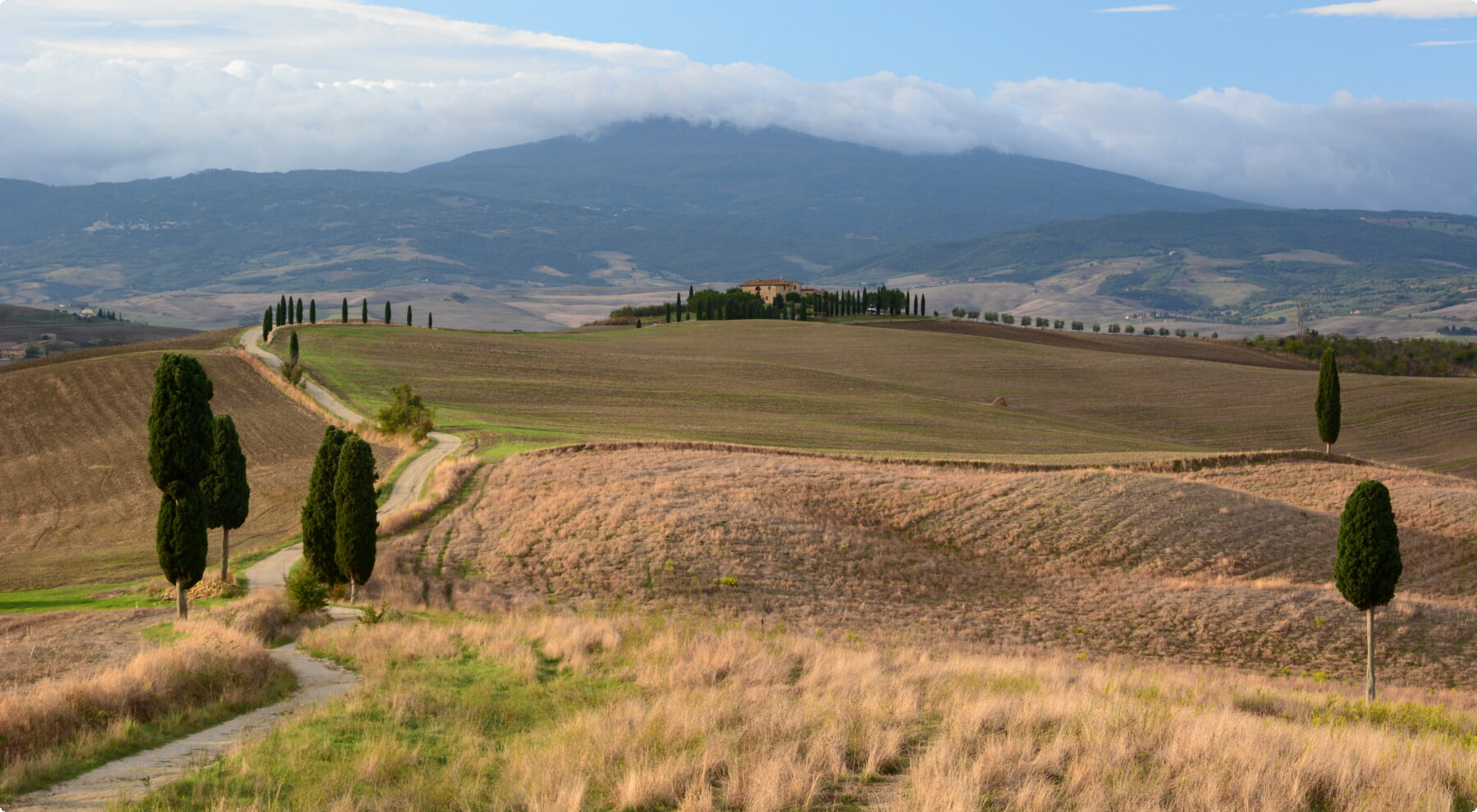
Pienza’s pleasures come in compact form: a cathedral façade that catches the sun, a piazza that feels like a living room, windows framing a valley so wide it looks unreal. Shops sell pecorino in every possible age and mood; the scent sometimes drifts down the street, making the town feel edible. Lunch here doesn’t need ceremony. A sandwich eaten on a low wall, with the valley stretching beyond, can be more satisfying than a table that tries too hard.
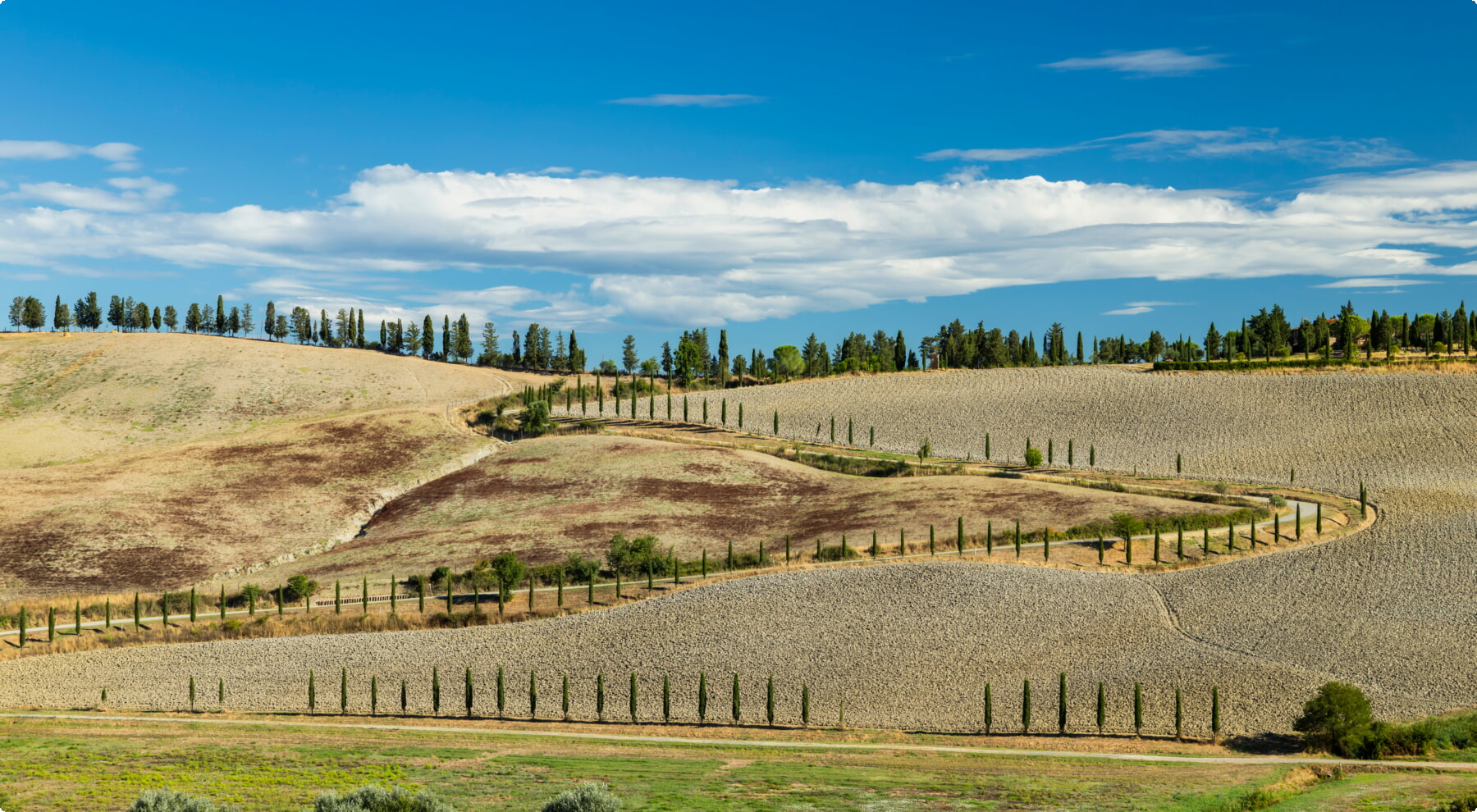
Then comes the drive - the famous stretch where Tuscany performs its best trick: turning geography into cinema. The road between Pienza and the Montalcino area (often via SP146 and connecting lanes) rises and falls with a gentle stubbornness. The hills seem to change color mid-slope, and cypress trees appear in disciplined clusters, then vanish. Every few minutes a new composition arrives, as if someone is quietly rotating a giant postcard rack.
It helps to keep stops intentional. Pull over only where it’s safe and permitted; Italian drivers are accustomed to slow vehicles, but they don’t love surprises. If time is tight the temptation is to keep rolling, yet even a five-minute pause can reset attention and make the next stretch feel fresh.
Val d’Orcia looks slow, but driving and parking can quietly eat minutes. A smooth day comes from treating towns as short chapters and the road as the main narrative, not the gap between highlights.
- Plan one “proper” town walk (Pienza or Siena) and keep the rest as brief, high-impact stops.
- Assume 10-15 minutes to park and walk into any hill town - even when the map says it’s close.
- Use scenic pull-offs sparingly; two good ones feel richer than six rushed ones.
There’s also a small psychological win in this segment: the day stops feeling like a long drive “to Tuscany” and starts feeling like Tuscany itself. Roads become narrower but more expressive, and even the roadside details - stone walls, old gates, a lone umbrella pine - add texture the way a good soundtrack adds depth without demanding attention.
Sant’Antimo and Montalcino: stone, hush, and Brunello air
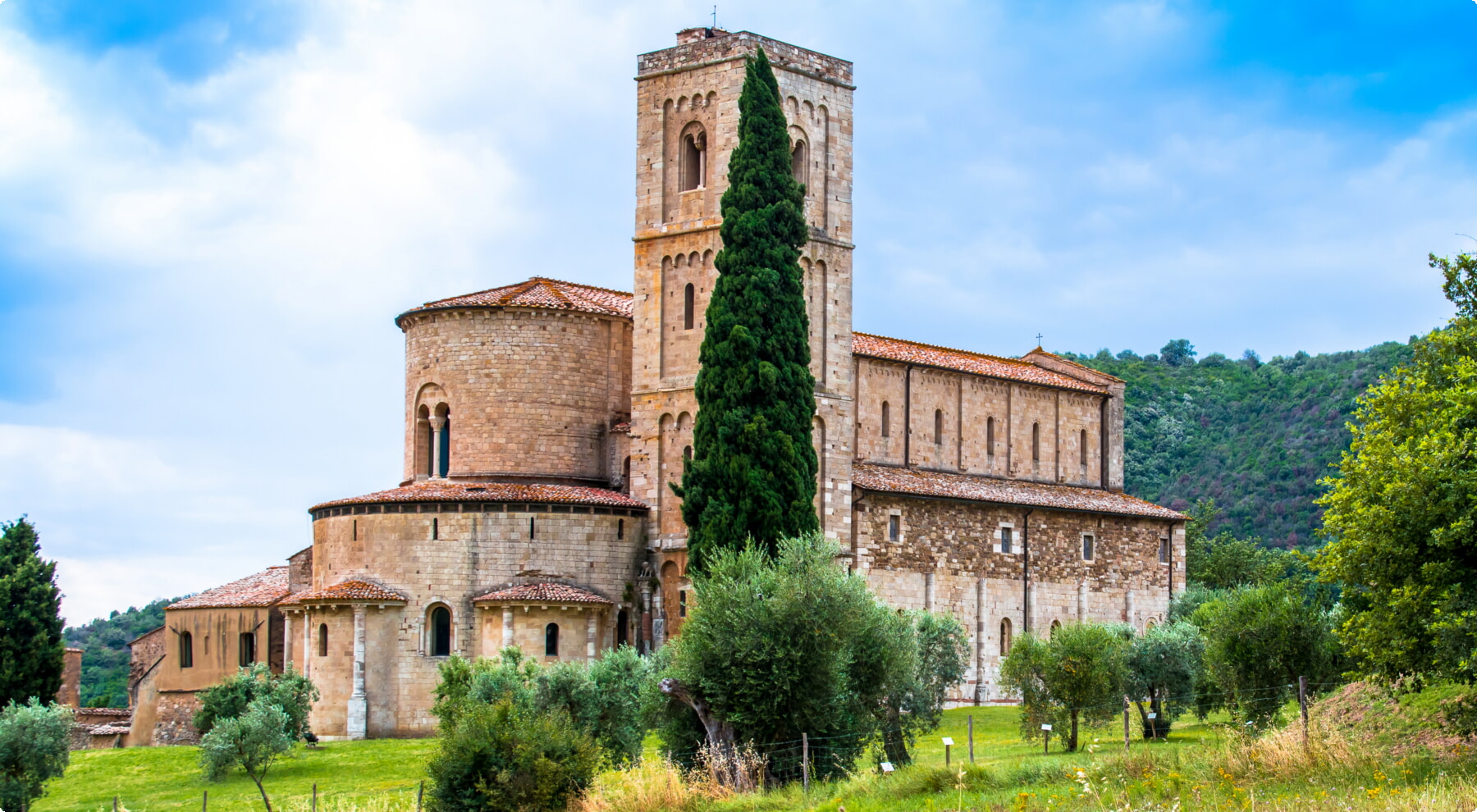
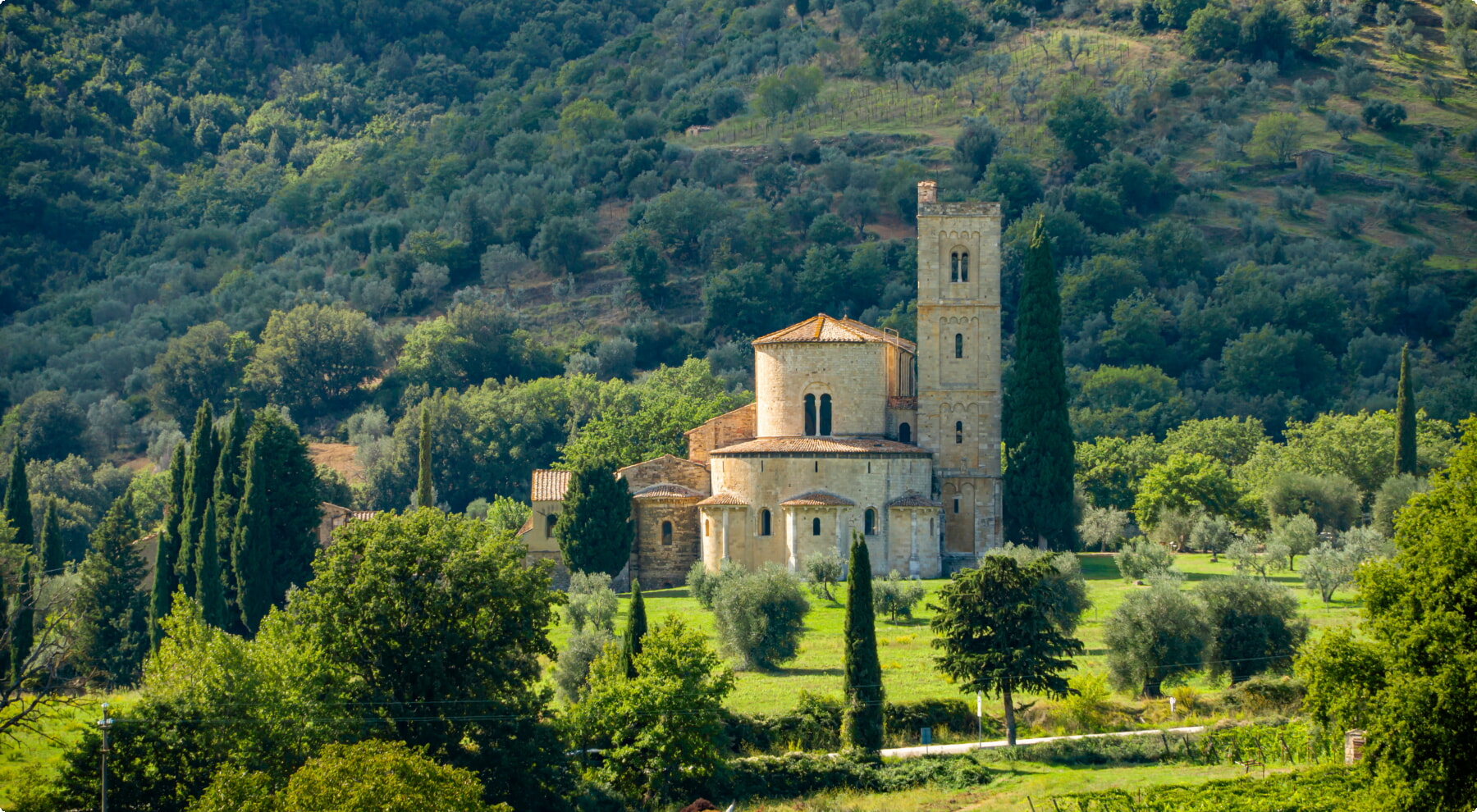
After the openness of the valley, the best next move is a place that changes the volume. The Abbey of Sant’Antimo sits below the hills in a pocket of quiet, surrounded by olive groves and fields that feel slightly removed from time. The descent toward it is part of the mood shift; the air seems cooler, the colors more muted. For drivers, it’s also a satisfying “off the main road” moment without becoming complicated - the map pin Abbazia di Sant'Antimo, Montalcino usually does the job.
The abbey itself is Romanesque and calm in a way that doesn’t ask for background knowledge. Stone columns rise with quiet confidence, and the interior light has that soft, dusted quality that makes people lower their voices automatically. Even a short visit can feel like a reset button, especially in the middle of a day that involves kilometers and decisions.
From here, Montalcino is the natural next step: a hill town with a sterner silhouette, famous for Brunello and for views that stretch far enough to make weather look like a moving object. Streets curl upward, and the fortress presence is felt even when it’s not in sight. The town can be done lightly - a brief walk, a look over the wall, a coffee or a small tasting in a shop that feels more local than luxurious.
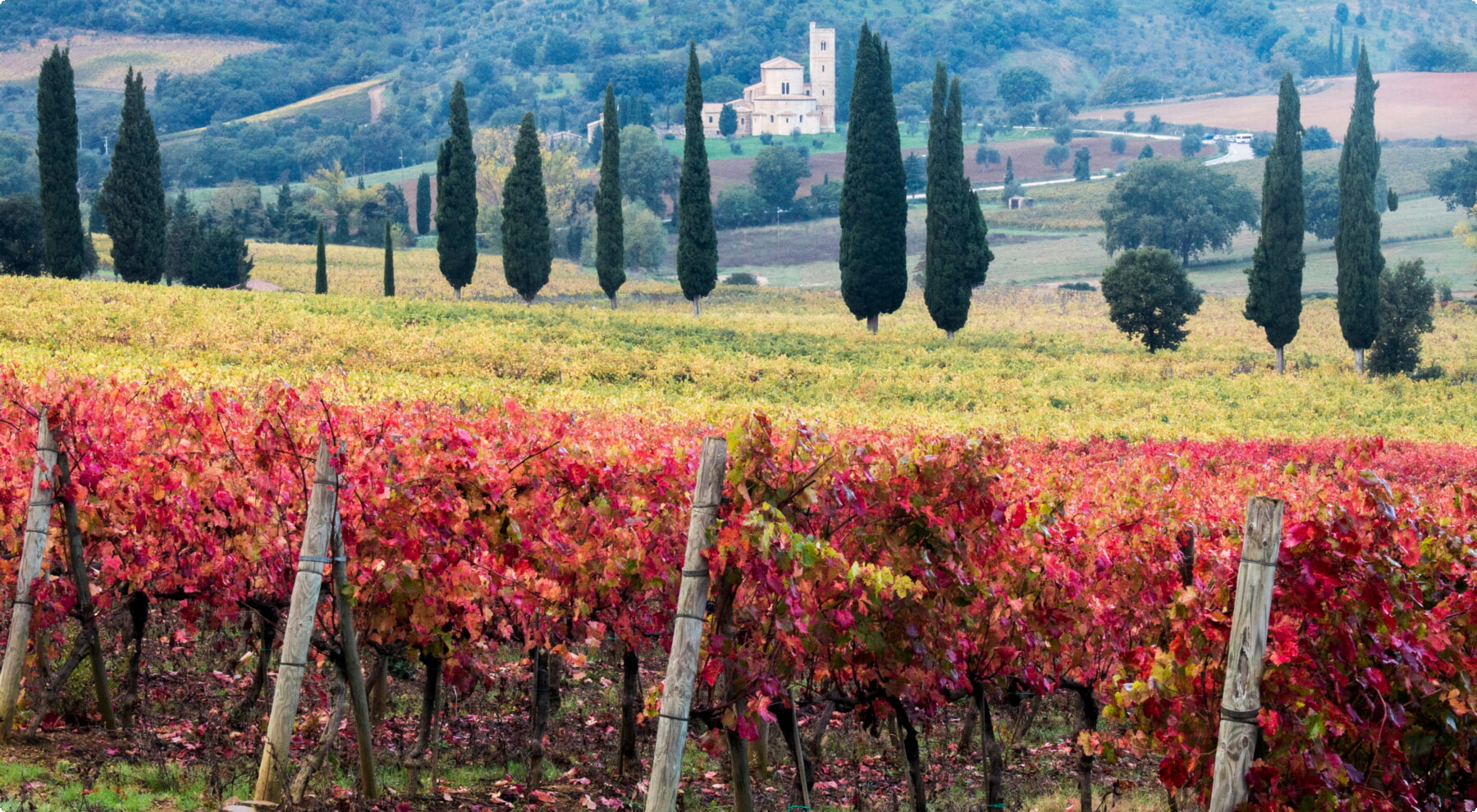
Brunello country can tempt visitors into overcommitting. On a one-day loop, it works better as a scent in the air - noticed, appreciated, but not allowed to take over the steering wheel. A small pour can be memorable when the focus stays on place.
Leaving Montalcino, the route toward Siena shifts again. The landscape becomes more mixed: woodland patches, broader agricultural fields, and occasional stretches where the road straightens just enough to feel fast. It’s a good moment to check the clock without panicking. Siena is the most “city” stop on the loop, and it benefits from arriving before late afternoon turns parking into a competitive sport.
Along this segment, service areas and small bars appear like punctuation. A short stop for espresso feels almost ceremonial in Italy, and it also keeps the driver’s attention crisp. The day is long, but it doesn’t need to feel heavy.
Siena in a tight window: Gothic drama, lived-in streets
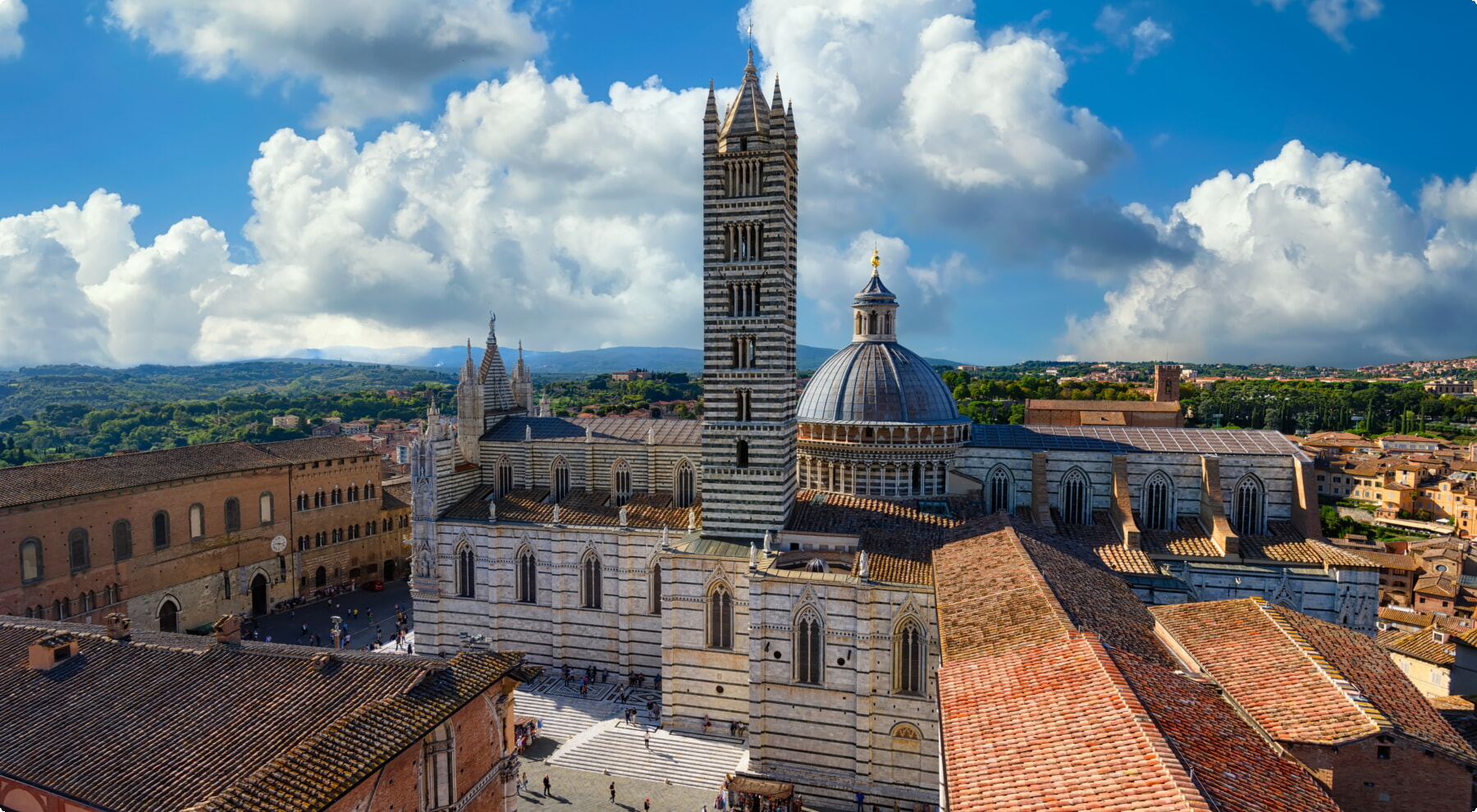
Siena arrives with a different energy - less pastoral, more textured. The streets are still medieval, but the city feels inhabited in a layered, practical way. Laundry hangs, scooters slip through narrow gaps, and the stone has been worn down by centuries of ordinary footsteps. It’s not a museum city; it’s a city that happens to be beautiful.
Driving into Siena requires a little humility. Historic access is restricted in places, and the easiest approach is to aim for parking outside the tightest core, then walk in. That walk is part of the pleasure: streets tilt, the city reveals itself slowly, and then - without much warning - Piazza del Campo opens like a bowl. It’s one of Europe’s great public spaces, not because it’s polished but because it’s used: people sit on the brick slope as if it were a beach, talking or doing nothing at all.
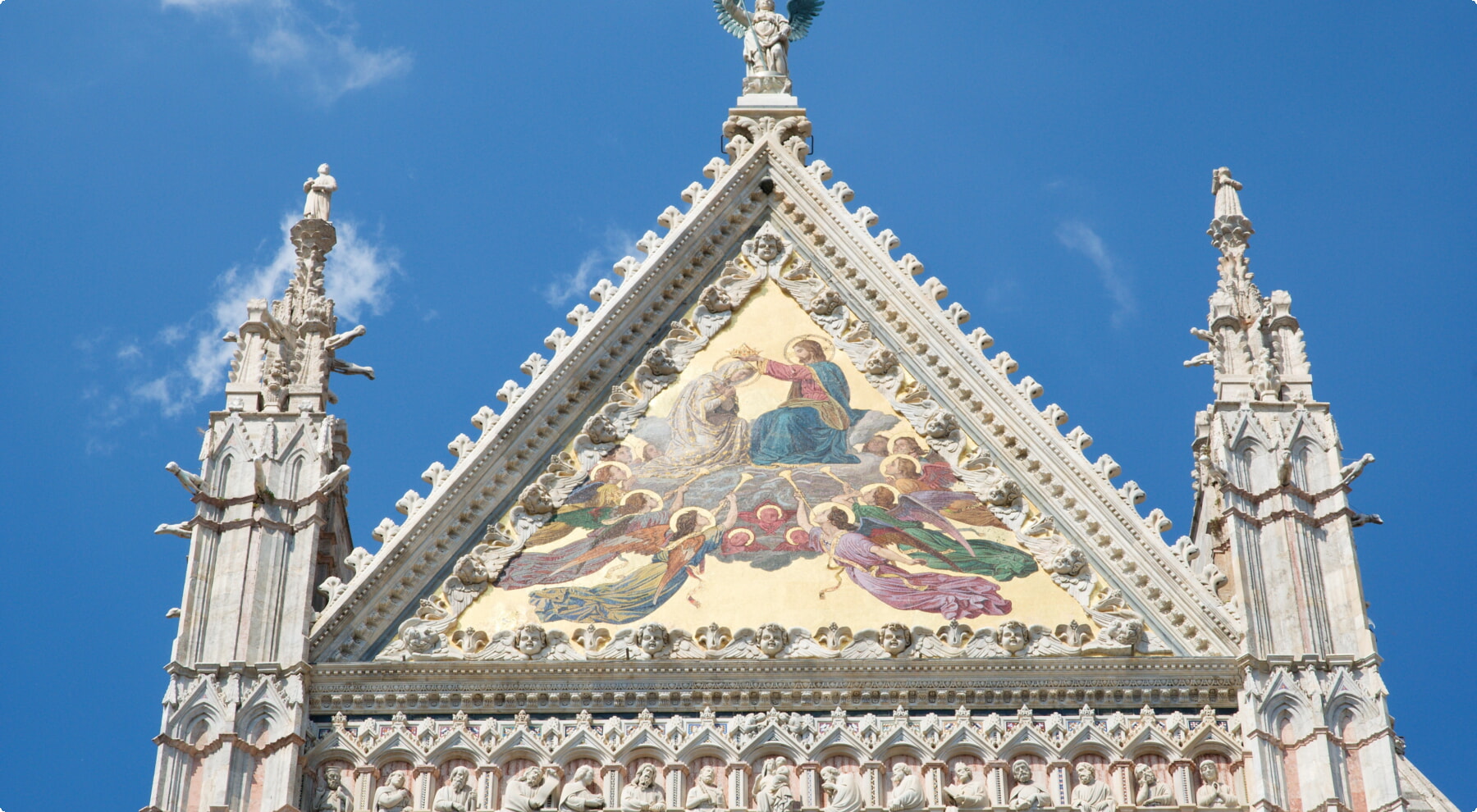
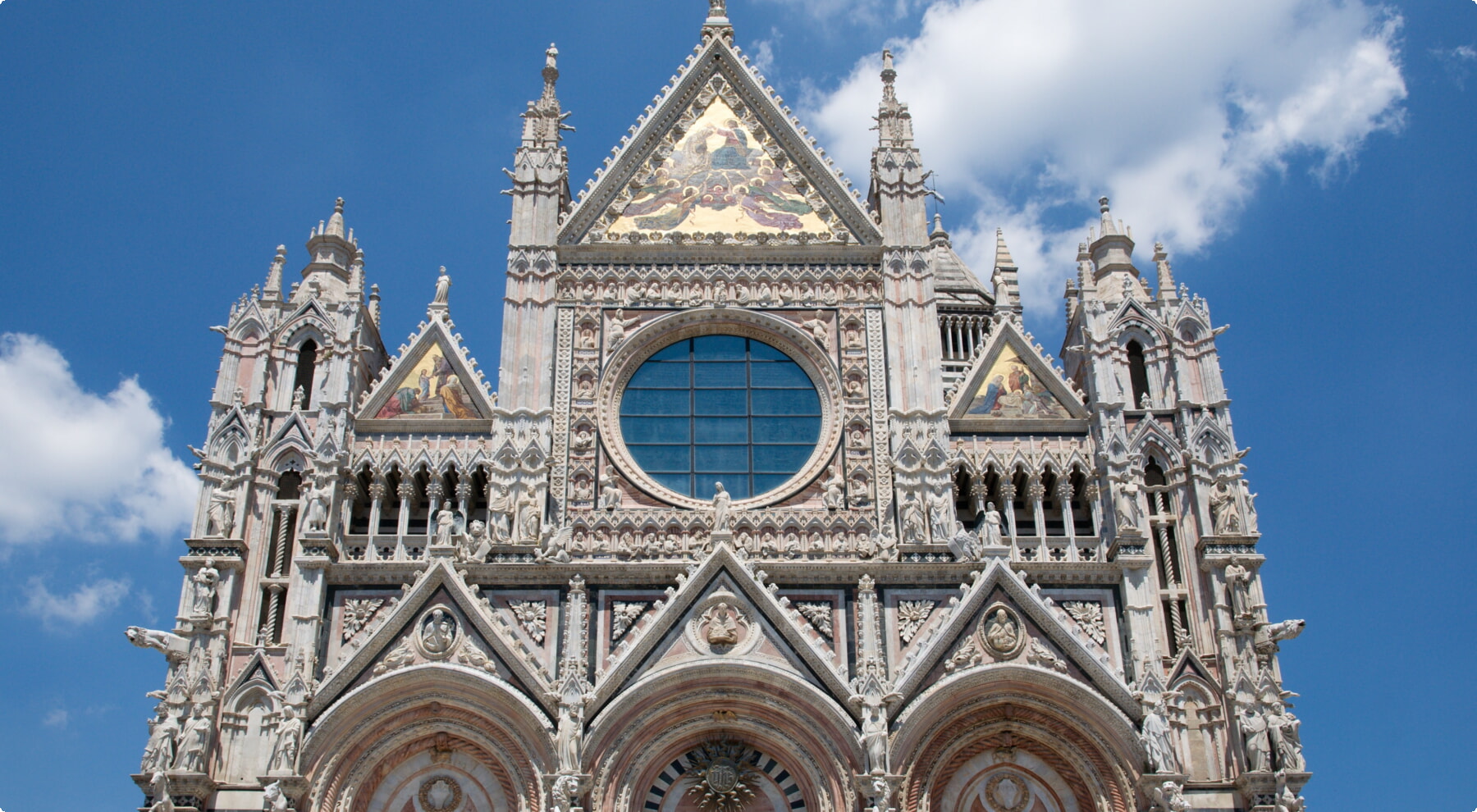
For those who want one “official” cultural anchor, the cathedral complex is the obvious choice. The striped marble façade and the interior’s detail can feel unreal, like a craft project scaled up to monument size. Tickets and current details are best checked on the official Siena Cathedral complex website, especially when time slots or temporary closures come into play.
A 90-minute Siena walk that feels complete
- Piazza del Campo: step into the square, then take a minute to watch how people move across it - it’s choreography without a director.
- Contrada streets: wander a few lanes away from the square; the neighborhood identity is visible in symbols, colors, and tiny shrines.
- Cathedral exterior and nearby viewpoints: even without a full interior visit, the surroundings deliver scale and detail.
- A small pause in a café: not for a “food moment” but to let the city’s pace sink in, before returning to the car.
Siena is also where Tuscany’s famous traditions feel closest to the surface. Contrade flags aren’t tourist décor; they mark belonging. The Palio isn’t just a spectacle; it’s a local obsession with rules and memories. Even on a quiet day, there’s a sense that the city is always preparing for something, or remembering something, or arguing about something in a way that outsiders will never fully decode.
When it’s time to leave, the transition back to countryside is quick. One traffic circle, one suburban stretch, and then the hills return. The body notices it: shoulders drop, the view widens, and the day’s earlier images start replaying in the mind like saved photos.
Return through the hills: choosing the right way back

The return drive is where a one-day Tuscany loop either stays graceful or becomes a grind. The simplest move is often the smartest: rejoin the A1 and let the highway do what it’s built for. Yet there’s also a case for a slower first hour out of Siena, especially if daylight remains. A short scenic segment can act like a final chapter rather than an abrupt ending.
Two approaches usually make sense. One is efficiency: a direct line to the highway, then steady driving south. The other is a measured goodbye: a few smaller roads that deliver sunset light on fields, then the highway when the sky starts to cool. Both can work; the choice depends on traffic, season, and how the day has felt so far.
Small adjustments that keep the last kilometers calm
- Decide the “last stop” early: set one final break (coffee, restroom, stretch), then commit to the remaining drive without renegotiating every 20 minutes.
- Watch for toll rhythm: keep payment method ready; small frictions add up when fatigue appears.
- Leave Siena before it gets too late: not out of fear, but because a smoother return protects the day’s best memories.
There’s a particular feeling when Tuscany fades in the rearview mirror: the hills flatten, the road straightens, and the mind keeps trying to hold onto curves that are no longer there. It’s similar to leaving a cinema in daylight - the plot is still vivid, but the street outside is ordinary again. That contrast is part of why a single day can feel strangely satisfying.
For those returning a car or catching an evening flight, the last segment benefits from being unromantic. Fuel up before the final urban stretch, allow extra time near Rome’s ring roads, and treat the final approach like a different kind of driving altogether. The day has already delivered its best images; the goal now is simply to arrive intact, soon , and with enough energy to remember where the best views actually were.