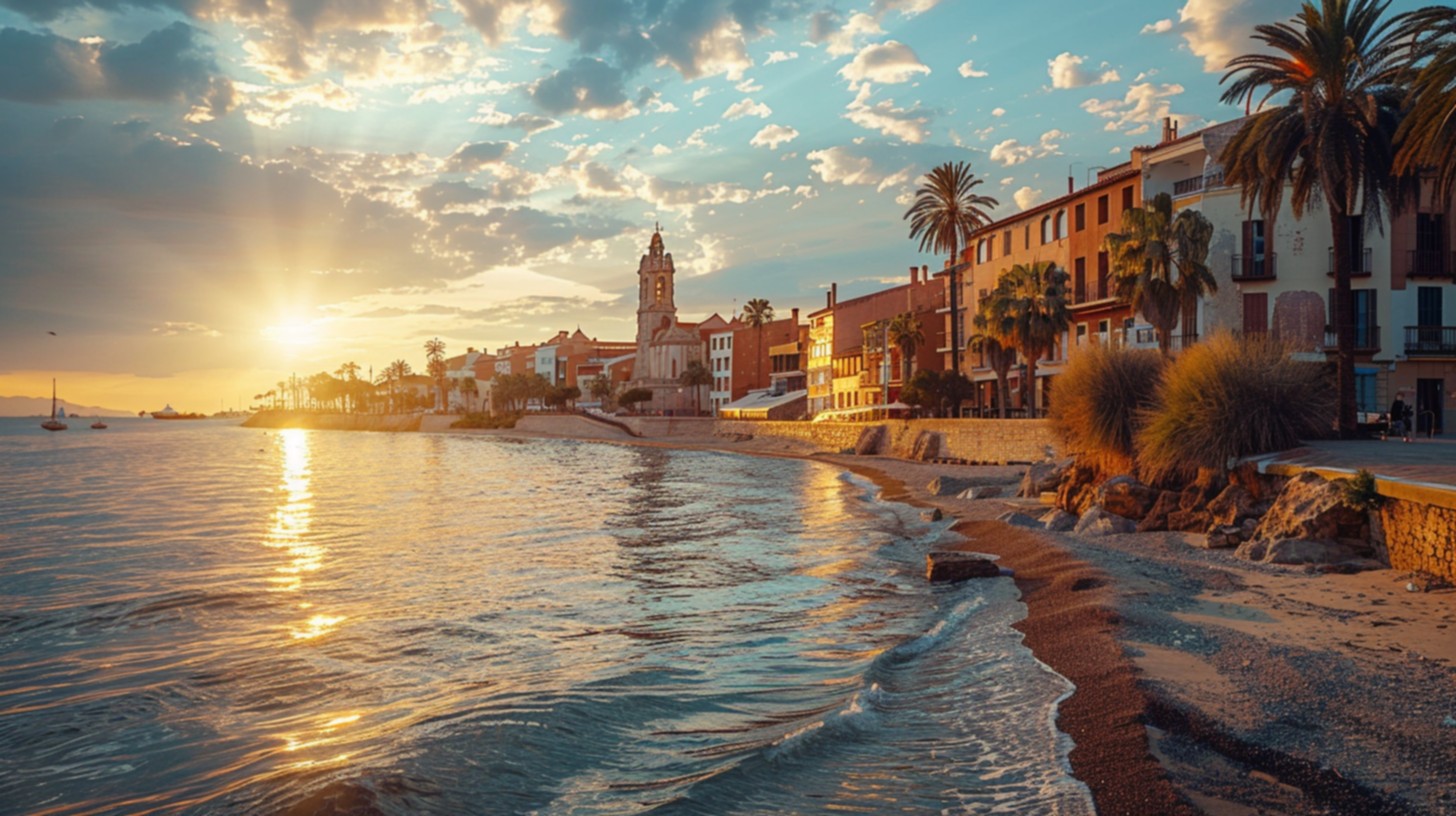
The Albanian Riviera does not perform its beauty in the usual Mediterranean way. It reveals it by layers - through a mountain road that drops suddenly toward open water, through villages half asleep at noon , through beaches that still feel tied to the landscape rather than separated from it. What makes this coast memorable is not only the color of the sea , but the sense that its rhythm has not yet been fully edited for outsiders.
Where the coast gets its character
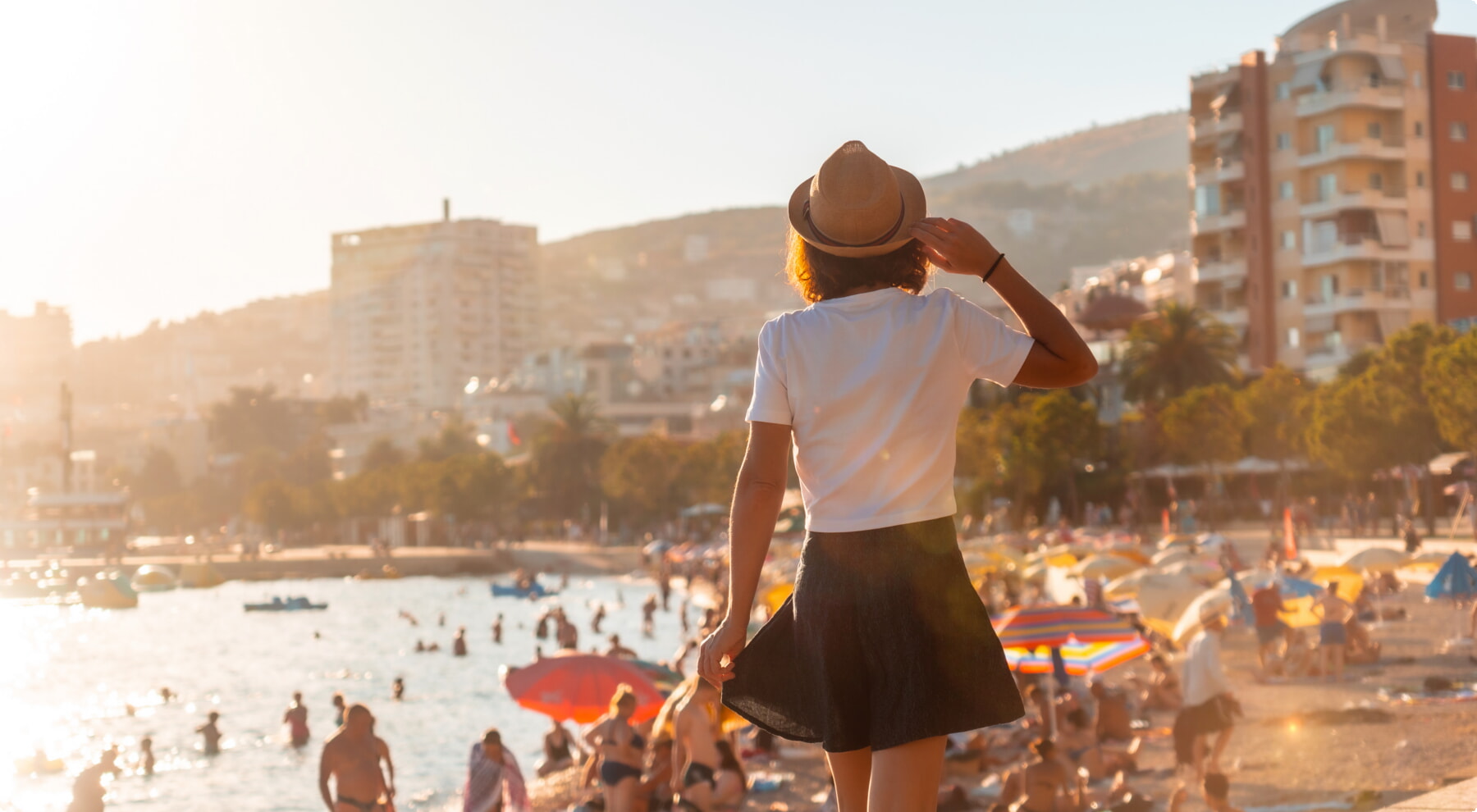
The Albanian Riviera stretches along the Ionian side of southern Albania , but a map alone says very little about its mood. The defining line is not simply shoreline - it is the meeting point between steep mountains and a sea that changes color by the hour. There are places in the Mediterranean where the coast has been smoothed into something predictable , arranged around marinas, promenades, and rows of identical umbrellas. This stretch has resisted that kind of uniformity for longer than most.
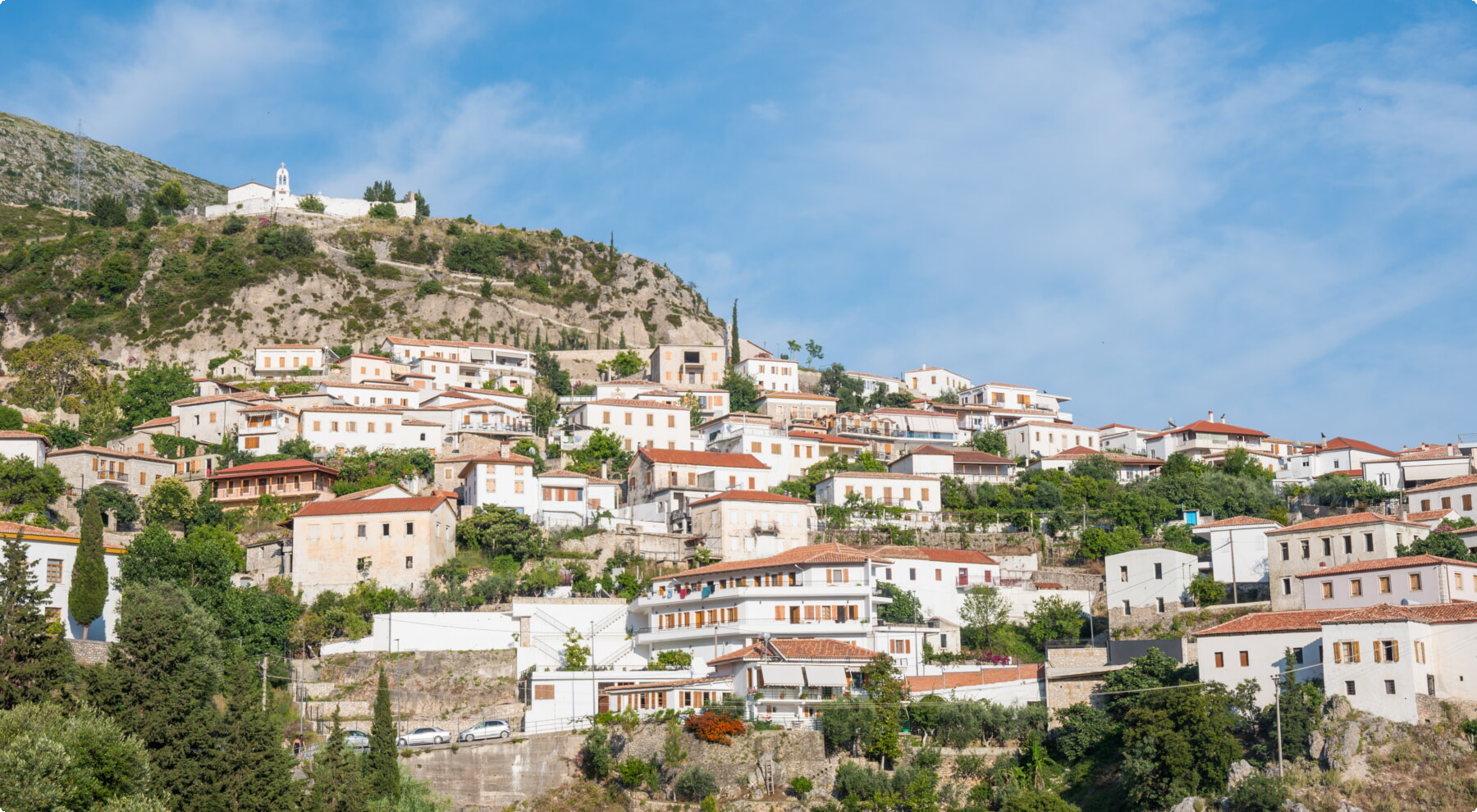
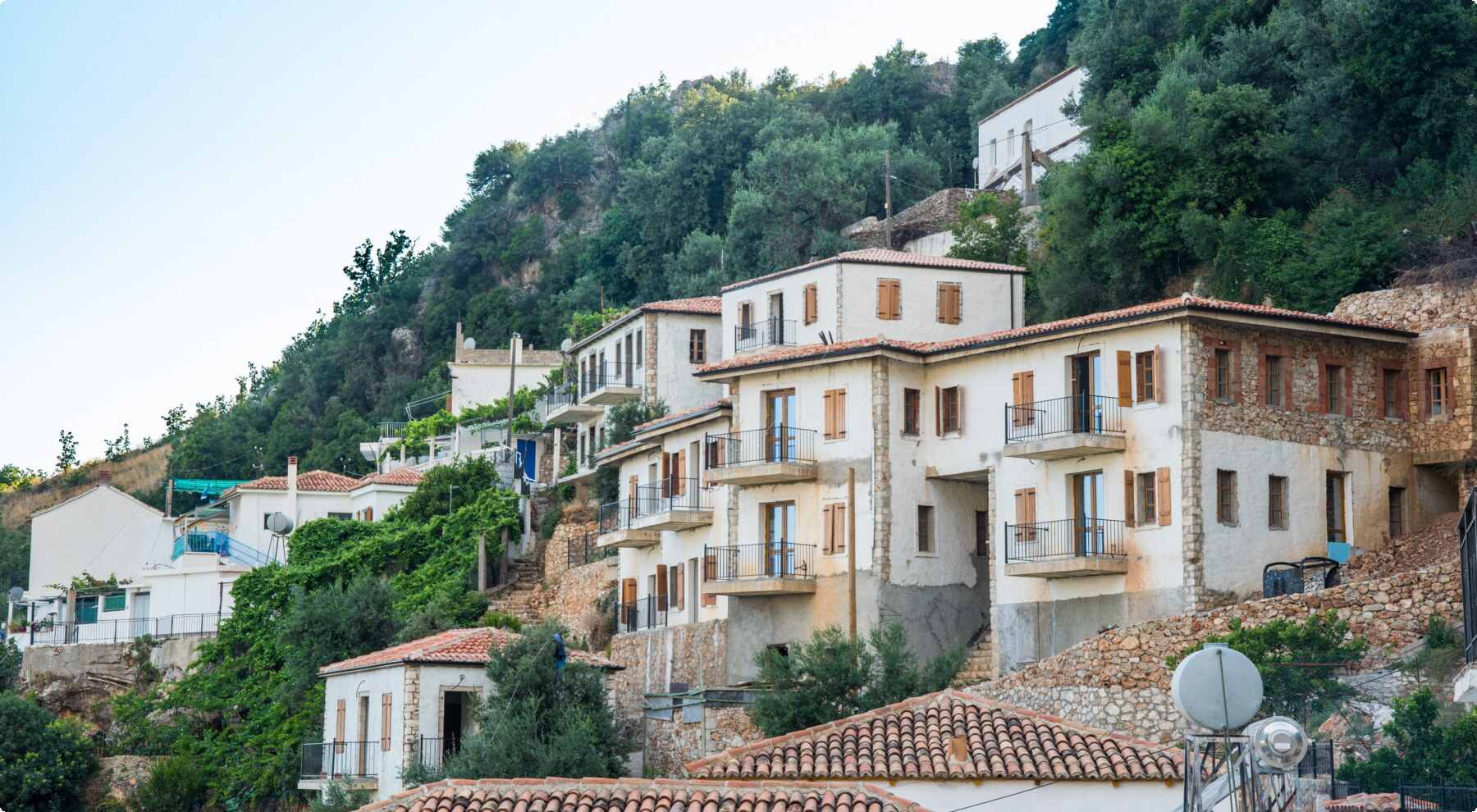
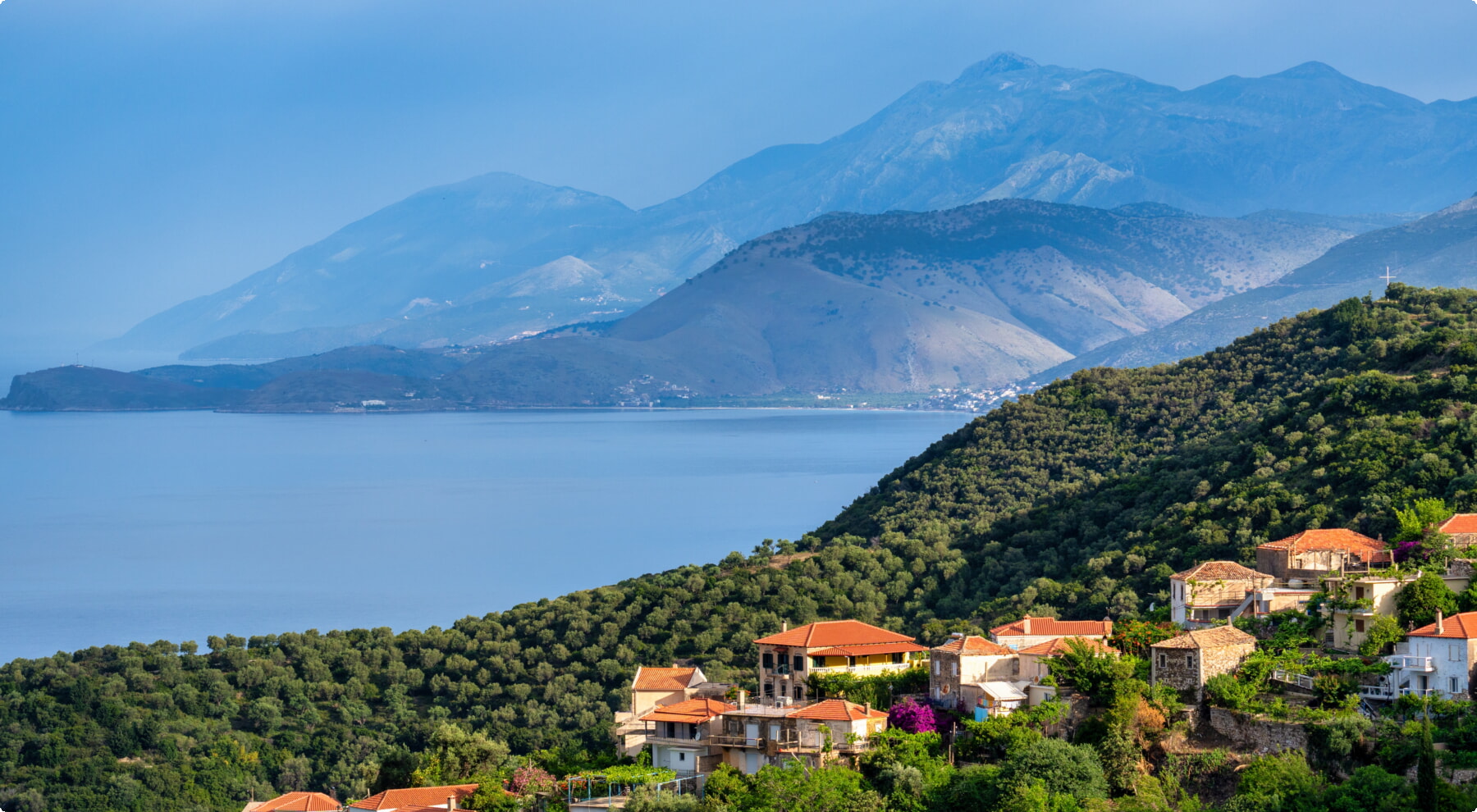
The first impression is vertical. Villages sit above small bays rather than opening lazily onto wide plains. Olive trees cling to slopes where stone walls still divide old plots. Roads turn sharply because the land gives them no other option. Even the beaches feel shaped by pressure and collision - white pebbles, dark rock shelves, sudden pockets of sand, coves revealed only when the road bends or the path drops enough to allow a full view.
The word untouched can be misleading if taken literally . This coast is not empty , and it has never been isolated from history. Greeks, Romans, Byzantines, Venetians, Ottomans, and modern Albanians all left something behind. What remains unusual is that the Riviera still follows its own internal logic. Some villages are lively in the evening and almost silent by morning. Others seem to live on two levels at once - old stone settlements above , newer guesthouses and beach bars below.
That tension gives the place its shape. It is scenic , certainly , but not polished into a background. A traveler notices details that do not belong to a ready-made postcard - goats stepping across roadside gravel , unfinished balconies facing brilliant water , a tiny chapel above a cove , laundry moving in the same wind that drives the sea into pale turquoise bands. The beauty here is less curated , more accidental. That is exactly why it lingers.
The road is part of the landscape
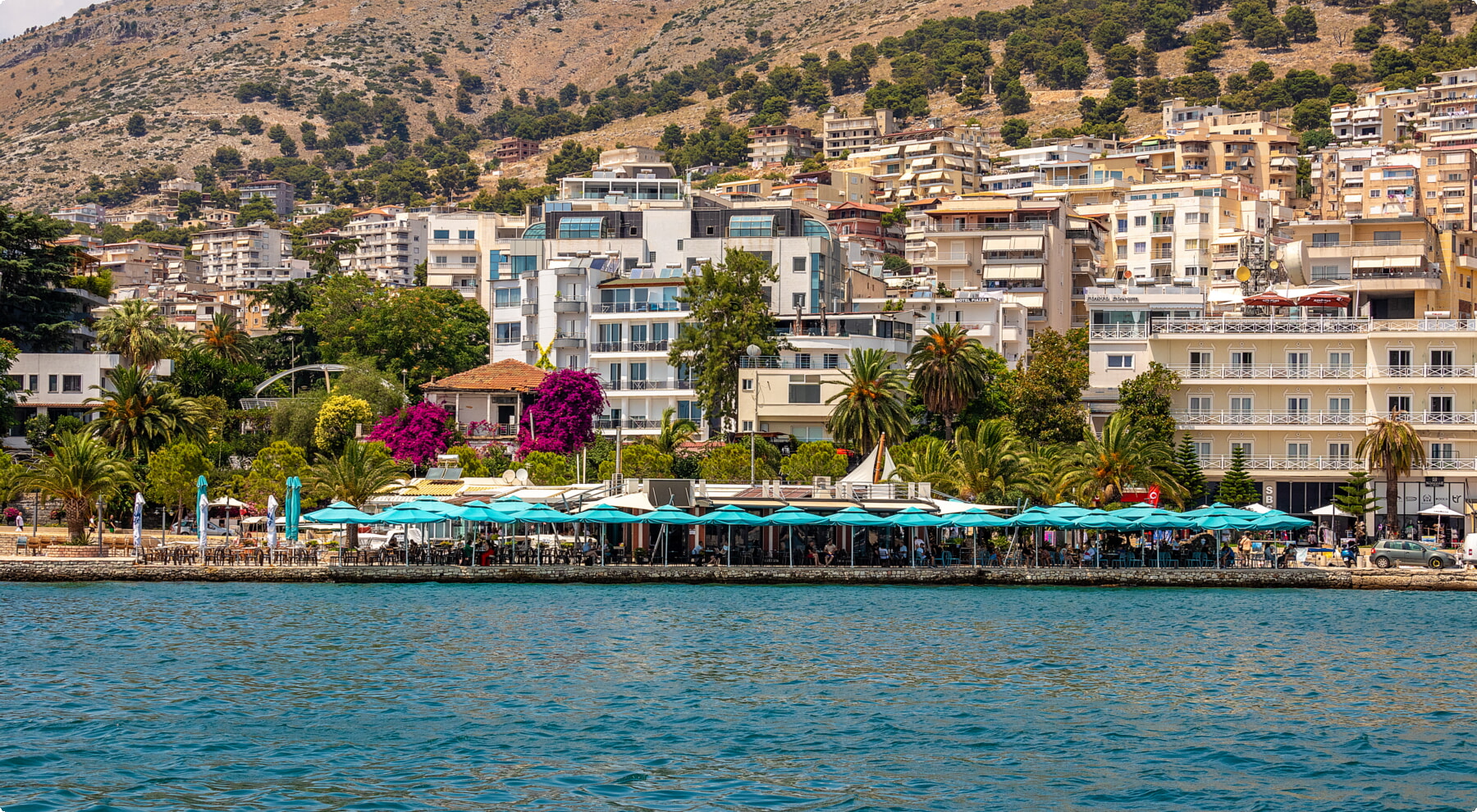
On the Albanian Riviera , movement matters almost as much as arrival. The coast is best understood by road because the villages do not unfold in a straight urban chain. They appear in intervals , each with a slightly different relation to the sea. For many itineraries , the practical starting point is car rental at Tirana Airport , followed by a southbound drive that slowly exchanges inland plains for mountain passes and the first hard flash of Ionian blue.
There is another route that changes the mood of the approach. Travelers already moving through Greece often choose car hire in Athens and enter Albania from the south , creating an itinerary that lets the Riviera appear almost in reverse - not as a reveal from the north , but as a sequence of climbing roads, border crossings, lagoons, and coastal villages that grow wilder before they grow popular again.
The most memorable entrance is often over the Llogara Pass . It is the kind of road that alters the scale of everything. Pines and mountain air dominate at first , then the horizon opens and the sea arrives all at once , far below and strangely luminous. From there , the coastal road does not invite speed. Distances can look modest on a screen and still take time because the Riviera is built on curves , gradients , viewpoints , and the constant temptation to stop.
This is one reason the region keeps a different tempo from more standardized resorts. A day here is not easily reduced to one destination. It often becomes a line of short transitions - coffee in one village, a swim in another, a late lunch above a bay, then a drive at golden hour when the mountain side glows bronze and the sea turns almost metallic. The road is not only infrastructure . It is part of the experience itself.
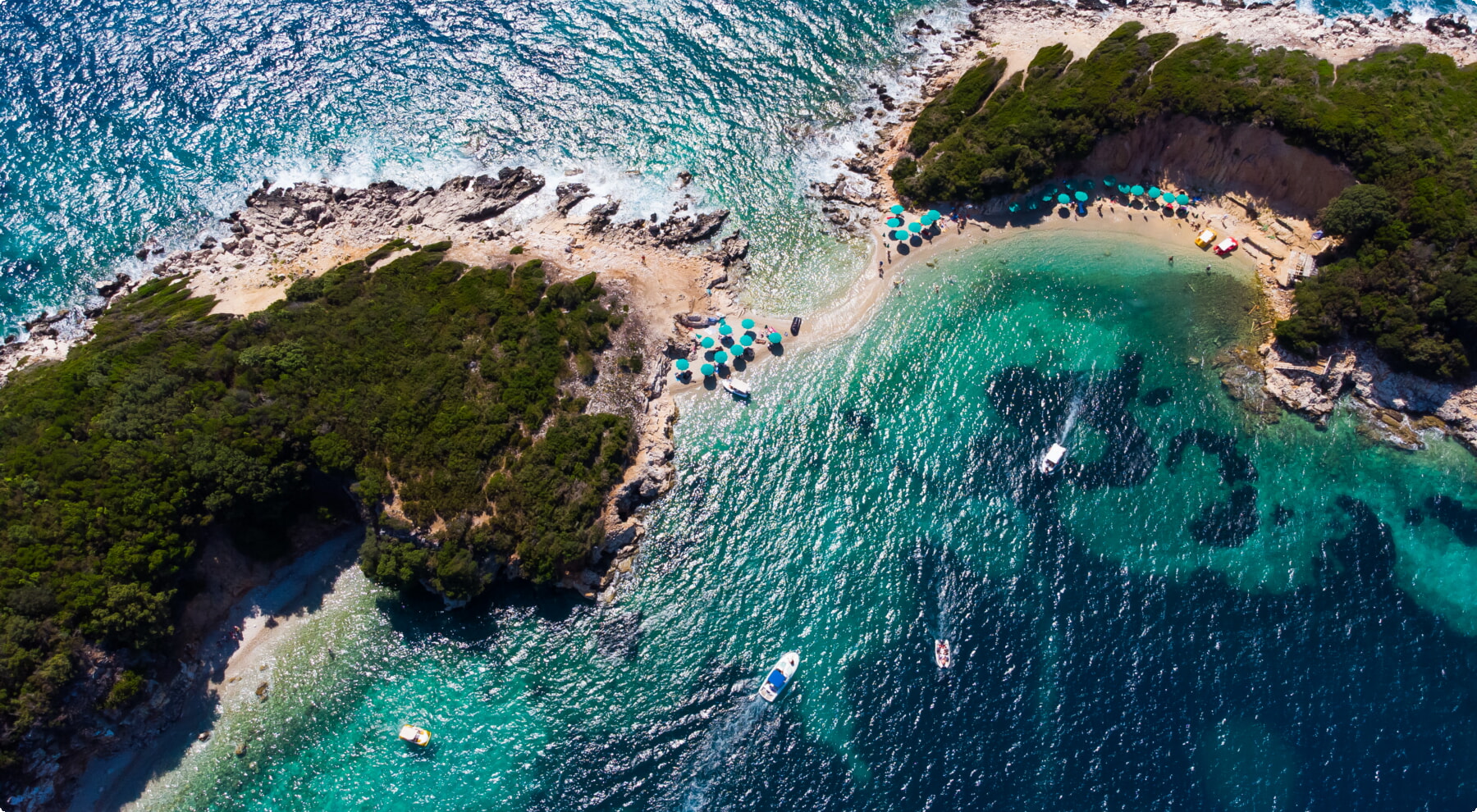
Summer traffic can thicken near the most famous beaches, yet even then the sensation is rarely urban. The road threads through orchards , cliffs , terraces, and stretches of bare stone. In shoulder season , it feels even more revealing , because the coast can be read clearly without the full noise of July and August. Closed shutters and half-empty terraces do not diminish it. They expose how much of the Riviera belongs to landscape first , business second.
The coast rewards a measured route rather than constant relocation. Roads are scenic , but they are not fast , and the most satisfying days usually leave room for unplanned stops above a bay or in an upper village. A little logistical discipline keeps the landscape from turning into a blur of check-ins.
- Fill the tank in larger towns before taking long coastal stretches - smaller stations are less predictable than the map suggests.
- Let the first drive over Llogara happen in daylight if possible ; the road is safer to read , and the view deserves more than headlights.
- Use one or two sleeping bases instead of changing towns every night ; on this coast , short distances can still consume the best part of an afternoon.
Villages , beaches , and sudden empty corners
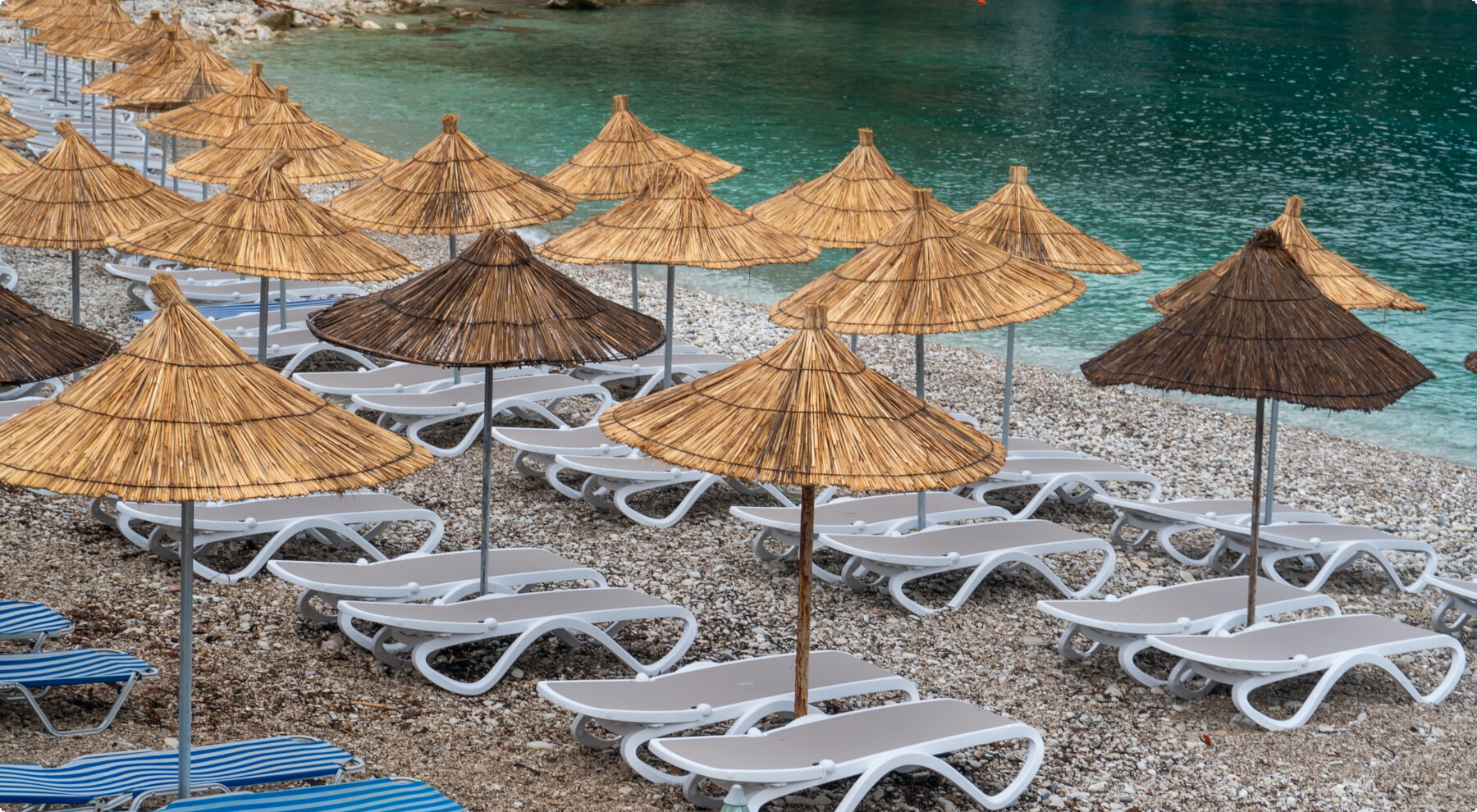
No single beach can stand in for the whole Riviera because the coastline keeps changing its face. One stretch offers broad pebbled crescents with lively summer terraces. The next narrows into a rocky inlet where the water looks almost unreal against pale stone. Then come villages that seem suspended between mountain and sea , with old houses above and a separate beachfront life below. The pleasure lies in this variety , and in the fact that the differences are felt over short distances.
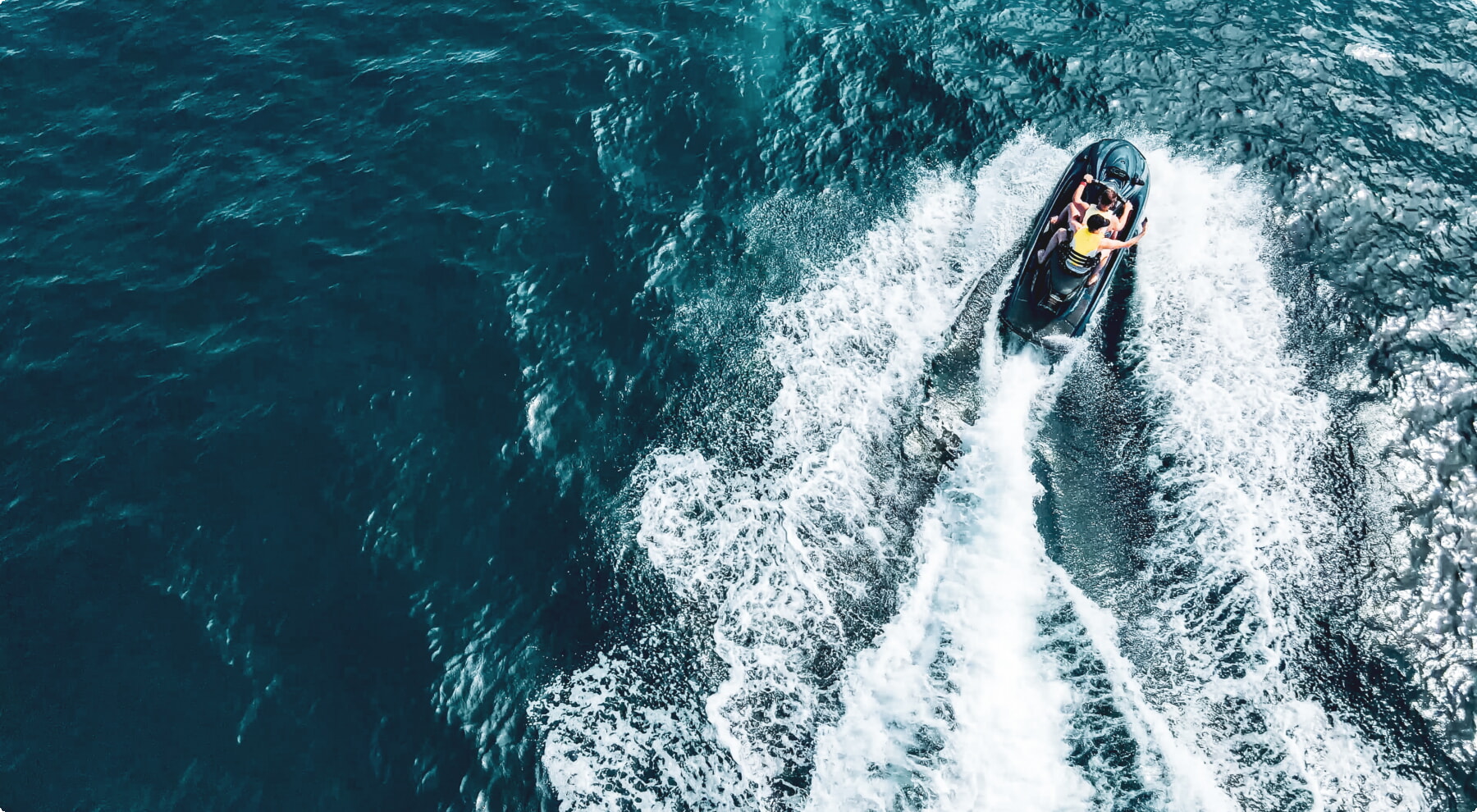
A few places illustrate the range particularly well :
- Palase has an exposed, open quality , with a sense of threshold - the coast beginning to announce itself after the pass.
- Dhermi combines a fashionable summer edge with an older village above , where white houses and narrow lanes remind the coast of its depth.
- Drymades feels broader and looser , the kind of beach where the landscape still dominates the built line behind it.
- Himare has more everyday life than a pure resort town - a promenade, a harbor rhythm, shops, apartments, old quarter hillsides.
- Qeparo offers one of the clearest contrasts between shore and upland settlement , with the old stone village watching from above.
- Borsh stretches long and spacious , impressive not because it is ornate but because it seems to continue without hurry.
- Lukove and the smaller coves nearby preserve a quieter tone , especially outside peak season.
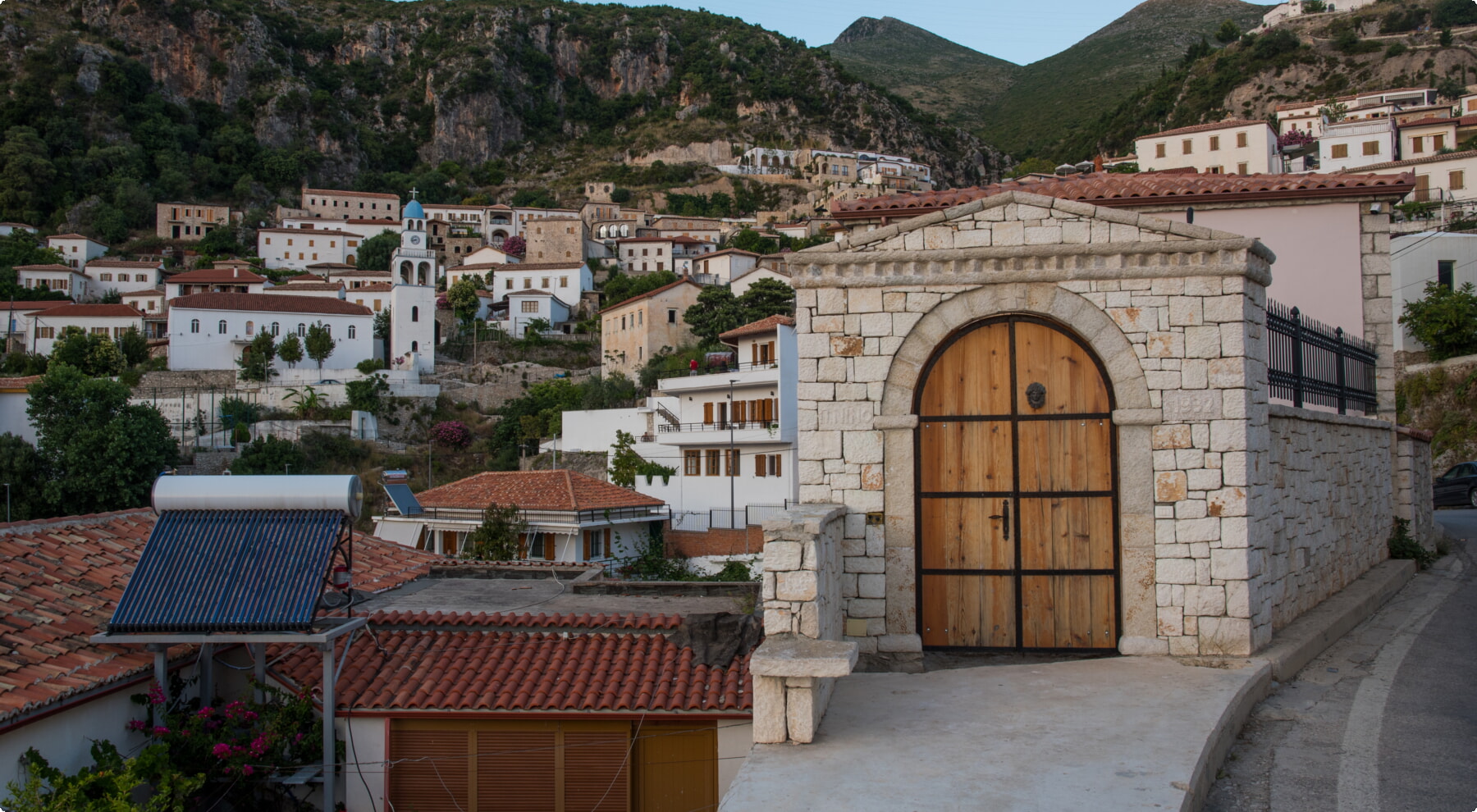
What binds these places together is not sameness but the repeated sensation of discovery. The sea can appear bright blue from one angle and almost green from another. In the morning , the bays often look still and transparent , every stone visible through the water. By late afternoon , wind can roughen the surface and turn the light silver. These shifts matter because the Riviera is not only scenic in the static sense . It is atmospheric.
There are also detours that deepen the coastal experience rather than distract from it. Inland , the spring known as Blue Eye introduces a different kind of water altogether - shadowed, intensely cold, and so clear that depth becomes visually confusing. It works as a useful counterpoint to the shoreline , a reminder that this region is fed by geology as much as by tourism.
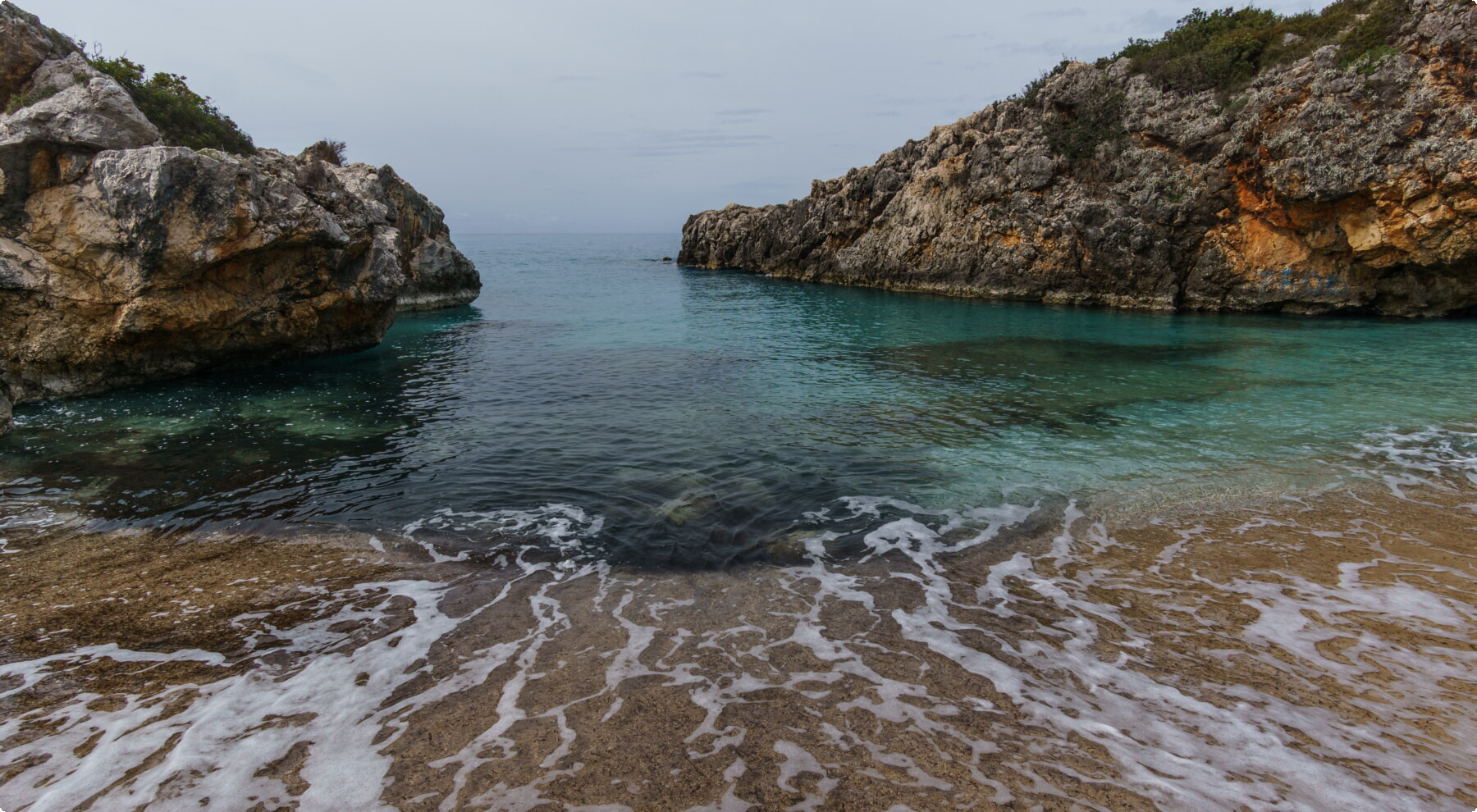
Some beaches have grown more organized in recent years , and in high season there are stretches where sunbeds and music push close to the water. Yet the Riviera still allows room for fragments of something less managed. A narrow stairway leads to an almost hidden cove. A rough track ends at a beach where the soundscape is mostly waves and cicadas. Above the shoreline , abandoned terraces and old olive groves reveal how recently much of this coast lived by agricultural time rather than by holiday demand.

That mix - animated spots beside nearly silent corners - keeps the region from flattening into a single mood. The Riviera can be social without losing its rough edges. It can also turn solitary very quickly , especially in the late afternoon when day visitors drift away and the hills begin to cast long shadows over the smaller bays. In those hours , the coast feels closest to its reputation : not untouched by presence , but still untouched by complete sameness.
History sitting close to the sea
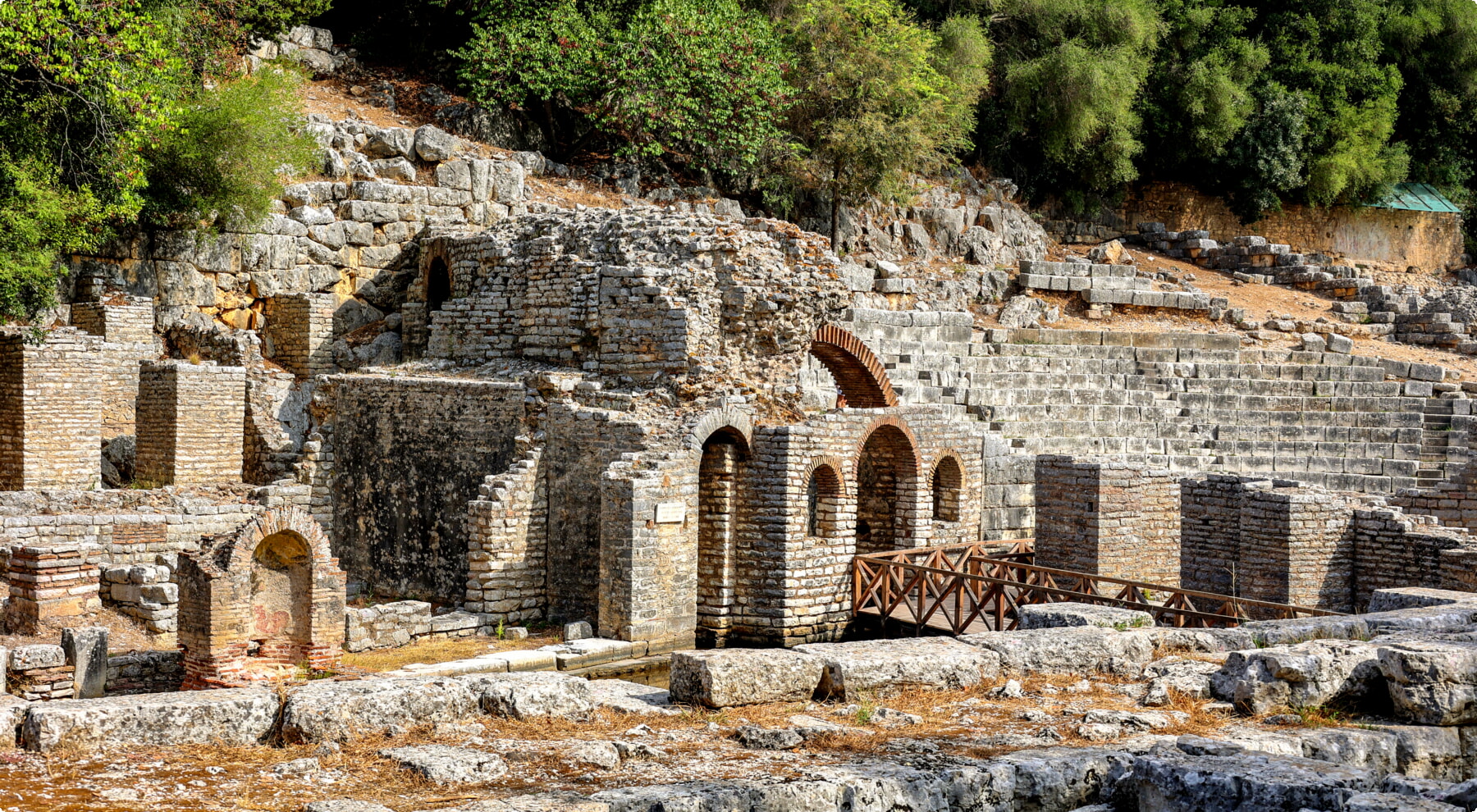
The Albanian Riviera is often discussed for its beaches first , but the coastline gains far more weight when read historically. Ancient routes moved through these waters. Fortified points watched over small harbors. Faith, trade, and military strategy all found reasons to occupy the same dramatic headlands that now attract swimmers and summer drivers. The result is a coast where stone rarely feels decorative. It usually has a story behind it.
South of the main beach belt , lagoons and wetlands lead toward one of the most significant cultural sites in the country - Butrint National Park. The place is powerful not only because of its age , but because of its setting. Ruins rise among trees and water, and the archaeological layers never seem entirely separated from the surrounding landscape. Greek foundations, Roman additions, later fortifications and religious traces all coexist in a setting where birds, reeds, and changing light remain equally present.
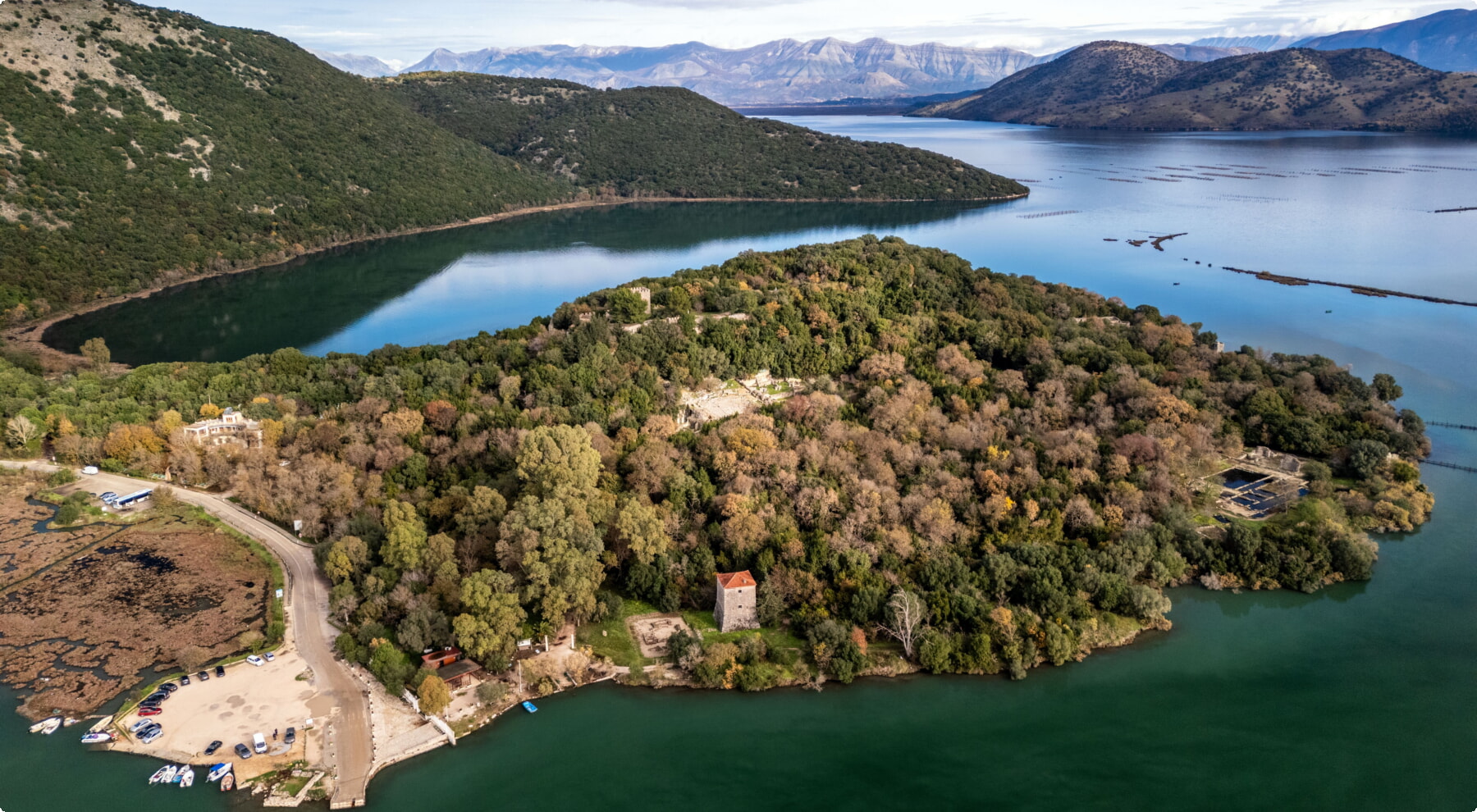
Elsewhere , the past appears in more compact forms. Porto Palermo carries the stern geometry of a coastal fortress. Old Qeparo holds onto a stone architecture that speaks of migration, decline, and stubborn continuity all at once. Small Orthodox churches survive in villages where modern summer businesses now occupy the lower road. Even the bunkers from Albania's communist years add another note - awkward, concrete reminders that isolation was once state policy rather than a travel fantasy.
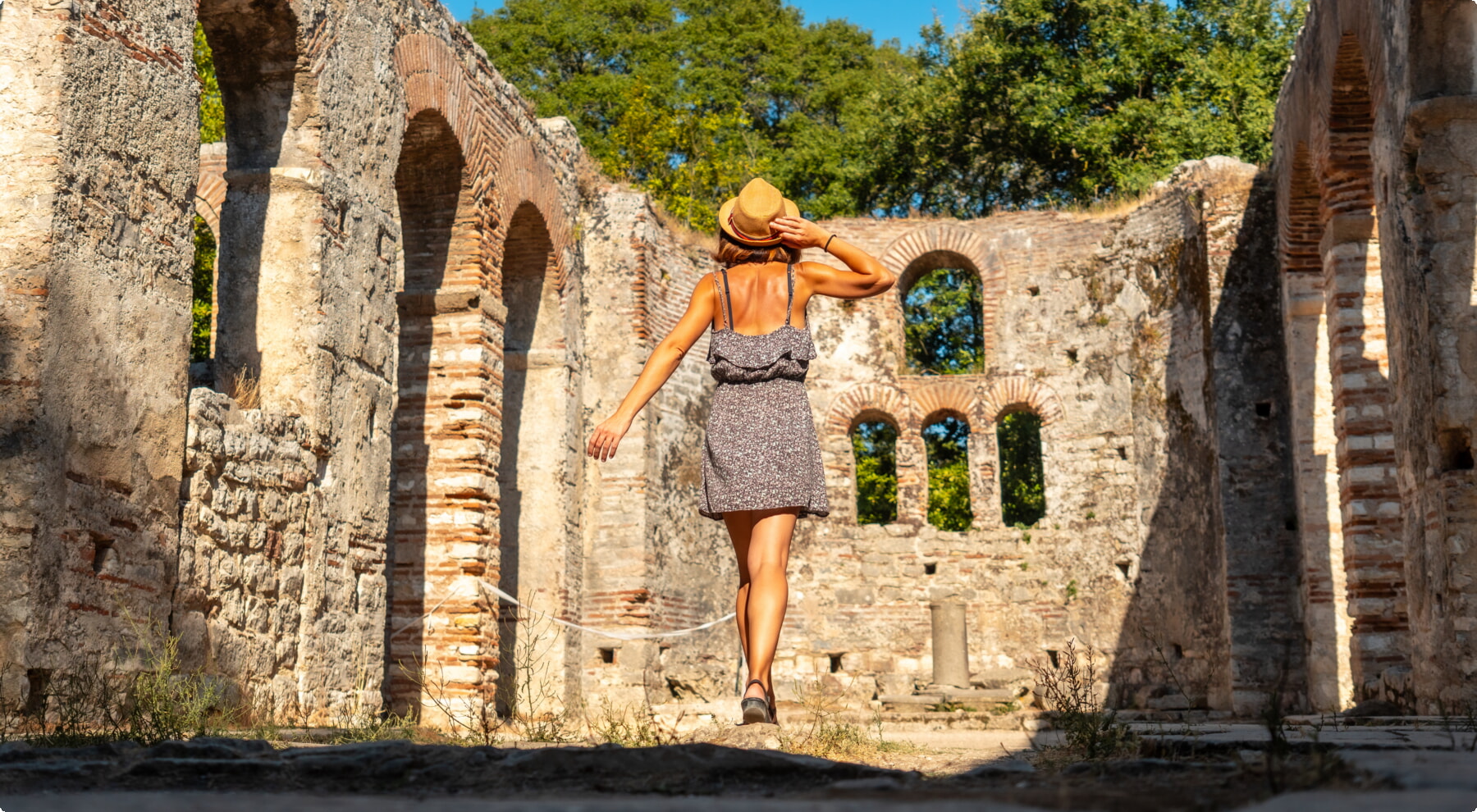
What feels fresh and undiscovered on the Riviera is often standing over very old ground. The strongest visits here happen when the sea is not treated as a backdrop alone , but as part of a long corridor of settlement , defense, worship, and exchange. That wider perspective changes even a simple stop at a hilltop ruin or church wall.
The historical dimension also explains why the Riviera does not feel entirely like a resort zone even where tourism is growing fast. Too many traces remain in plain sight. Dry stone walls cut across hillsides. Older houses sit just above the newer beachfront economy. Footpaths that now lead to viewpoints once connected agricultural plots and isolated communities. The coast has not been invented for leisure . Leisure has merely arrived late to a place that already had structure and memory.
Food , light , and the evening tempo
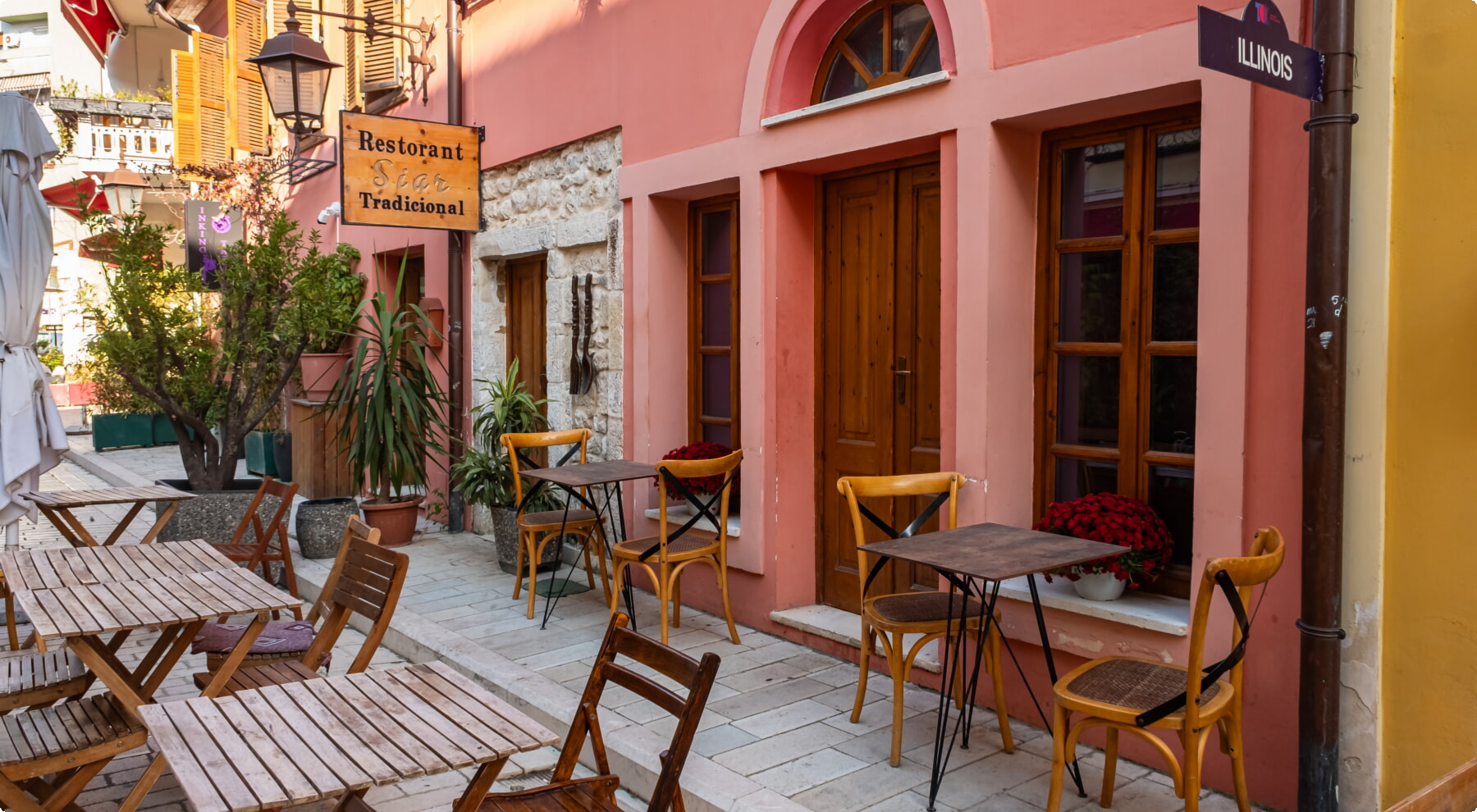
The Riviera is not a culinary spectacle in the self-conscious sense , and that is part of its appeal. Meals are often direct , regional, and attached to what the coast and nearby mountains can actually provide. Seafood matters , of course , but the table is shaped just as much by olive oil, citrus, herbs, cheese, lamb, tomatoes, and the patient influence of village cooking that never aimed to become a trend.
Several patterns appear repeatedly along the coast :
- Grilled fish tends to be handled simply , with lemon, olive oil, and very little interference.
- Byrek remains more than a snack - it is part of the daily architecture of eating in towns and roadside stops.
- Lamb and goat dishes connect the coast to the mountains behind it , especially where taverns still cook with a village sensibility.
- Olives, white cheese, yogurt, and mountain honey reveal how close the Riviera is to inland pastoral traditions.
- Raki and local wine still belong to conversation, not just to ceremony.
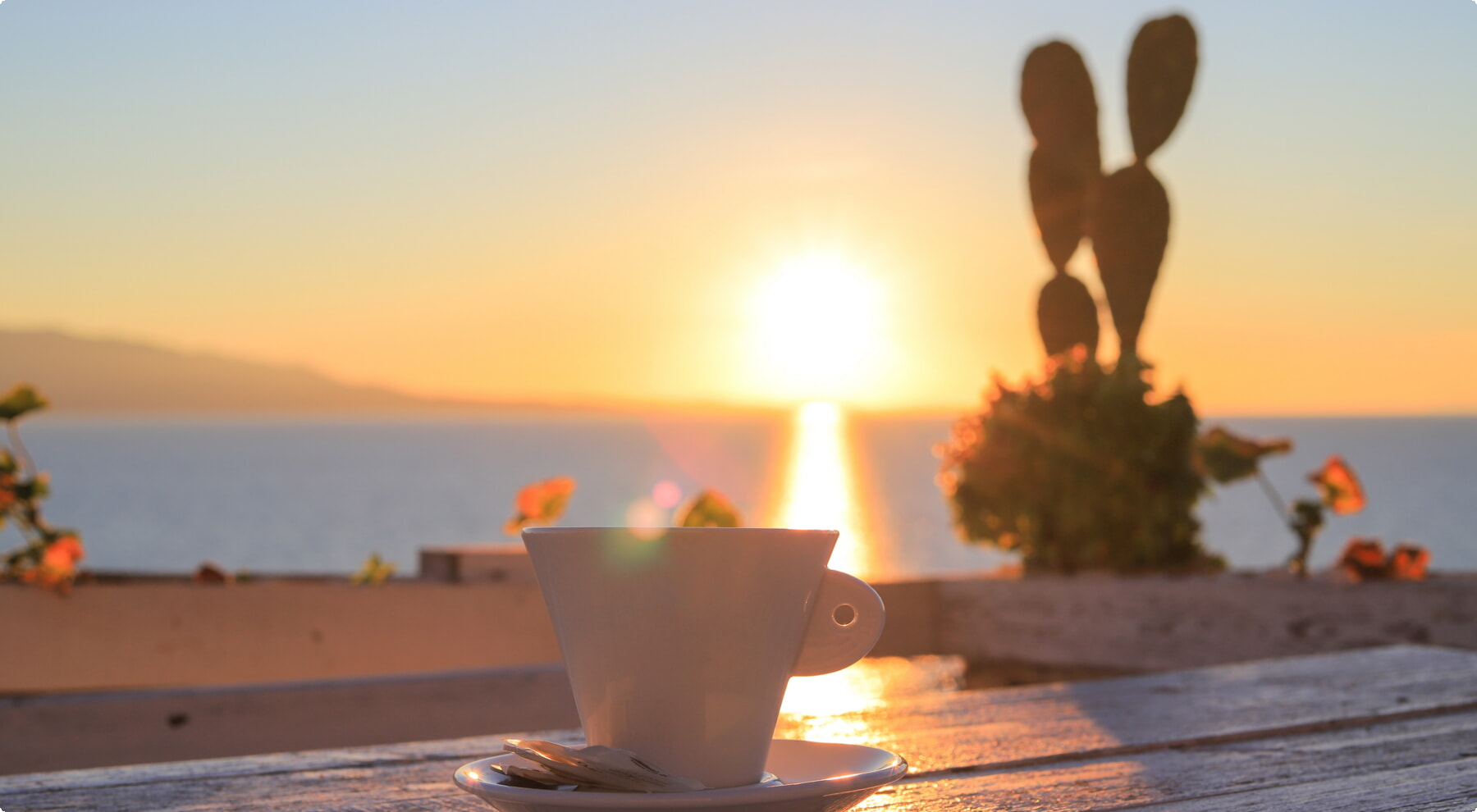
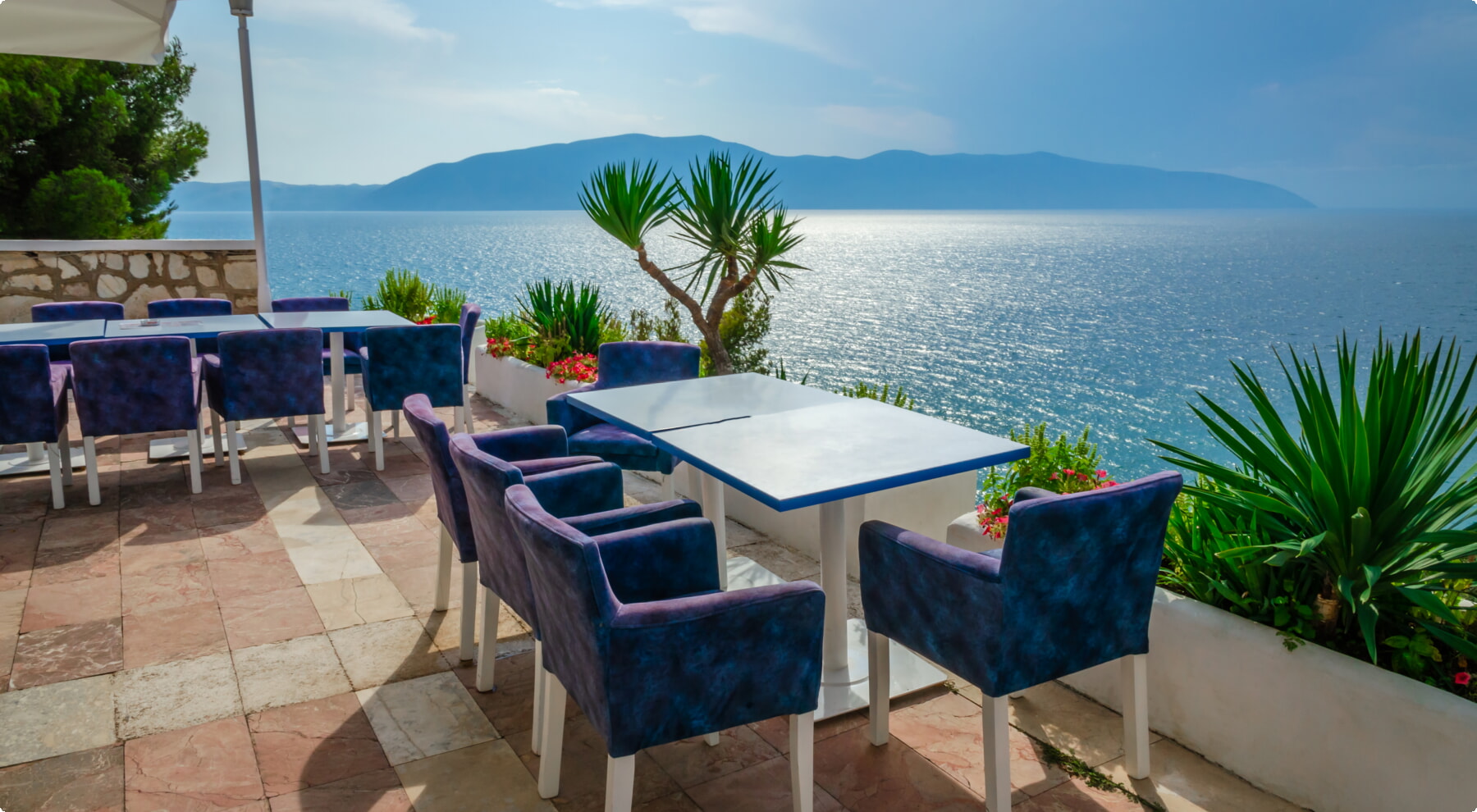
What makes dining here memorable is often less the menu than the setting and timing. Lunch can unfold slowly under filtered shade with the sound of cutlery and waves arriving from different directions. Evening brings another shift . Light softens on the hills, tables begin to fill, and waterfront settlements that looked almost sleepy at five o'clock can feel gently animated by eight. There is movement , but not always hurry.
In the best places , service still carries the imprint of family businesses rather than a fully internationalized hospitality script. That means less polish at times , but also less impersonality. The terrace may be simple. The chairs may not match. The fish may have been shown before cooking because that is simply how the house operates. These details matter because they align with the Riviera's larger character - not unfinished in a careless way , but not excessively edited either.
Coffee culture also shapes the day. A coastal town can spend long hours in apparent stillness while cafés remain active, half social club and half observation point. Watching the promenade is part of the ritual. So is the slow extension of evening after sunset , when conversation outlasts the heat and the sea darkens into a flat black plane beyond the last row of lights.
A coast in transition
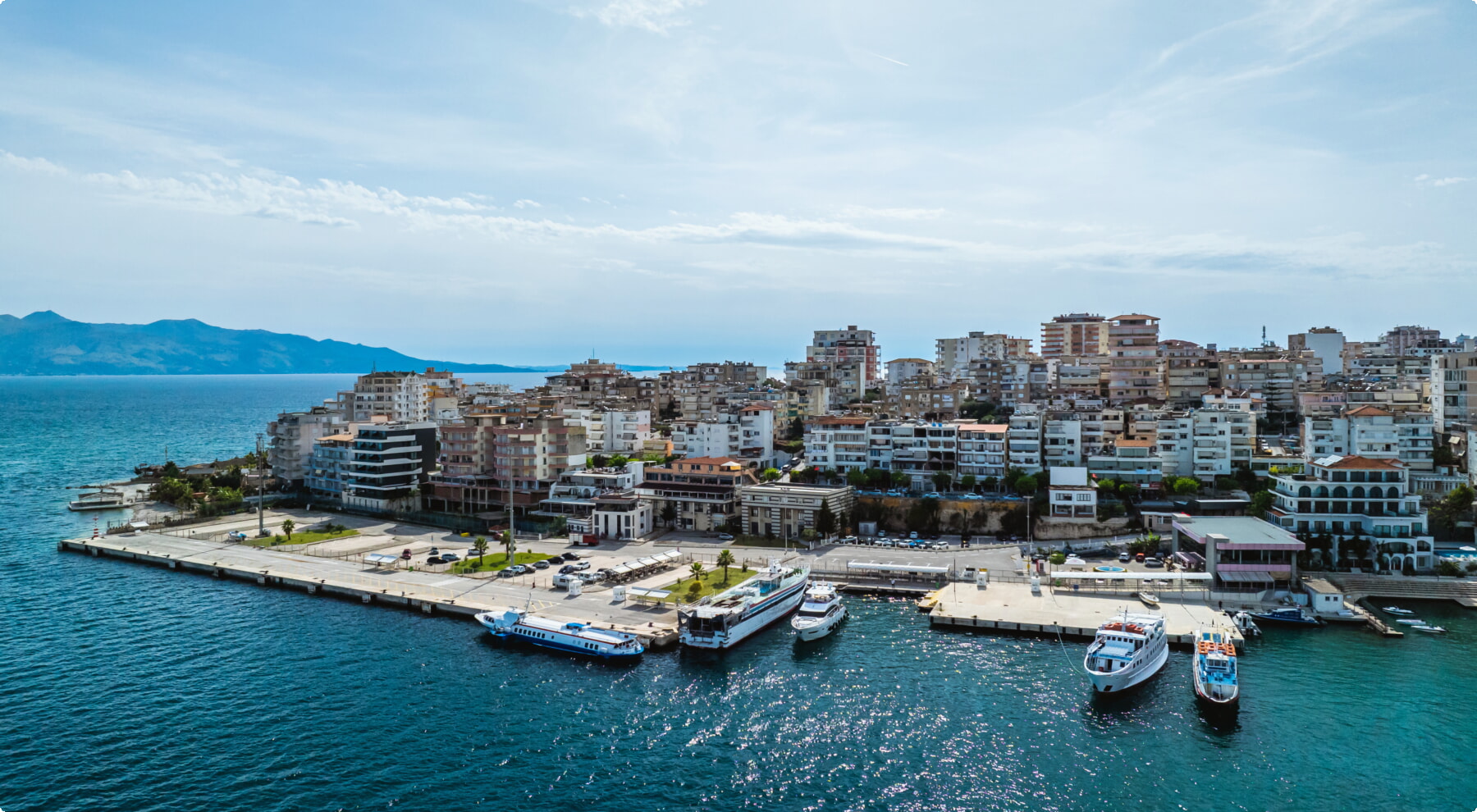
The Albanian Riviera is called untouched partly because it arrived late to the wider tourism imagination. That lateness created a rare interval - a period when the coast was accessible enough to be experienced, yet not fully transformed by the expectations that often follow exposure. That interval has not disappeared , but it is narrowing. New hotels rise. Beach infrastructure grows denser in some places. Roads improve , and with improvement comes speed , demand, and pressure to make the coastline more legible to mass tourism.
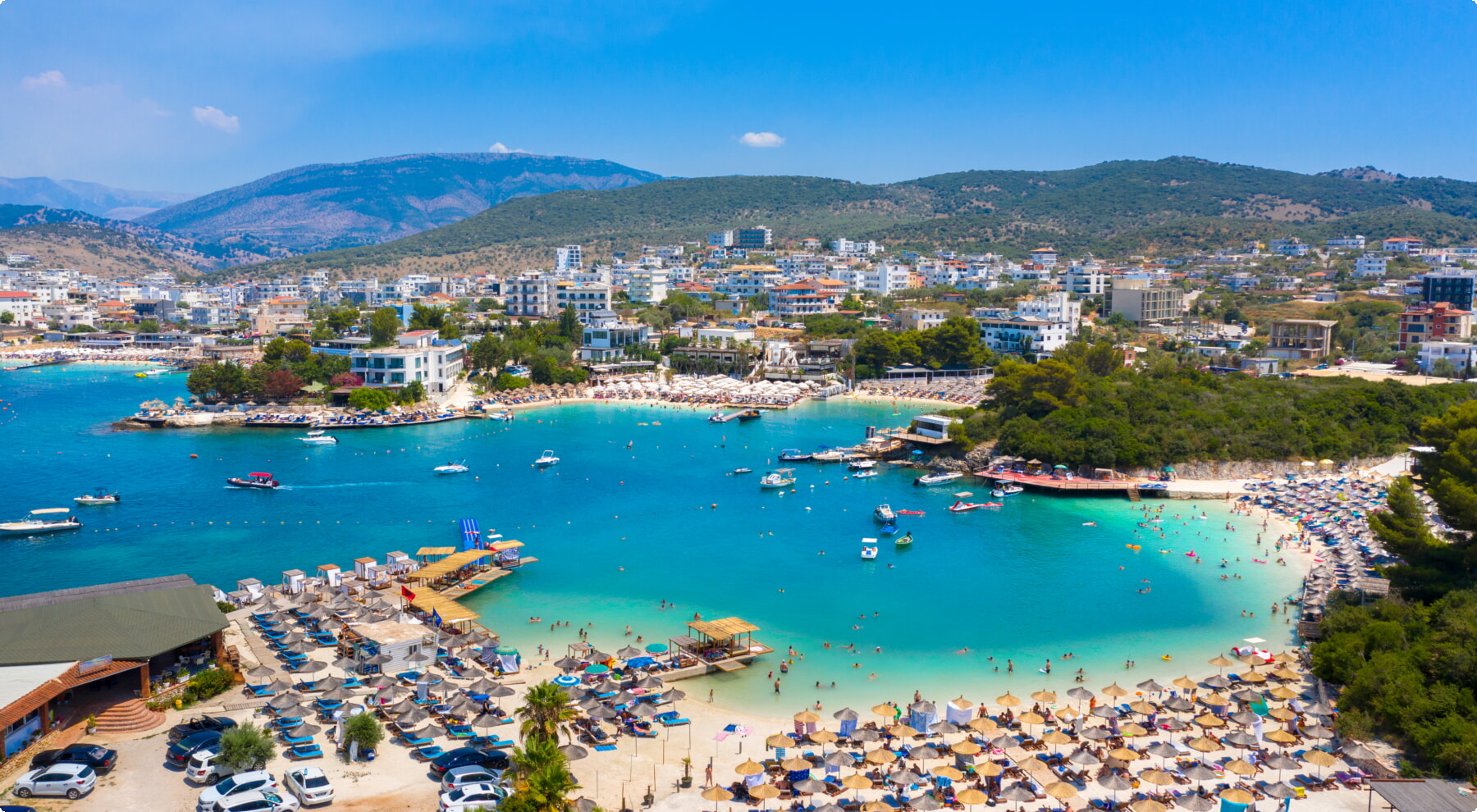
Still , the most interesting thing about the Riviera is that the outcome remains unresolved. It has not settled into one identity. Parts of it are already summer hotspots with loud music and ambitious construction. Other parts continue to feel provisional in the best sense - stone houses under repair, old orchards near the shore, upper villages nearly paused in time while the lower road negotiates a new economy. The tension is visible everywhere , and it gives the region a living, unsettled quality.
For that reason , timing matters almost as much as location. June and September often reveal the Riviera at its most intelligible , when the water is inviting but the coastline is still readable as a place rather than a queue. In those weeks , the mountains seem closer, the villages more distinct, and the sea less crowded by surface noise. Nothing essential is missing. What disappears is only the layer of seasonal overload that can make any coast feel generic.
The phrase untouched coast is best understood not as a claim of purity , but as a description of incomplete conversion. The Albanian Riviera has not entirely surrendered to the easy formula of Mediterranean consumption. It still contains friction - between old stone and new concrete, between village memory and beach ambition, between remoteness and sudden popularity. That friction is precisely what gives the shoreline its charge. Toward evening , when the road above the sea begins to cool and the last light catches terraces, rocks, and unfinished walls alike , the coast looks less like a polished destination than like a place still deciding what it wants to become.