The best coastal route from Lisbon to Algarve is not the obvious sprint south on the motorway. It bends west, keeps finding the Atlantic again, crosses an estuary by ferry, and changes character every few hours - from beach suburbs to limestone cliffs, from rice fields to raw surf coast. Done properly , it feels less like a transfer and more like a slow unfolding of Portugal’s western edge.
What makes this the best coastal route

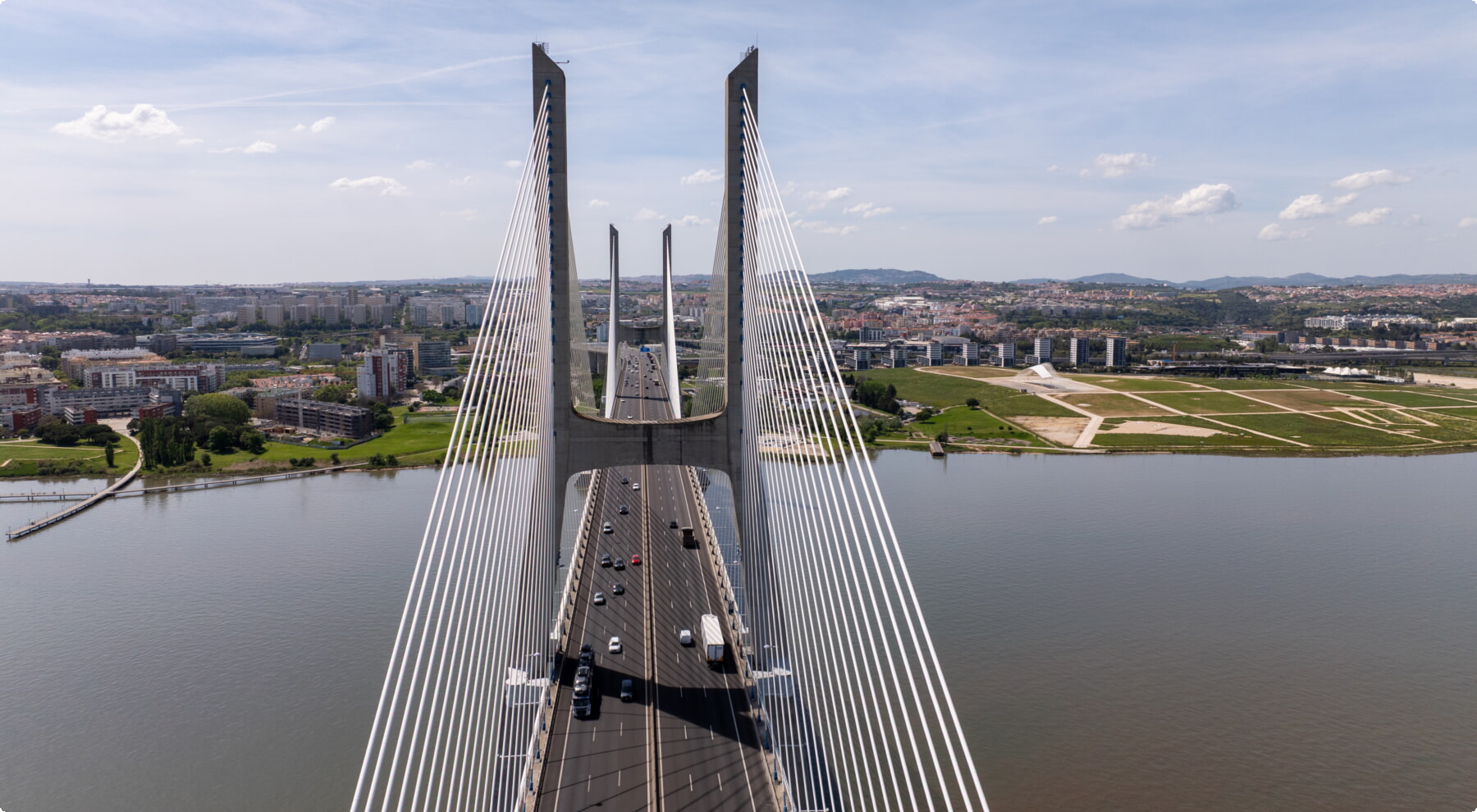
“Best” matters here , because the shortest drive from Lisbon to the Algarve barely deserves the word coastal. The A2 gets the job done quickly, but it slips inland and smooths out the very textures that make southern Portugal memorable. A more rewarding line leaves Lisbon over the 25 de Abril Bridge, tracks the ocean along the Setúbal Peninsula, cuts through Arrábida, crosses from Setúbal to Tróia by ferry, and then follows the Alentejo and western Algarve shore through a chain of villages that still feel tied to tide, wind, and fishing rhythms.
For a city start, arranging car rental in Lisbon makes it easier to leave early and get beyond the capital before the day turns into pure urban logistics. This route works best when the first hour is treated as a clean departure rather than as a battle with ring roads and missed turnoffs. Once the bridge is behind the rearview mirror, the mood changes quickly - apartment blocks give way to beach roads, pine stands, and a looser horizon.
The route is not constantly pressed against the sea. That is part of its strength. Portugal’s west coast hides behind dunes, lagoons, cliffs, and farmland; the ocean appears, disappears, and returns with different force each time. South of Setúbal, the landscape widens around Tróia and Comporta. After Sines, it tightens again into cliff-edged beaches and whitewashed settlements. By the time the road reaches Sagres and Lagos, the coast has become theatrical , carved and golden, almost impatient to end in a flourish.
There is one structural choice that turns this drive from good to excellent - keeping the Setúbal to Tróia crossing instead of cutting inland. That ferry is more than a shortcut. It is a hinge between two distinct coasts. North of it , the drive still carries the aftertaste of Lisbon. South of it , there is a sense of release. The beaches lengthen, the towns spread out, and the road begins to breathe. That shift is why this itinerary feels like a journey rather than a sequence of scenic detours stitched onto a highway transfer.
Lisbon to Setúbal - the first Atlantic arc
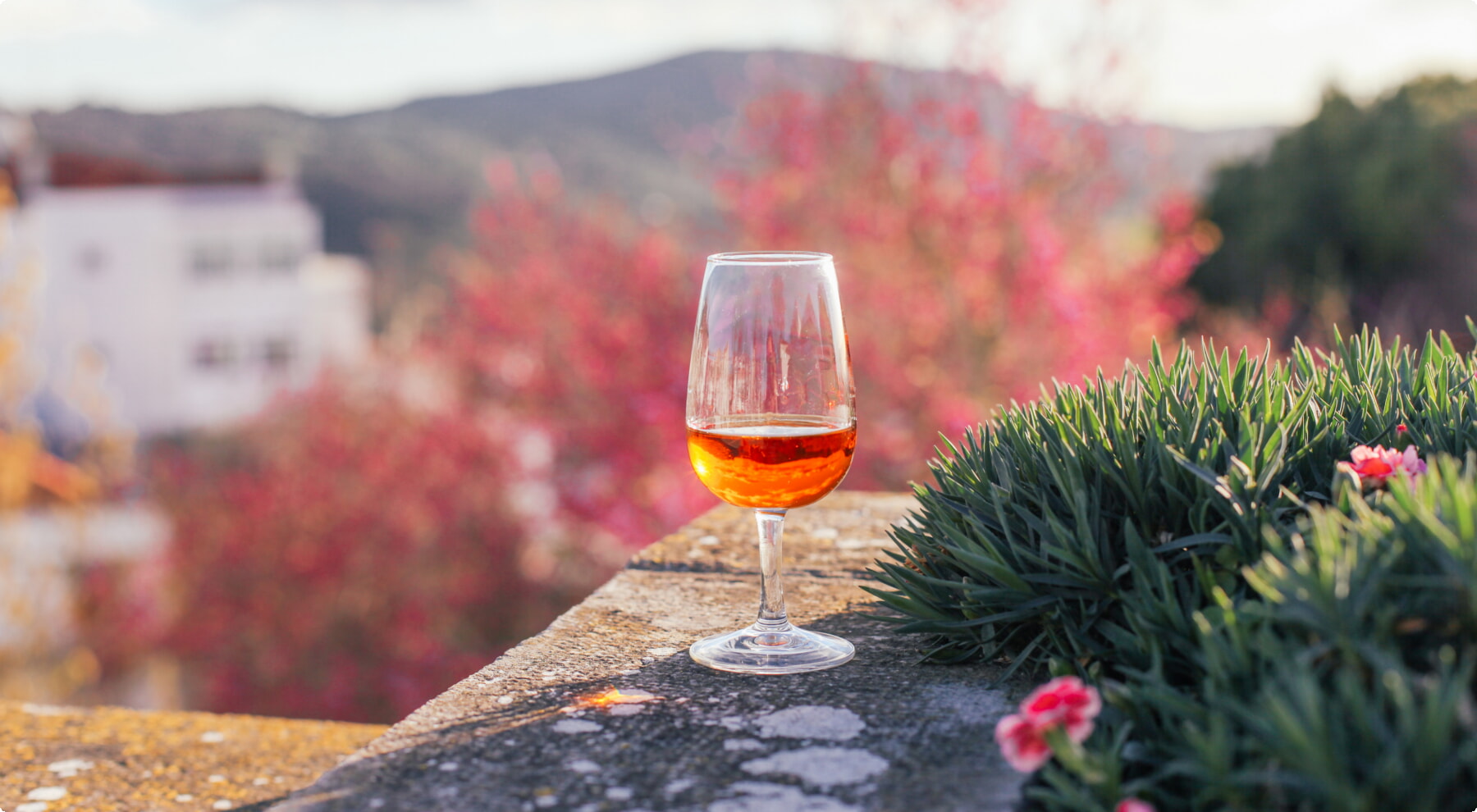
The opening segment has a useful job - it strips away the city without making the departure feel abrupt. From Lisbon, the cleanest coastal line heads through Almada and down toward Costa da Caparica. This is not the most romantic part of the drive, but it earns its place. The Atlantic first appears here as a long, practical beach cityscape - surf schools, apartment blocks, boardwalk stretches, and an endless band of sand. It offers a transition from capital intensity to ocean rhythm , and that transition matters.
South from Caparica, the coast grows more interesting. Lagoa de Albufeira brings a calmer, lagoon-shaped landscape where water and sandbars begin to complicate the shoreline. Then comes Sesimbra, tucked into its curving bay like a town that never quite decided whether to be defensive or leisurely. Fishing boats, restaurant terraces, and steep streets pull the route inward for a while. The road out of Sesimbra then turns more exposed, especially around Cabo Espichel, where the land suddenly feels harder and more vertical.
Stops that shape this first section
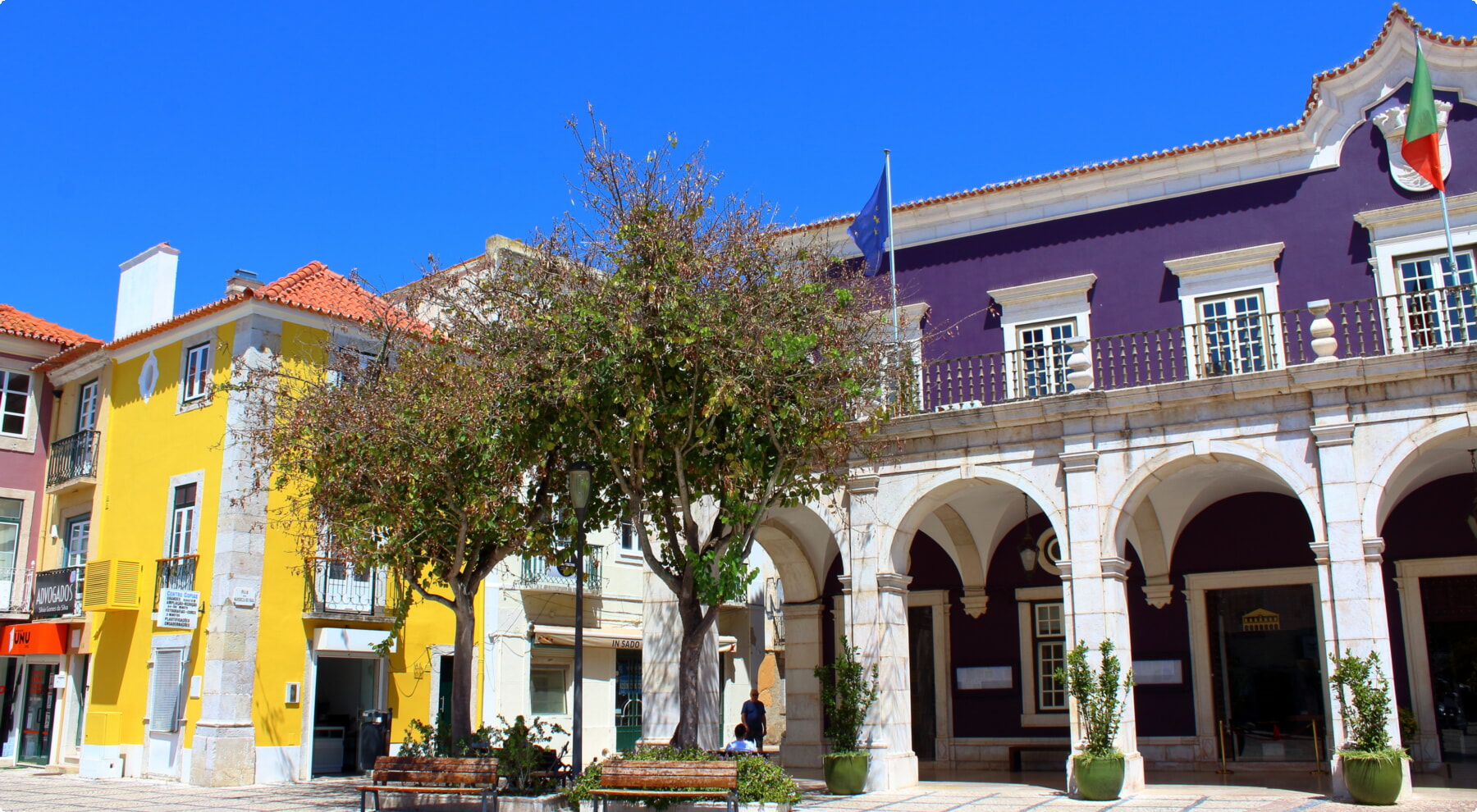
- Costa da Caparica - best for the first uninterrupted ocean view and a sense of leaving Lisbon behind.
- Lagoa de Albufeira - a quieter interlude where the coastline softens into lagoon scenery.
- Sesimbra - compact, lively, and more rooted in fishing culture than in resort polish.
- Cabo Espichel - stark headland scenery with a powerful sense of edge and distance.
- Serra da Arrábida viewpoints - the segment where the water turns improbably clear and bright.
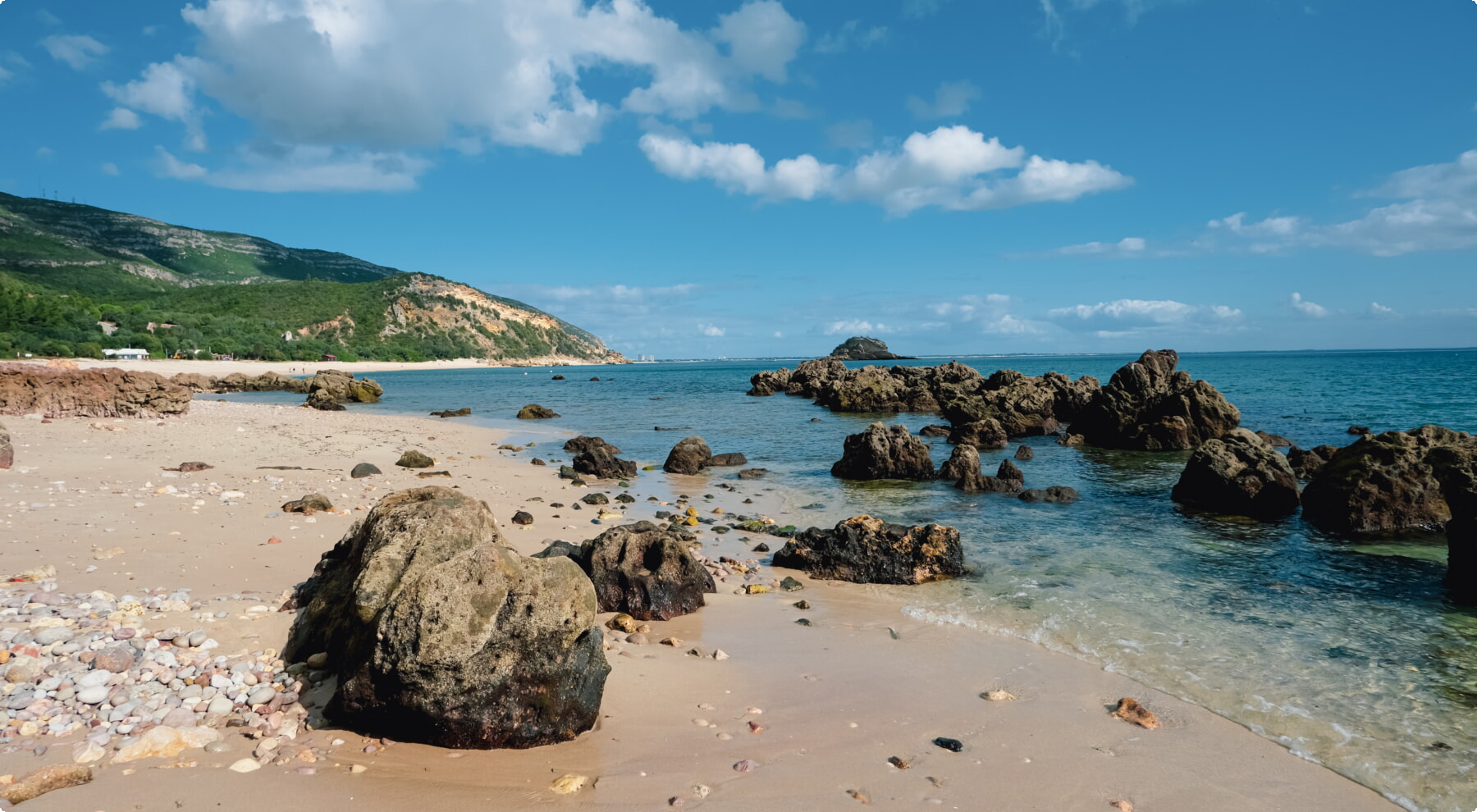
After Cabo Espichel, the road toward Setúbal becomes one of the strongest surprises on the entire drive. The Arrábida hills drop toward coves and folded limestone slopes, and on clear days the sea looks almost Mediterranean in color , even though the Atlantic is still doing the shaping. It is a short section, but one with real compression - steep turns, viewpoints, and sudden glimpses of beaches far below. This is the first point where the route stops feeling exploratory and starts feeling chosen.
Setúbal itself should not be treated as a mere ferry terminal. It has working-port energy, a proper city pulse, and a food culture that gives the route some urban depth before the long rural stretches begin. Still , the real purpose of arriving here is forward motion. The crossing to Tróia is the moment when the route loosens completely. From this point on, the coast becomes less suburban, less interrupted, and far more spacious.
Tróia to Sines - dunes, rice fields and long straight light
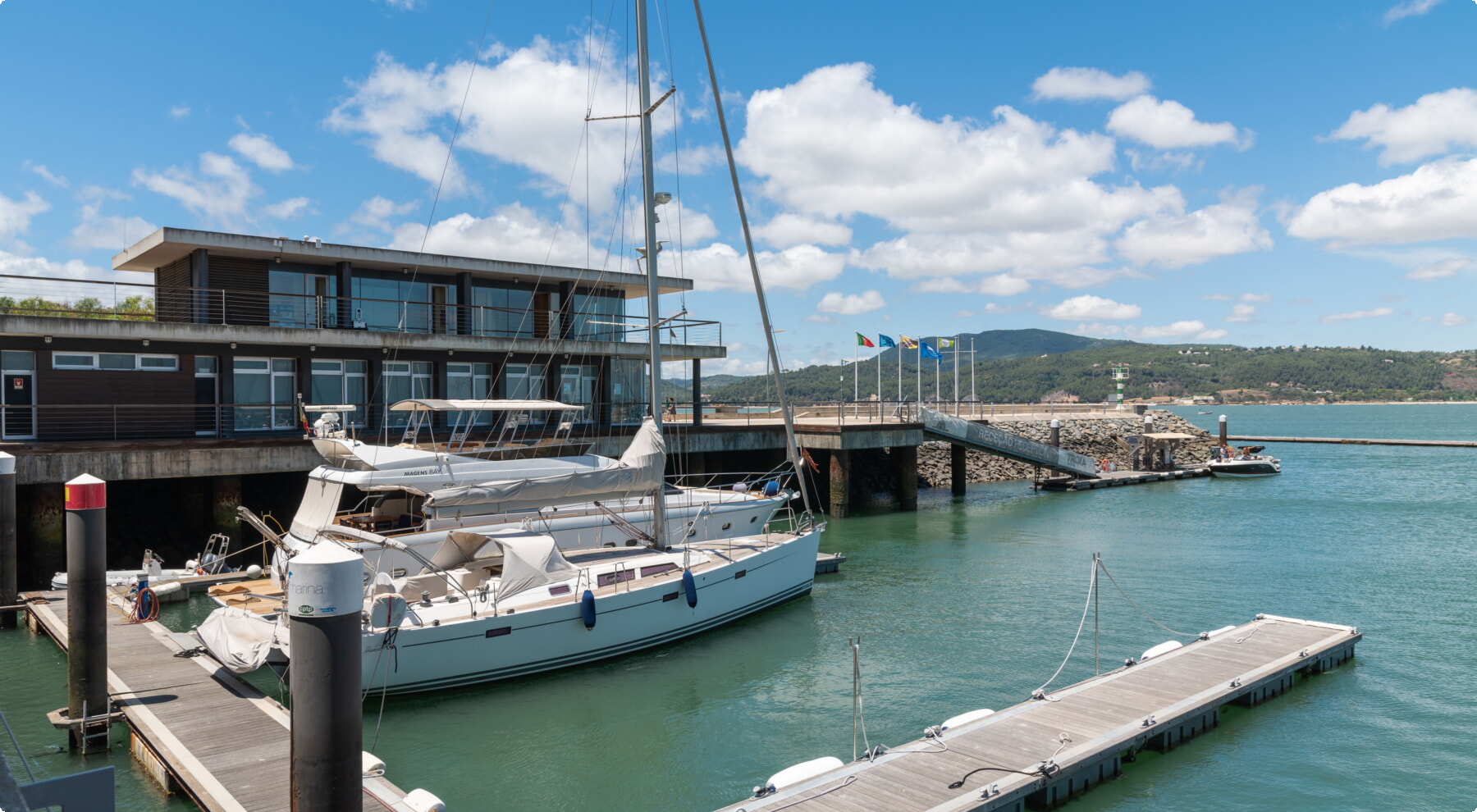
The crossing from Setúbal to Tróia changes the scale of the trip in a matter of minutes. For arrivals touching down and leaving the capital immediately , Lisbon Airport car rental keeps this transition efficient, because the day can move straight from runway to bridge to ferry without a second round of city navigation. Once on the Tróia side, the coastline feels newly stretched out - flatter, quieter, and more restrained in its beauty.
Tróia and Comporta have a reputation for low-key chic, but the route works best when attention stays on the land itself rather than on branding. This is a coast of dune systems, pine woods, rice fields, and long roads that seem to have been drawn with a ruler. The sea is often nearby without being constantly visible. That distance creates a distinct mood. Instead of dramatic cliff scenery, there is a kind of horizontal elegance - pale sand, silvery water channels, reeds moving in the breeze, and villages that appear only when needed.
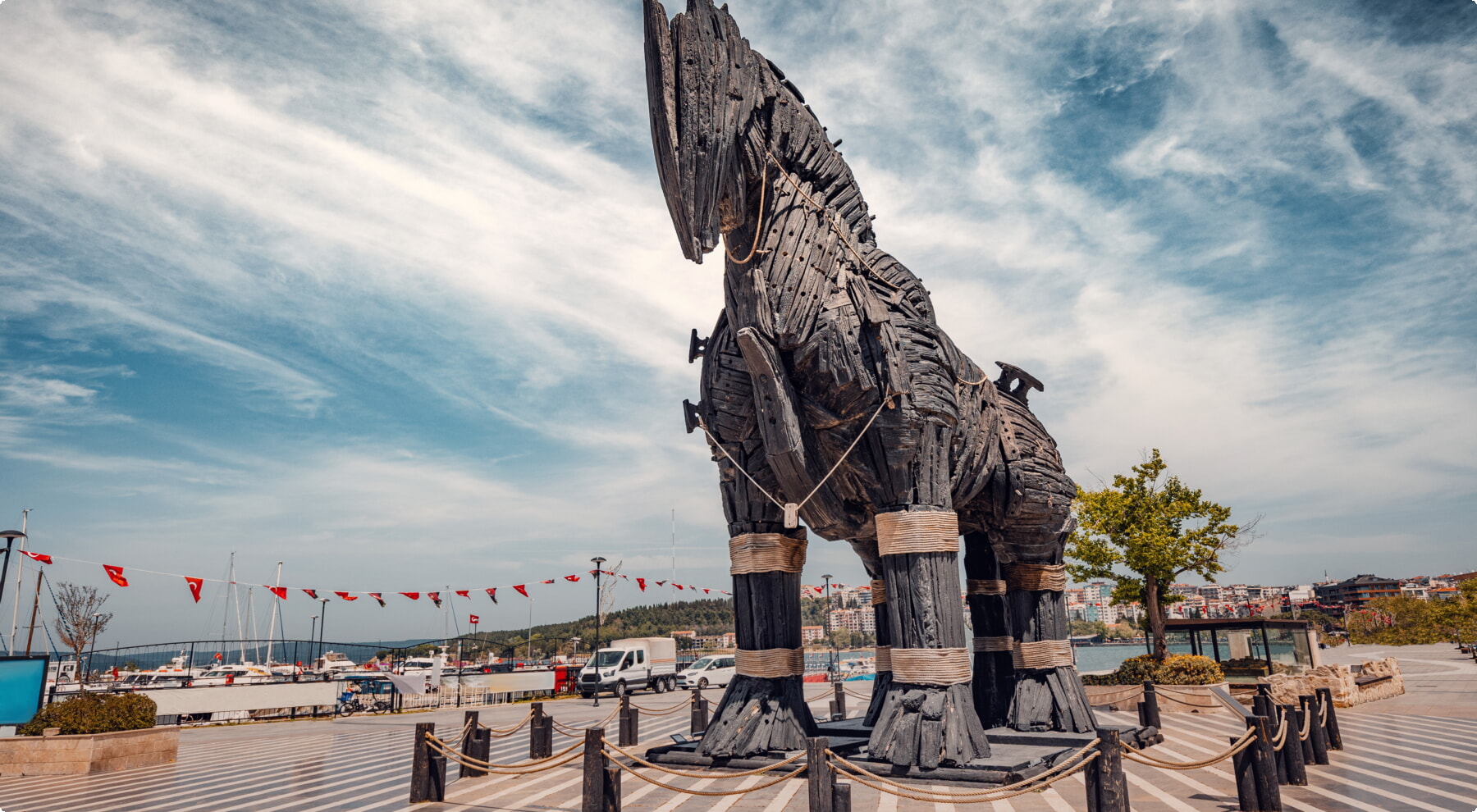
Comporta, Carvalhal, and Melides are not places to over-schedule. Their charm comes from rhythm rather than spectacle. Roads drift between umbrella pines and agricultural plots; beach turnoffs tempt, but not every one needs to be taken. The better instinct here is selectivity. One beach, one village stop, one longer pause for lunch or a walk is often enough to let this section do what it does best. Too many interruptions can flatten its spaciousness.
This short ferry ride is a practical connection, but also a tonal reset for the whole drive. It breaks the journey at exactly the right moment and lets the southern coast begin with a sense of arrival rather than continuation. On busy days , timing matters more than distance.
- Check sailing frequency in advance if the route depends on making Comporta before late afternoon.
- Avoid treating the ferry as lost time - the estuary views help the landscape shift make sense.
- If queues build in summer, keep the Tróia crossing anyway; the inland alternative weakens the route.
South of Melides, Lagoa de Santo André adds another watery interruption before Sines appears. Sines is an unusual stop because its industrial port is impossible to ignore, yet the old town still carries a weathered maritime dignity. That contrast prevents the drive from becoming too polished. The route needs some roughness. It reminds the eye that this coast has always been worked as well as admired. From here onward, the road leaves behind the open composure of Comporta and enters a wilder, more cut-up shoreline.
Sines to Odeceixe - the wild middle stretch
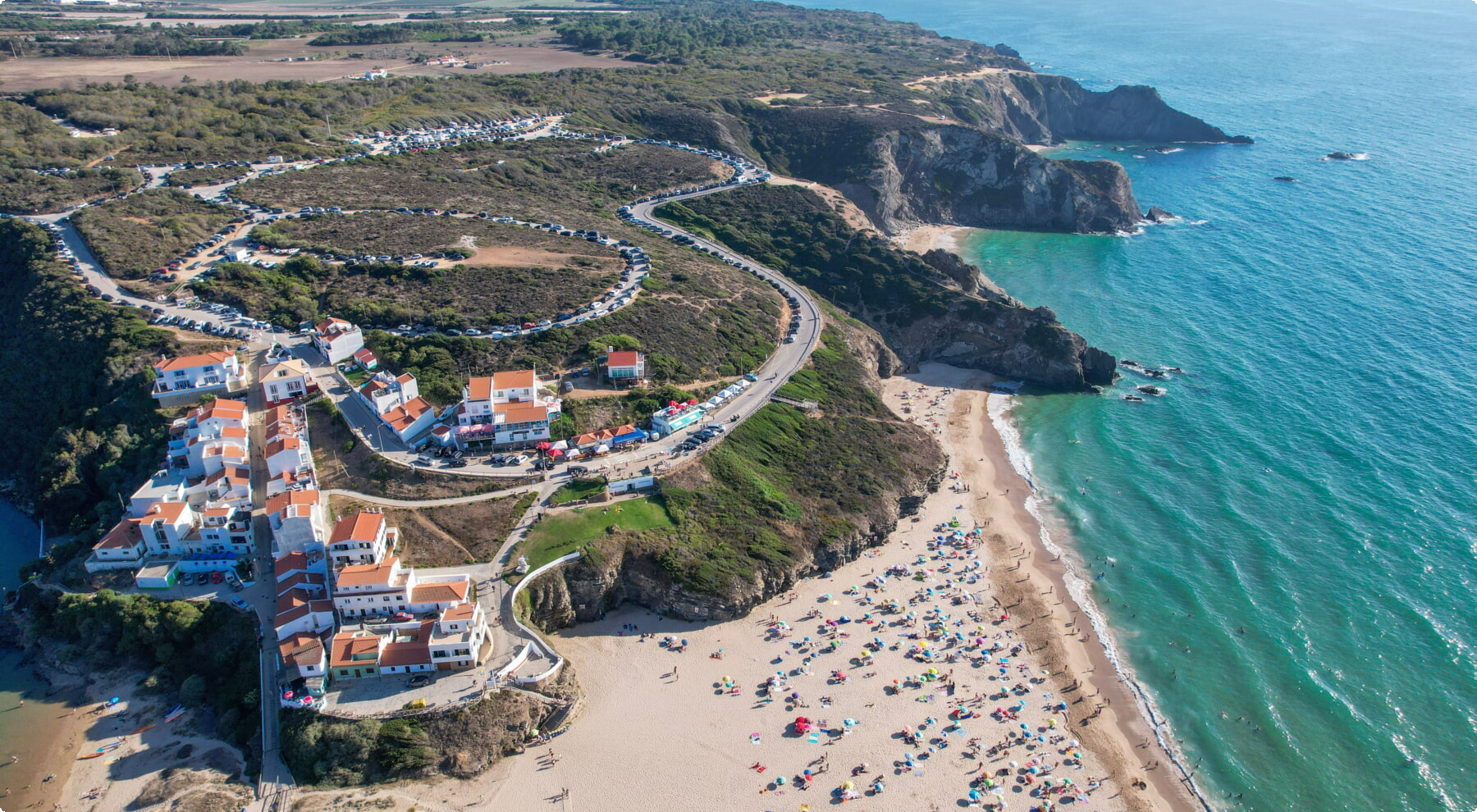
If the Tróia - Comporta section is defined by breadth, the run south from Sines is defined by interruption. Cliffs break the coast into distinct bays; villages perch above beaches rather than spread beside them; the wind begins to matter more. Porto Covo makes a graceful opening - white houses, blue trim, and little coves tucked between dark rocks. Just offshore sits Ilha do Pessegueiro, a small visual anchor that gives the shoreline a mythic look, especially in changing light.
From there, the route threads through the territory associated with Rota Vicentina, and that matters even for drivers who never lace up hiking shoes. The walking paths have helped preserve the identity of this coastline as something textured and slow rather than overdesigned. Vila Nova de Milfontes, where the Mira River meets the Atlantic, brings the first substantial pause point in this stretch. It has enough life for an overnight stop, but it still feels attached to estuary light and beach weather rather than to resort mechanics.
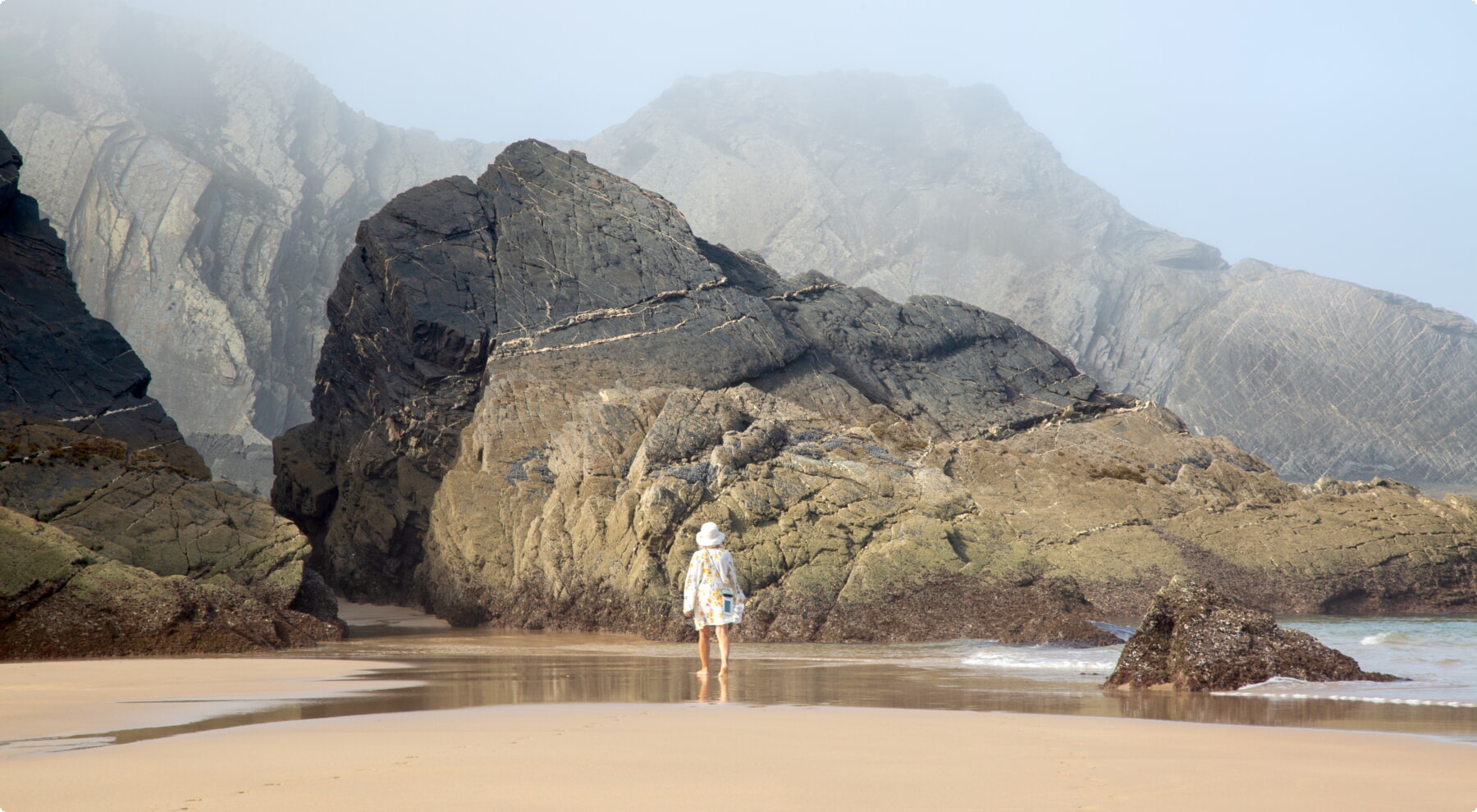
South of Milfontes, the road becomes more fragmented in the best sense. Almograve, Zambujeira do Mar, and the beaches between them are not meant to blur together. Each has a slightly different geometry - higher bluffs, broader sands, darker rock shelves, stronger wind exposure. The sea never feels decorative here. It pushes, cuts, and throws spray upward. That force is exactly why this middle stretch often lingers in memory longer than the more famous Algarve postcards.
Distances on the map look easy , but the road keeps inviting detours to viewpoints and beaches that are worth more than a quick photo stop. It is the one section where trying to “cover ground” usually produces the least satisfying day. Better results come from choosing fewer villages and letting the pauses run longer.
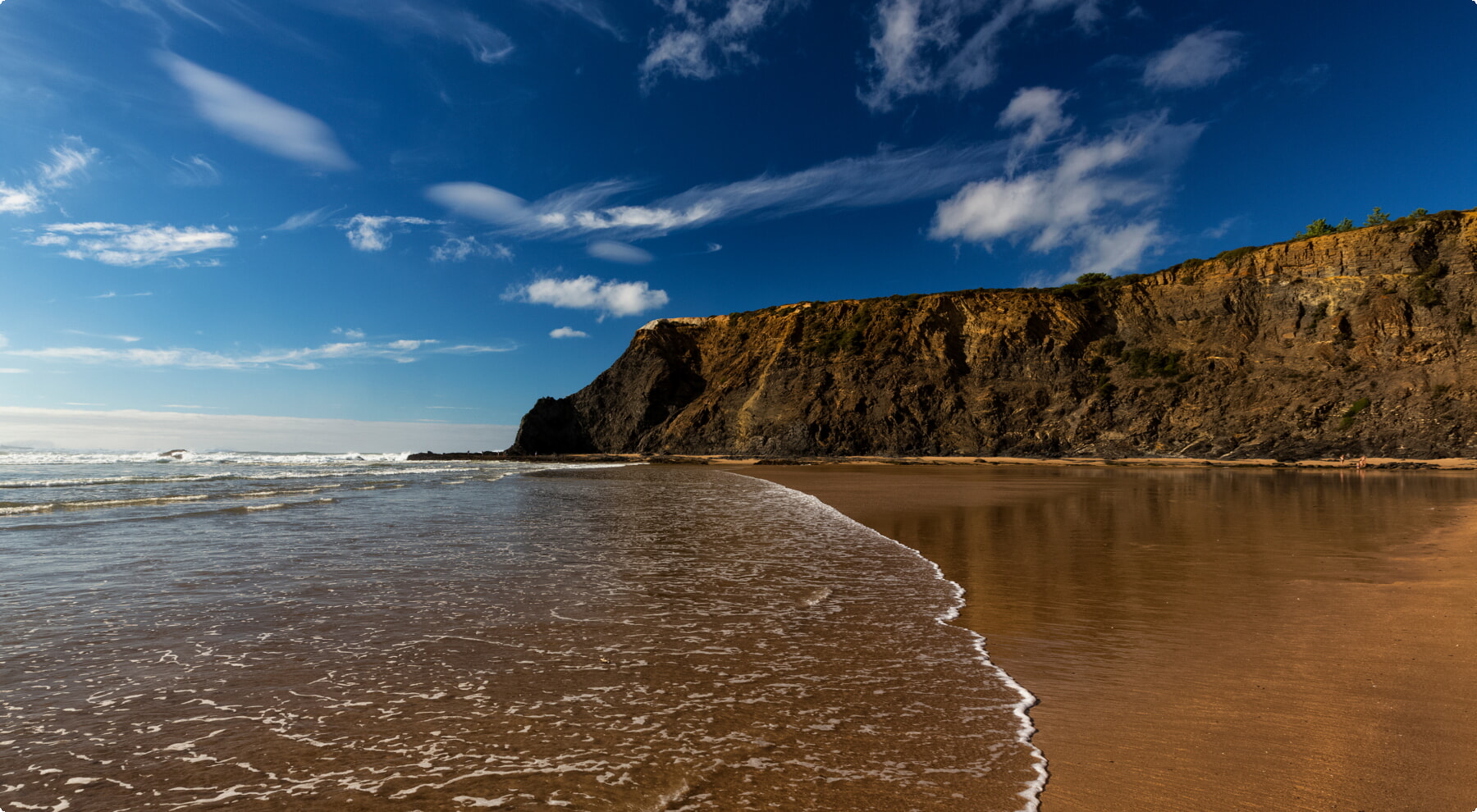
Odeceixe arrives as a natural threshold. The river valley softens the approach, and the famous beach below the village hints that the Algarve is near without announcing it too loudly. That subtlety is useful. The western Algarve still belongs to the Atlantic mood, but a shift is coming. The land grows more folded, the roads more sinuous, and the final phase of the route begins to gather drama.
Western Algarve - cliffs, surf coves and the dramatic finish
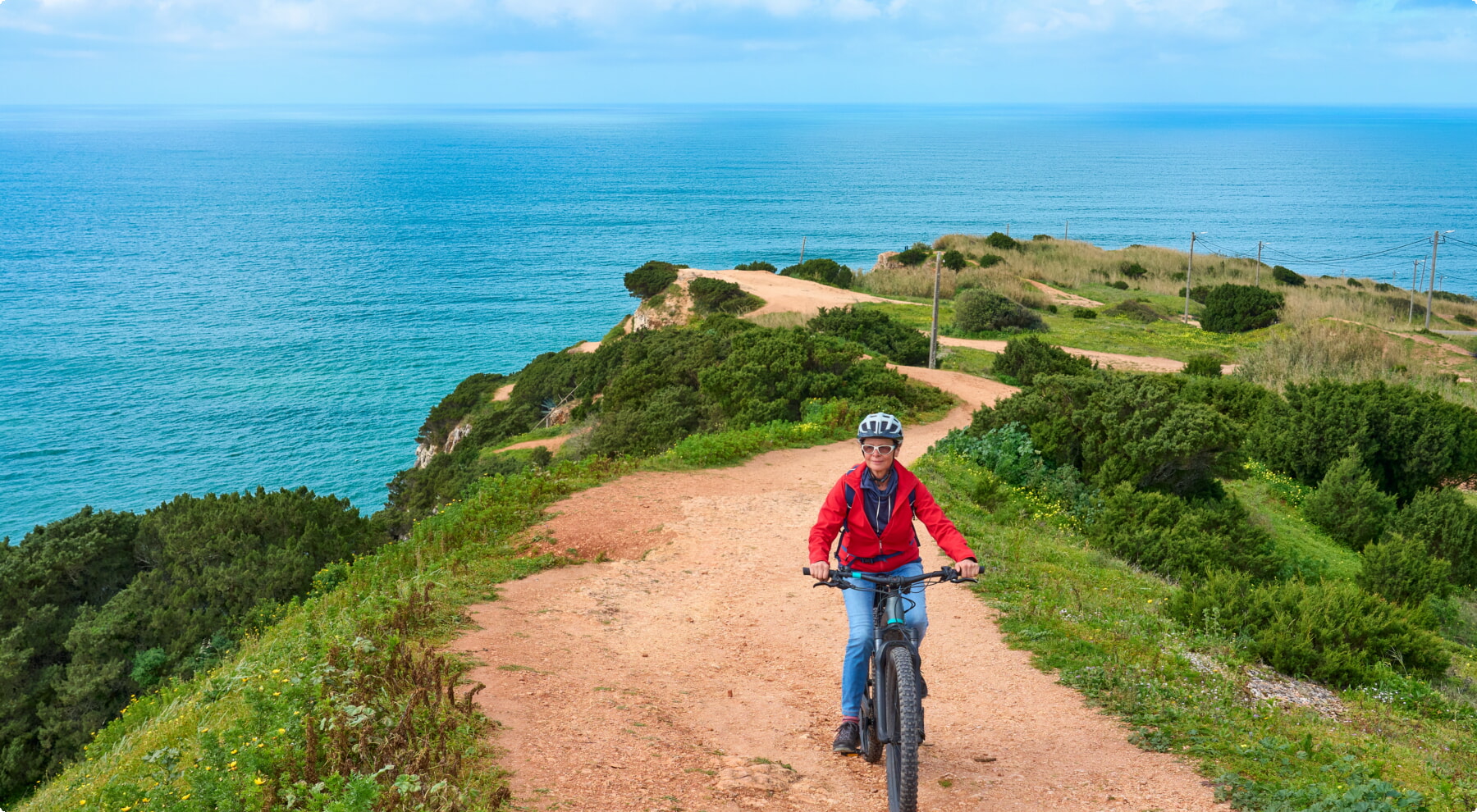
Crossing into the Algarve by way of Odeceixe is far more satisfying than approaching from the interior. It preserves continuity. The coast remains rugged, villages stay small, and the sense of exposure survives. Aljezur is the first real anchor here - a place of white houses, a ruined castle on the hill, and quick access to beaches that each carry their own personality. Arrifana feels sculptural, with its high cliff walls and deep blue water. Monte Clérigo feels broader and more domestic. Neither one needs much embellishment from the road.
Further south, Carrapateira and the road loops around its headlands provide some of the best driving on the whole route. The scenery is not polished in the Algarve postcard sense. It is wind-struck, open, and severe enough to keep sentimentality away. Then the land bends toward Vila do Bispo and Sagres, where the geography begins to feel terminal - as if the continent has narrowed into a final rock platform before dropping into the Atlantic. This is where the drive gathers its strongest sense of edge.
A strong order for the western Algarve finish
- Odeceixe - soft river landscape and a graceful transition into Algarve territory.
- Aljezur - best used as a base for several nearby beaches rather than as a quick pass-through.
- Arrifana or Monte Clérigo - choose one longer stop instead of collecting both too fast.
- Carrapateira - excellent for the feeling of raw exposure and uncluttered coastal driving.
- Sagres and Cabo de São Vicente - the route’s most “end of the land” atmosphere.
- Lagos - a shift from austere west coast energy to sculpted limestone scenery.
Sagres deserves time because it is not merely scenic; it has presence. The light changes faster there, the wind can sharpen abruptly, and the sea seems to move on several levels at once. From Sagres eastward, the route begins to pick up a different Algarve note - more visitors, warmer colors, softer transitions between sea and settlement. Lagos becomes the logical payoff. It offers enough town life to feel like an arrival, while still holding onto a remarkable coastal fringe.
The most memorable final stop is often the headland of Ponta da Piedade, where the rock suddenly turns into arches, stacks, and narrow inlets with almost theatrical precision. After the darker, rougher west coast, these golden limestone forms can feel like a change of genre. That contrast is exactly why the route works so well. It does not deliver one endless version of “beautiful coast.” It stages several different coasts in sequence , each correcting the last.
How to divide the drive without flattening it
This journey is technically possible in a long single day, but that approach strips it of proportion. The drive becomes far richer over three or four days, because each major landscape gets its own breathing space. A compact but still satisfying version might run Lisbon to Setúbal or Sesimbra on day one, Tróia to Vila Nova de Milfontes on day two, and Milfontes to Lagos on day three. A looser version adds a night around Comporta or Melides and another in Aljezur or Sagres, which lets the western Algarve breathe instead of arriving as a rushed finale.
Sleep bases matter more than famous stop names. Sesimbra works well when the first day is meant to still feel close to Lisbon while already facing the sea. Setúbal is more practical for an early ferry departure. Comporta is best when the goal is calm and space rather than nightlife. Vila Nova de Milfontes is arguably the strongest midpoint base because it sits naturally between the softer Alentejo shore and the more rugged southern cliffs. Aljezur is excellent for surfers and west-coast loyalists; Lagos fits better when the route is meant to end with more restaurants, walkable evenings, and a stronger sense of arrival.
Some roads are worth ignoring. The A2 is useful only when weather, time, or fatigue forces a reset. The A22 in the Algarve has its place too, but it belongs to transit rather than discovery. Even within the coastal version, not every beach access road deserves equal attention. The better principle is not maximum coverage but controlled curiosity. One or two high-quality pauses per section usually reveal more than a frantic chain of short pullovers. This route rewards selective attention - long enough to absorb each shift in color, geology, and settlement pattern.
Season also changes the route’s meaning. In midsummer, parking pressure around the most famous beaches can make the west coast feel narrower than it really is. In shoulder seasons, the same roads feel expansive and almost meditative. Winter brings stronger skies and rougher seas, which can actually suit the Alentejo and western Algarve better than high summer does. If the final destination lies farther east - Albufeira, Faro, or Tavira - it often makes sense to accept that the most character-rich coastal section ends around Lagos and then continue by a more direct line. That choice does not diminish the route; it clarifies where its real peak lies.