It usually happens in the least cinematic moment: a half-empty parking lot, a coffee cooling in the cup holder, and the soft “thunk” of an auto-lock that sounds suspiciously final. Locked keys in a rental car aren’t rare - but they feel personal, like the trip is judging you. The good news is that most modern rental setups expect this mistake, and there’s a practical path out, even if the path is slightly inconvenient.
- 1) The first minute: make it safe, make it certain
- 2) Quick checks that actually work (before you pay anyone)
- 3) Calling the rental company: how to get help without making it worse
- 4) Roadside assistance, locksmiths, and “local solutions”
- 5) Fees, paperwork, and damage: keeping the bill from spiraling
- 6) Preventing a repeat (without turning the trip into a checklist)
The first minute: make it safe, make it certain

First, confirm what happened. Not “pretty sure” - actually confirm. Look through the window and locate the keys: seat, cup holder, ignition slot, center console. It sounds obvious, but in the heat of it, people misdiagnose the problem: the keys are in a pocket, the car is unlocked, or the fob is in a bag that was tossed into the trunk.
Then deal with safety before pride. If the car is in a live lane, a hotel drop-off zone, or a tight airport curb, move yourself out of the flow and decide who needs to be alerted. If a child or pet is inside, treat it as urgent and call local emergency services immediately - no negotiation, no “maybe it’s cool.” A rental contract can be replaced; air in a hot cabin cannot.
If the lockout happened in a place where cars keep moving, safety decisions come before phone calls. Step away from traffic, choose a visible spot, and keep eyes on the vehicle - not because it’s dramatic, but because tow trucks and ticketing happen fast.
Finally, note the setting. Airport garage? Street parking? Remote viewpoint? The difference matters because the fastest solution changes with location. In a busy spot like Los Angeles International Airport, security rules and tow policies can shape what help is allowed to do. In a quiet neighborhood, a locksmith can often work unbothered.
Quick checks that actually work (before you pay anyone)

There’s a temptation to call immediately. But two minutes of methodical checking can save an hour and a service fee , and it doesn’t require luck. The goal is to find a legitimate access point that doesn’t involve prying, bending, or “just try this trick from a video.” Rental cars are watched closely, and damage that looks small on TikTok can look expensive on a return invoice.
- Try every door handle twice. Some cars unlock only the driver’s door on the first press; the rear might still open. If the fob is inside, certain models behave oddly and will unlock one door but not others.
- Check the trunk status. If it was left open a moment earlier (loading bags), it might still be ajar even if the cabin locked. Look for a slightly raised trunk line rather than yanking it.
- Look for a physical key blade. Many fobs contain a hidden metal key. The problem is that the blade often opens only the driver door, and only if there is a visible key cylinder (some cars hide it under a cap). It’s worth searching calmly.
- Confirm the car isn’t in “auto re-lock.” A few vehicles unlock briefly and re-lock after 30-60 seconds. If someone unlocked it remotely earlier, the timing can mislead.
- Scan for open windows. Even a narrow crack matters, but do not use improvised tools to “fish” inside. That turns a lockout into a damage claim, and the trip gets less fun.
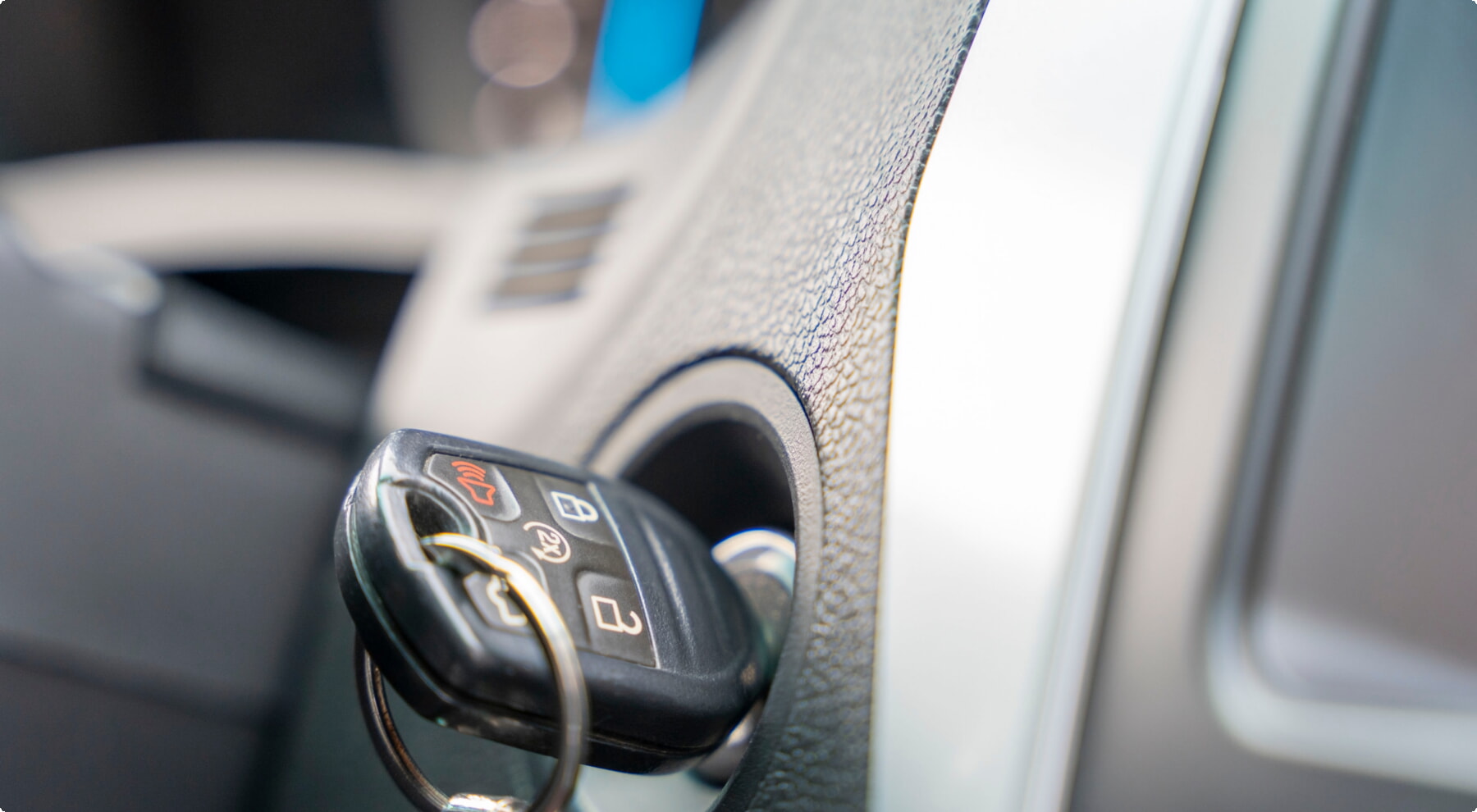
After that, do a pocket audit, slowly. One hand in each pocket, then the bag, then the jacket that was tossed in the back seat earlier. A lot of “locked-in” keys are actually “not where expected” keys. The mind edits reality when it’s embarrassed.
If the keys truly are visible inside, take a photo through the window. It’s not for social media, it’s for clarity: it shows the rental agent or roadside provider that the keys are inside, the car is intact, and you’re not asking for something suspicious.
Calling the rental company: how to get help without making it worse
The cleanest fix usually starts with the rental company, not with a stranger and a set of tools. Most large agencies have an internal playbook for lockouts: who can authorize a locksmith, whether a spare key exists locally, and what paperwork is needed so the car isn’t flagged in the system.
Use the number on the rental agreement or the key tag (if the tag is not also locked inside, which happens more than anyone admits). If it’s after hours, follow the prompts to roadside assistance. The call is easier if the following is ready: contract number, license plate, exact location, and a call-back number. Mention whether the engine is running (yes, it happens) and whether the car is in a restricted area like an airport curb.

In Los Angeles, lockouts show up in very specific places: beach lots, hillside viewpoints, and the looping logic of airport pickups. It’s one reason travelers often book with strong support built in when they rent a car in Los Angeles - quick help matters more than a small difference in daily rate.
If the rental started at the airport, the process can be even more standardized. Counters and shuttle hubs deal with lost keys, dead fobs, and accidental lock-ins every week. When arranging a vehicle for a tight schedule, it’s sensible to choose a provider where car rental at Los Angeles Airport (LAX) comes with clear roadside channels, because “clear” is what you want when the phone battery is dropping.
Rental support responds faster when the situation is described like a dispatch note, not a story. Keep it factual, confirm the vehicle is secure, and ask what they authorize before anyone touches the door.
- State the exact location (street + landmark), not just “near downtown.”
- Ask whether a vendor is authorized, and whether reimbursement is possible if you self-arrange.
- Request the estimated cost range and any lockout fee, so there are no surprises later.
One subtle point: if the rental agent suggests “just call any locksmith,” ask for the rule in plain language. Some companies require pre-approval, others accept any licensed provider but need an invoice with specific details. A five-second question can prevent a long argument at the counter.
Roadside assistance, locksmiths, and “local solutions”

Once the rental company is contacted, the actual unlocking typically happens in one of three ways. The first is company-dispatched roadside assistance. The second is an independent locksmith arranged by the traveler (sometimes with approval). The third is the “local solution” offered by a nearby attendant, parking manager, or helpful passerby - which is where caution belongs.
Company roadside assistance tends to be slower but cleaner. It’s slower because the request enters a queue. It’s cleaner because the provider is already known to the rental company, and any accidental scuffs are easier to document. If time is tight - for example, the trip is supposed to continue to Union Station, Los Angeles for a train connection - it helps to say so, without theatrics. Dispatchers prioritize based on location and risk.

Independent locksmiths can be fast and surprisingly professional, especially in dense urban areas. But the traveler should insist on two things: a clear price before they start, and a non-destructive method. “Wedge and long-reach tool” is normal; bending frames and forcing weather seals is not. If the locksmith speaks casually about “just popping it,” it’s okay to stop the process and call someone else, even if it feels awkward.
A parking attendant might offer a coat hanger, a friend might suggest a screwdriver, and someone will definitely claim it takes “two seconds.” But rentals are inspected, and bent door frames whistle on highways. The fastest fix is the one that leaves no trace.
Police involvement is usually reserved for genuine safety issues, not routine lockouts. Some travelers expect an officer to open a car as a courtesy; in many places it simply isn’t offered. And even when an officer is willing, the priority is safety, not convenience.
There is also the awkward scenario where the car is running and locked. Modern vehicles sometimes prevent locking with the fob inside, but not always. If it’s idling in a public place, stay nearby. A running car in a tourist area is a magnet for opportunists, and it only takes a short distraction. Again, not dramatic, just true.
In popular stop-and-walk areas, this can happen mid-day: someone hops out at Santa Monica Pier, Santa Monica for “just a minute,” and the car decides to lock itself like an overprotective robot. The fix is rarely heroic - it’s paperwork and waiting - but the right kind of waiting.
Fees, paperwork, and damage: keeping the bill from spiraling

Lockout costs are less about punishment and more about logistics. Someone has to drive out, confirm identity, open the vehicle, and document it. The frustration comes when expectations are fuzzy: one person assumes it’s free “because it’s a rental,” another assumes it will be hundreds, and both are sometimes wrong.
Fees can appear in a few categories: a roadside dispatch fee, a locksmith charge, a “replacement key” fee if the key is damaged or lost, and sometimes an administrative fee if the incident triggers extra handling. If the car is towed because it was left in a no-parking zone while the traveler was calling around, that tow is usually separate and can be painful.
- Ask what is billed by the rental company vs the third party. A single problem can generate two invoices, and it’s better to know who is charging for what.
- Request an itemized receipt from the person who unlocks the car. Name of business, date/time, vehicle plate or VIN (if they list it), and the service performed.
- Document the door area after the unlock. A quick photo of the weather stripping and the frame helps if there’s a later argument about “new damage.”
- Confirm whether a new key was created. If a locksmith programs a new fob, that can change billing and the return process.

Then there’s insurance, which is where travelers lose time. Some credit cards cover certain rental incidents, but lockouts sit in a gray area. Some roadside policies cover “lockout services,” but only if they were called first. It’s tempting to assume coverage - and then discover the claim requires pre-authorization that didn’t happen, and now the claim is a polite rejection letter.
If the rental company offers a choice between sending their provider and letting you hire your own, ask the simplest possible question: “If I hire my own, will you reimburse, and what must the receipt show?” It’s a small sentence, but it prevents the classic travel moment of standing at a counter explaining that yes, you paid, but no, you don’t have the right kind of proof.
A lockout is rarely expensive because of the unlock itself. It gets expensive when the record is vague and someone decides to interpret the situation in the least generous way possible. A clean paper trail keeps the discussion short, even if the day wasn’t.
One more detail that’s oddly important: identity. If someone else in the group is listed as the renter, that person should be present or reachable. Many agencies won’t authorize opening the vehicle for an unlisted driver, even if that driver has the reservation email on the phone and a persuasive tone. That rule can feel harsh, but it’s also how rentals avoid handing cars to the wrong people.
Preventing a repeat (without turning the trip into a checklist)

After the unlock, the natural impulse is to swear it will never happen again. That promise lasts until the next scenic stop, when the brain switches back into vacation mode. Prevention works best when it’s woven into how people move, not into a list of “rules” that nobody follows when hungry.
One habit that works because it’s physical: when stepping out, touch the key or fob before closing the door. Not “think about it,” but touch it. The body is honest even when the mind is busy. For keyless cars, it helps to decide where the fob lives - one pocket, one zipper - and not improvise every time.
Another method is to treat the rental key like a hotel key: it is never placed on a seat, never placed on the dashboard, and never tossed into a cup holder “for a second.” Those are exactly the places that vanish from memory. This matters even on glamorous stops. At places like Griffith Observatory, people step out for a photo with the city behind them, hands full, doors closing themselves with cheerful confidence. A routine prevents the fob from becoming part of the scenery.

It also helps to learn the car’s quirks early. Some vehicles beep angrily if the fob is inside; others stay silent and lock anyway. On the first day, test it with the window down: step out with the fob, close the door, see how quickly it locks, and how it behaves when the fob is near. This tiny experiment can prevent that sinking feeling later, outside .
Travel is full of little distractions that lure the fob into the wrong place: paying for parking, juggling snacks, switching playlists, guiding a friend to a viewpoint. In Los Angeles, those distractions come with iconic backdrops. It’s hard to focus on keys when the Hollywood Sign is suddenly visible over the hills and everyone is pointing. That’s exactly when “touch the fob, then close the door” earns its keep.

If the rental uses an app-based key or remote unlock feature, it’s worth verifying it works while things are calm. Some apps require a data connection, some require re-login, some require a code sent to a phone number that’s not accessible on the road. Better to learn that at breakfast than in a parking lot at sunset with a low battery and a growing audience.
And if the trip involves multiple drivers, align on one simple rule: whoever closes the door confirms who has the key. It sounds elementary, but it eliminates the classic group mix-up where each person assumes the other person has it. The best part is that it doesn’t feel like “safety protocol,” it feels like basic courtesy - who’s carrying the keys now ?