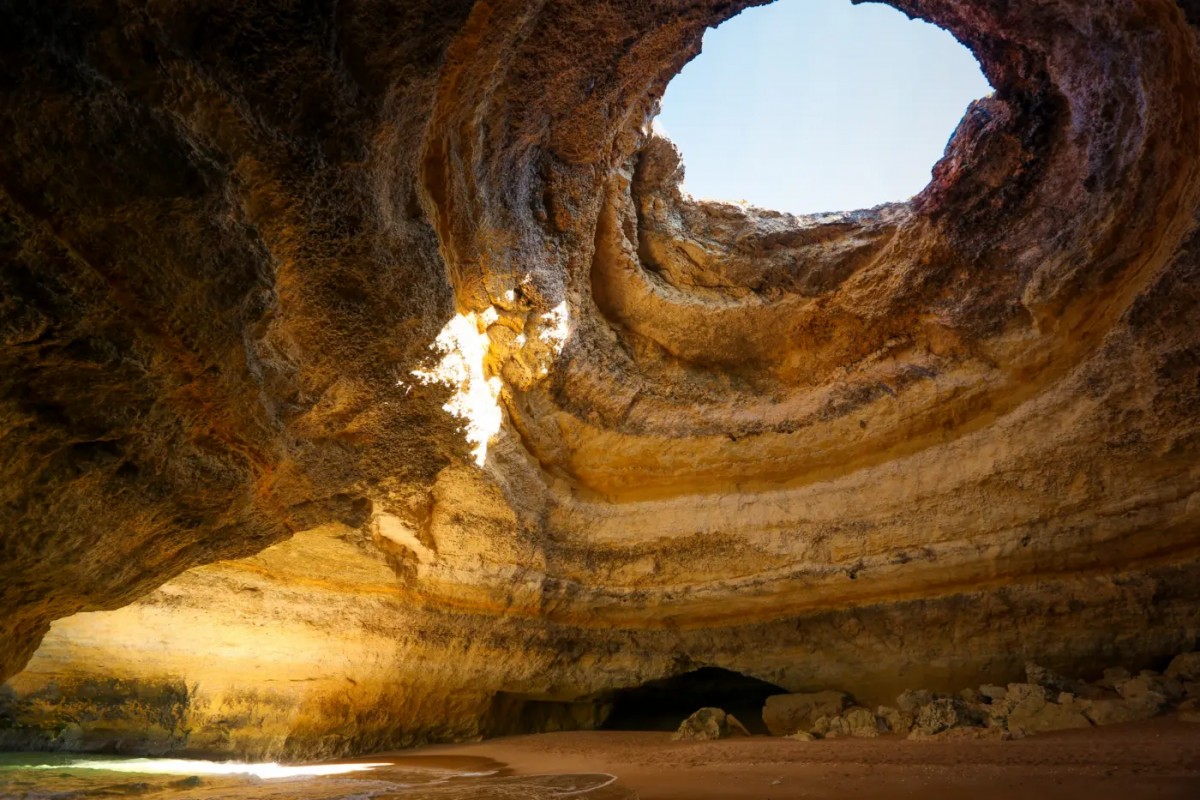
There’s a stretch of the Algarve where the cliffs don’t just frame the sea - they seem to hide it. Benagil is the headline act: a cave with a skylight like a round window cut into the roof, and a patch of sand inside that looks almost staged. The twist is that getting close is now about timing, respect, and a bit of strategy, not bravado.
Where Benagil sits on the Algarve coast
Benagil is a small fishing village folded into the limestone coastline of the Algarve, near Lagoa. On a map it looks modest - a dot between bigger names - but the cliffs here are carved like old bread crust: crisp edges, soft hollows, and the occasional arch that makes you stop mid-sentence.
The simplest “base camp” is Praia de Benagil, Lagoa. It’s a proper little beach with boats bobbing close to shore, sun-bleached steps, and that mix of sunscreen and salt that clings to your hands even after you swear you’ve washed them. On summer mornings you’ll hear flip-flops, zippers, and the low hum of people asking the same question in different accents: “Is this where the cave is?”
Yes - but don’t confuse “near” with “easy.” The cave is just offshore, yet the sea decides who gets to approach. Benagil’s cliffs aren’t decorative; they’re working rock, constantly eroding, occasionally dropping a stone like a reminder.
If you’re arriving from Faro or Albufeira, the road is smooth and quick, and the landscape changes in a way you feel more than you notice: inland it’s quiet, then suddenly you’re near the edge and the air tastes sharper. The last few minutes are often the most human - parking, shoulder bags, a half-drunk coffee, somebody arguing gently about directions. You’re close now, you can tell by the gulls.
What the “hidden beach” really means
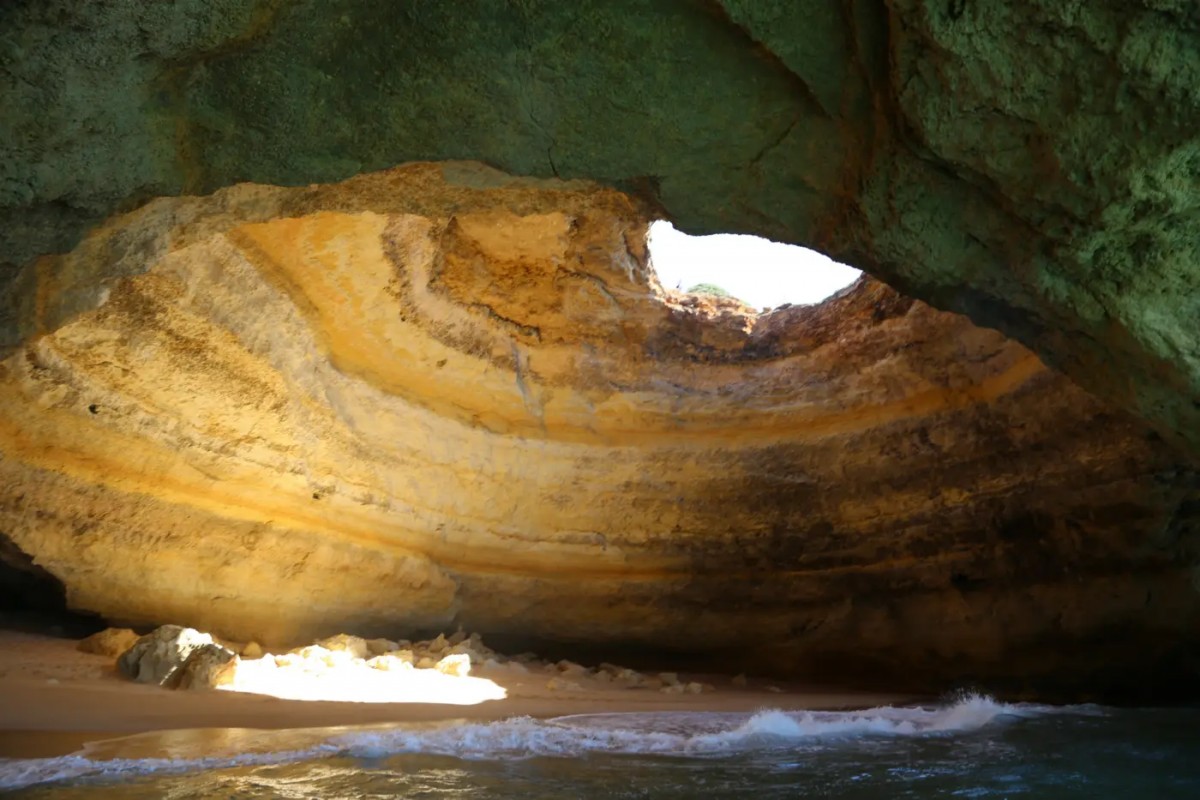
People call Benagil “the cave with a secret beach,” and that’s true, but it’s also slightly misleading in the way postcards are. Inside, there’s a sandy patch, yes - a pale oval under a circular skylight. When sunlight hits it, the sand looks like it’s lit from within, like a lamp shade turned inside out. The walls are honey colored limestone, streaked with darker lines like brush strokes someone forgot to blend.
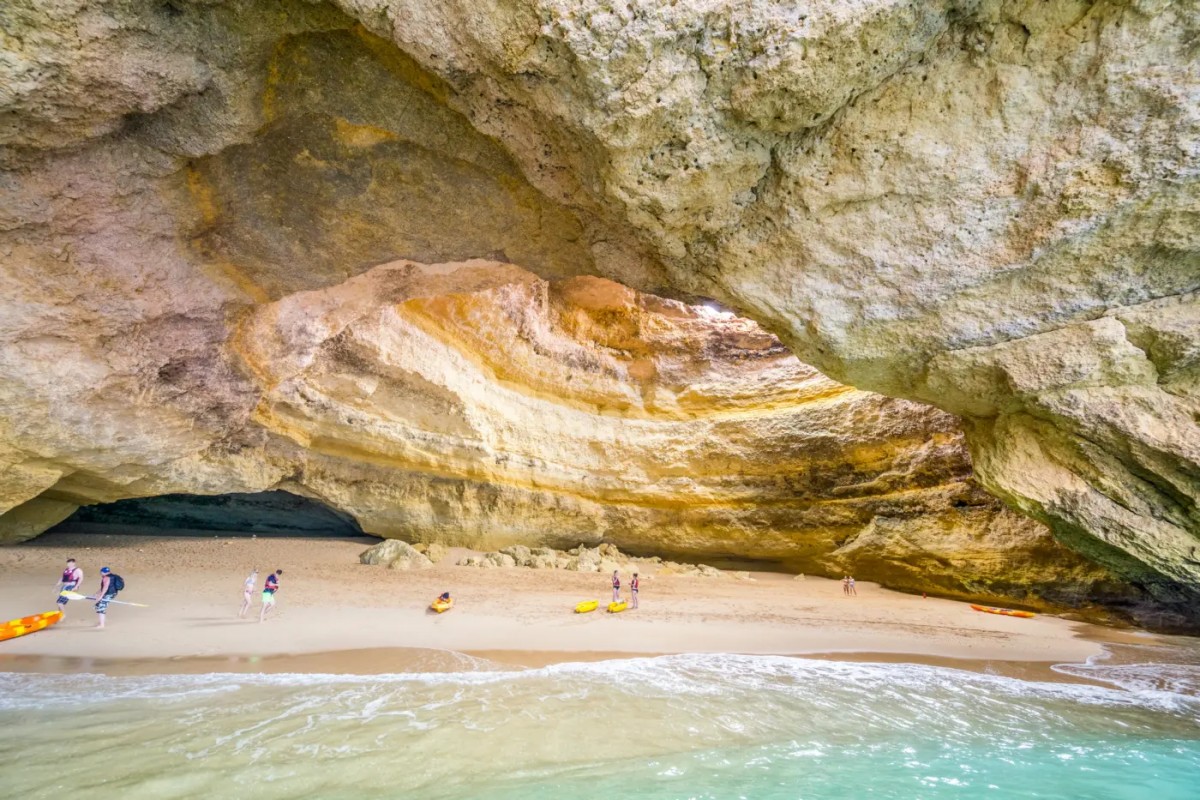
But the hidden beach is now mostly a view, not a place you sprawl on with a towel. Rules have tightened in recent years for safety and conservation: swimming into the cave isn’t allowed, and landing on the sand inside is prohibited. That sounds strict until you picture the setting properly: a confined chamber, boats nudging in and out, people trying to stand under loose rock. It’s not a cinema set; it’s a roof made of stone.
If an operator promises you can “hop out onto the sand,” be skeptical. Responsible tours treat the cave like a fragile room with a low ceiling - you enter, you look, you leave, and you don’t try to outsmart the ocean.
So what are you actually coming for? The feeling of being inside a cliff. The echo. The way voices turn soft without anyone agreeing to whisper. The gentle slap of water against rock, like someone tapping a drum with their fingertips. And the skylight - that famous “eye” in the ceiling - which makes the cave feel less like a tunnel and more like a cathedral with the roof missing.
If you’re the kind of person who gets a little thrill from hidden courtyards, secret staircases, or finding an old key in a drawer, Benagil hits the same nerve. It’s that sense of “this shouldn’t exist,” even though it obviously does.
How to visit: boat, guided kayak, viewpoints
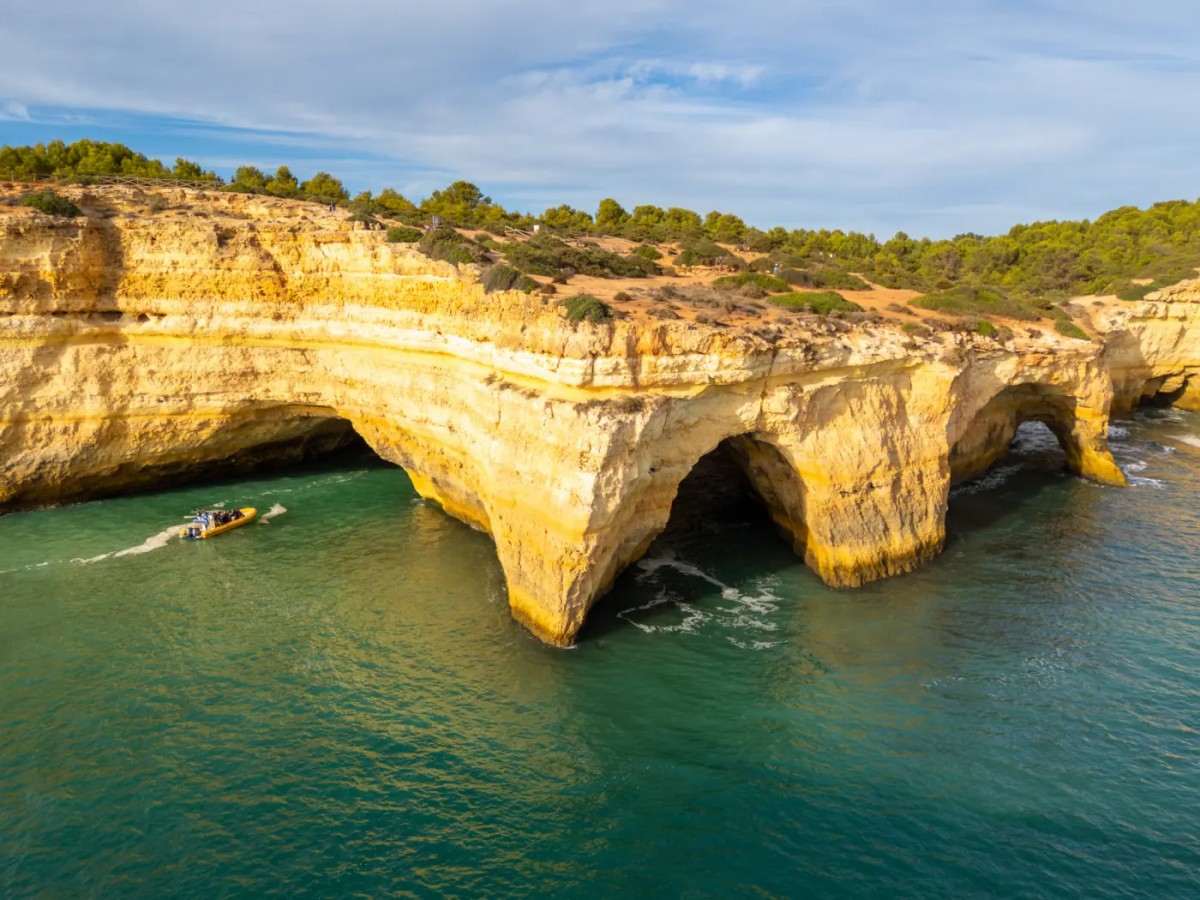
Here’s the good news: you can still visit Benagil Cave. The practical news is that you need to do it the right way. Access is generally limited to organized options like licensed boat trips and guided non-motorized tours, and you won’t be stepping onto the inner sand. Think of it like visiting a delicate museum room - you don’t touch the exhibits, but you can still be amazed.
Three ways people do it
- Boat tour: the easiest for most travelers. You’ll glide in, pause for photos, and back out without breaking a sweat.
- Guided kayak tour: more effort, more closeness. You feel the scale because you’re lower to the water, and every ripple matters.
- Clifftop viewpoints: no waves, no wetsuits - just walking. You won’t see the cave’s interior from above, but you’ll understand the coastline’s geometry.
One thing that surprises first-timers: the cave can feel bigger from a small kayak than from a boat, because you’re not distracted by an engine and other people’s camera screens. You can hear your own breathing. Your paddle makes a soft, hollow “clop” when it hits the surface at the wrong angle. It’s intimate in a way that’s hard to explain until you do it.
And yes, a few years ago many people swam from Benagil beach to the cave. Today that’s a bad idea and typically not permitted - currents, boat traffic, and safety rules all point in the same direction. Even strong swimmers can get tired in a way that feels sudden, like your muscles have an off switch.
If you’re deciding between boat and guided kayak, ask yourself a simple everyday question: do you want the “espresso” version or the “long lunch” version? Boat tours are quick, tidy, and satisfying. Guided kayak trips take longer, require more from you, and can feel more personal - like you earned the view rather than collected it.
What you’ll actually see inside
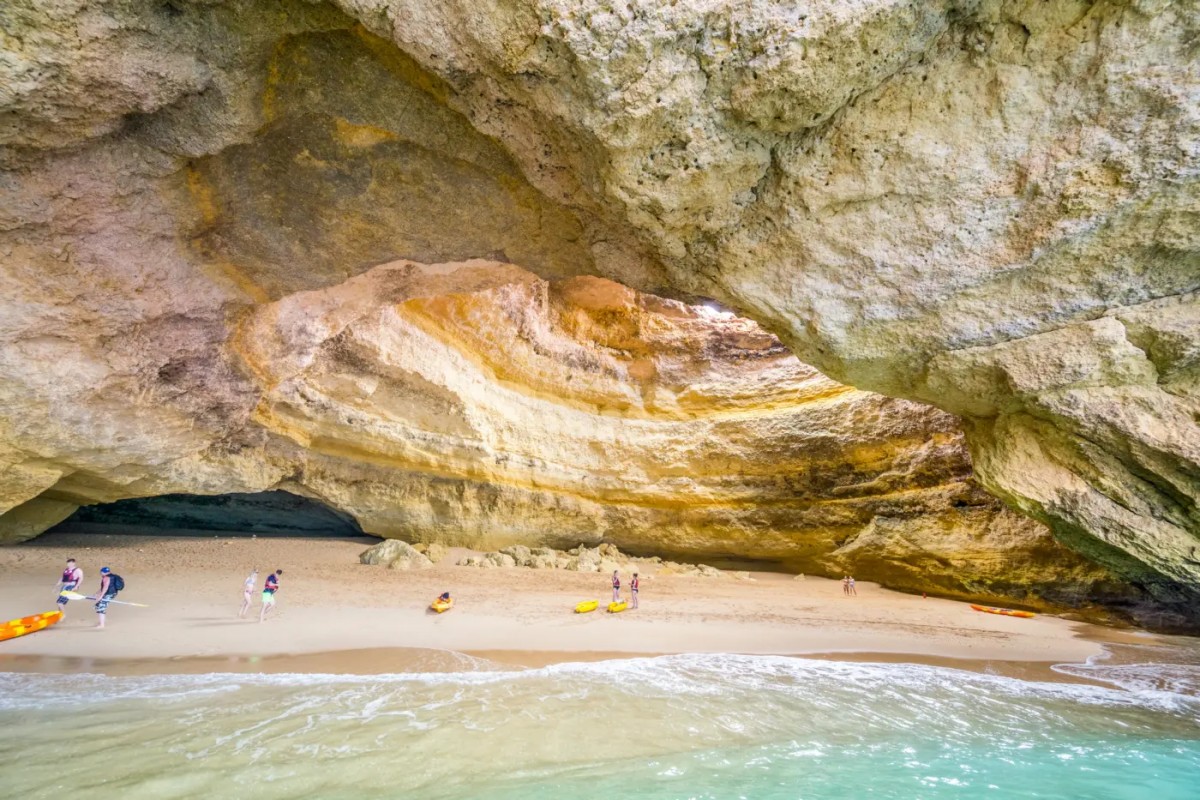
You enter through an arch, the light drops, and then it opens into the chamber. The skylight is the star, but look sideways too: the walls are textured like dried wax, and in the shade the limestone shifts from gold to cool beige. If the sea is calm, the reflections ripple across the rock like moving wallpaper.
Most tours don’t linger long. That can feel rushed, but it’s also part of the rhythm - in and out, like visiting a friend who lives in a busy building. Take a breath, take your photos, then try to put the phone down for ten seconds. Your memory deserves at least one moment without a screen between you and the cave.
Light, tide, and the art of picking a time
Benagil is famous, which means crowds. But it’s also sensitive to conditions, which means the ocean can thin the crowds for you. If you arrive on a bright, calm morning, the place can feel like a festival - parking, queues, chatter. If you arrive when there’s wind, the same beach feels almost private , and the cave becomes a “maybe later.”
Light matters more than people expect. The skylight can turn the sand into a spotlight, but only if the sun is cooperating. Midday often gives the strongest overhead glow, while early morning can make the cave moodier, with softer shadows and a gentler palette. On cloudy days, the interior looks flatter - still beautiful, but less dramatic, like a theater stage with the main lamp turned down.
Tide is the quiet factor. Even without landing, water level changes the way the cave feels and how close boats or kayaks can get to the sand. At higher water, the “beach” becomes smaller, and the chamber can look more like a bowl. At lower water, you see more texture at the base of the walls, more of those little scallops carved by years of waves.
If you’re flexible, aim for the edges of the day: earlier departures can mean smoother water and fewer boats waiting their turn. In peak summer, that often means starting before your brain fully wakes up - but you’ll thank yourself later, probably while eating something messy with your hands and smiling for no reason.
And here’s a tiny secret: some of the best moments happen right outside the cave. When your boat backs away, you get the full frame - dark entrance, bright sea, and the cliffs catching sun like warm . copper. People tend to focus only on “inside,” but the coastline is the story too.
Benagil feels magical because it’s still a real place, not an amusement ride. Treat it like you would a quiet neighborhood at night - move gently, keep your voice low, and don’t turn it into a performance.
- Choose licensed operators and follow crew instructions immediately, even if it feels fussy.
- Skip drones unless you’re explicitly allowed - noise and safety concerns add up fast.
- Keep hands and feet inside boats or kayaks, and don’t chase “one more angle” near rock walls.
One more thing: don’t underestimate the walk and heat on land. The Algarve sun is the kind that feels polite at first, then you realize you’re cooked. If you’ve ever forgotten to drink water on a long shopping trip and suddenly felt grumpy for no reason - it’s that, but with cliffs.
Turning Benagil into a full day by car
Benagil is brilliant, but it’s even better as part of a coastline day. With a car, you can stitch together beaches, viewpoints, and a long lunch without racing the tour timetables. If you’re planning that kind of freedom, Cars-Scanner makes it easy to rent a car in Portugal and build the day around your own pace instead of somebody else’s whistle.
Start with Benagil early, then drive a few minutes to the cliffs near Marinha. The view above Praia da Marinha, Lagoa is the kind that makes people go quiet for a second. The sea is ridiculously clear on calm days, and the rock formations sit offshore like sculptures left out to dry. Nearby, you can connect to the Seven Hanging Valleys area - walking even a short section gives you that satisfying feeling of “I earned this view” without turning it into a marathon.
If you want a change of mood, drive toward Carvoeiro and wander the rock windows at Algar Seco, Carvoeiro. It’s less about one iconic photo and more about small discoveries: little arches, pockets where the sea surges in, platforms where you can sit and watch waves breathe. The limestone here is, strangely friendly - full of handholds and shapes that look almost designed.
Traveling with kids or just craving something playful after all that geology? You can pivot from cliffs to water slides at Slide & Splash, which is close enough to work as an afternoon reset. It’s a funny contrast, really: nature’s cathedral in the morning, engineered chaos in the afternoon. But that’s vacation life - serious beauty, then ice cream.
For an official nod to the coastline’s fame, look up Praia da Marinha on Portugal’s tourism site - it’s a reminder that what feels like a personal discovery is also a celebrated landmark. Still, the experience is yours. The wind on the cliff path, the salt on your lips, the way your clothes smell faintly of sea at the end of the day.
Just remember: plans here should be written in pencil. If the water is rough you adapt, and if you adapt well, you still get a great day. The Algarve rewards flexibility - the same way cooking does when you realize you’re missing one ingredient and the meal turns out fine anyway , maybe even better.